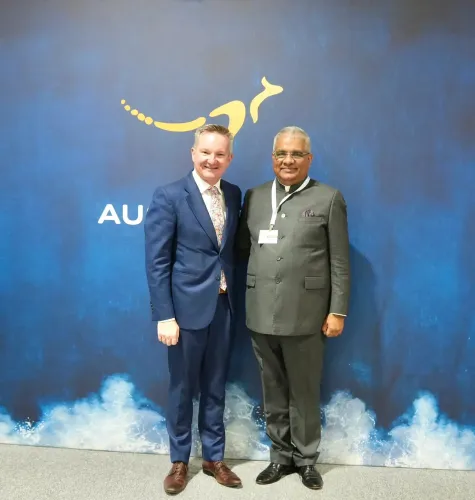
Yadav meets Brazil's Environment Minister at COP31 in Türkiye
Synopsis
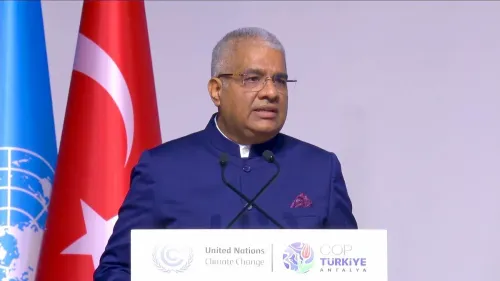
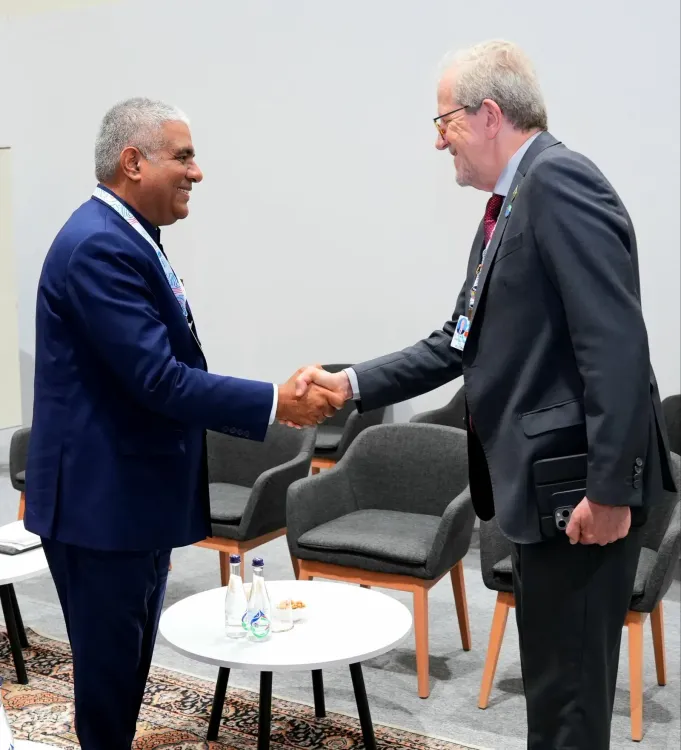
Union Environment Minister Bhupender Yadav met Brazil's Environment Minister João Paulo Ribeiro Capobianco on the sidelines of COP31 in Antalya, Türkiye. Talks covered climate negotiation strategies and conservation of big cats, reflecting the two BASIC group nations' long-standing environmental cooperation.
Key Takeaways
Bhupender Yadav held a bilateral meeting with Brazil's João Paulo Ribeiro Capobianco on the sidelines of COP31 in Antalya, Türkiye on 18 November 2026 .
Discussions focused on ongoing UNFCCC negotiations and each country's domestic climate policy approach.
India and Brazil are founding members of the BASIC group , coordinating climate positions since 2009 .
The two ministers exchanged views on big cat conservation , with India's International Big Cat Alliance (2023) and Brazil's jaguar habitat forming a natural basis for cooperation.
The meeting is part of India's established practice of South-South bilateral engagements at COP sessions to build technical and political alignment.
Observers will watch for joint statements or follow-up mechanisms in UNFCCC or CBD processes.
On the sidelines of COP31 in Antalya, Türkiye, Union Environment Minister Bhupender Yadav sat down with Brazil's Minister of the Environment and Climate Change, João Paulo Ribeiro Capobianco, for bilateral talks that ranged from climate negotiation strategy to the shared challenge of protecting the world's big cats — a meeting that underscores how the two emerging-economy giants continue to find common cause on the global environmental stage.
Climate negotiations and national policy positions on the table
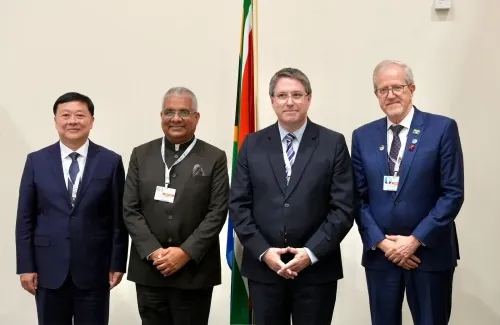
Yadav confirmed the discussions 'primarily focused on the ongoing negotiations with emphasis on matters related to our country's policies and approach to climate change responses.' At the heart of that exchange is a long-standing alignment: India and Brazil are both founding members of the BASIC group, the bloc of major emerging economies — alongside South Africa and China — that has coordinated climate positions at UNFCCC sessions since 2009. That shared architecture gives their bilateral conversations weight well beyond a courtesy call.
COP sessions have become a predictable, productive venue for India to hold these targeted sideline meetings with fellow developing nations, using the concentrated diplomatic environment to reinforce multilateral alignments and exchange technical positions ahead of formal negotiating rounds.
Big cats and biodiversity: an unlikely but natural bridge
The second pillar of the conversation was conservation — specifically, 'the conservation of big cats and their respective biodiversity and how we can learn from each other's experiences.' The framing is deliberate. India is home to the world's largest wild tiger population and launched the International Big Cat Alliance (IBCA) in 2023 to promote global cooperation on the conservation of tigers, lions, leopards, and other apex felids. Brazil, meanwhile, is a critical habitat for the jaguar, South America's dominant big cat and an anchor species for Amazon biodiversity under the Lula administration's environmental agenda.
The two countries bring complementary experience: India's decades-deep Project Tiger methodology and corridor management, and Brazil's vast tropical ecosystem stewardship. Cross-pollinating those learnings — especially within an alliance framework like IBCA — could strengthen both nations' conservation outcomes.
South-South cooperation in action at Antalya
The meeting reflects a broader pattern that has become a fixture of India's COP diplomacy: targeted South-South engagement that complements the larger multilateral negotiating floor. By pairing climate-policy alignment with concrete biodiversity exchange, the discussion moves beyond the abstract commitments of COP communiqués and into actionable technical territory.
What observers will now watch for is whether the Yadav–Capobianco meeting produces any formal follow-up — a joint statement, a technical working group, or a coordinated position in the UNFCCC or Convention on Biological Diversity (CBD) framework. If the IBCA becomes a vehicle for Brazil's engagement, that would mark a meaningful expansion of the alliance's geographic reach beyond Asia and Africa.
Two of the world's most biodiverse nations, talking climate and big cats in Antalya — the question now is whether this sideline conversation finds its way into binding outcomes on the main floor.
Point of View
Adding diplomatic currency to what could otherwise appear a symbolic gesture. For Brazil's Lula government, engaging India on jaguar and Amazon biodiversity through an Indian-led multilateral framework aligns with its own narrative of restored global environmental credibility. The meeting's real test will come in whether it produces a formal deliverable, or remains one of dozens of productive-but-paperless COP corridor conversations.
NationPress
18 Nov 2026
Frequently Asked Questions
What did Bhupender Yadav discuss at COP31?
Yadav met Brazil's Environment Minister João Paulo Ribeiro Capobianco at COP31 in Antalya to discuss ongoing climate negotiations and national climate policy approaches, as well as big cat conservation and biodiversity cooperation between the two countries.
Where is COP31 being held?
COP31 is being held in Antalya, Türkiye, according to Minister Yadav's post describing his sideline bilateral meeting there.
What is the International Big Cat Alliance?
India launched the International Big Cat Alliance (IBCA) in 2023 to promote global cooperation on the conservation of tigers, lions, leopards, and other big cats, bringing together range countries and partner nations.
Are India and Brazil in the same climate negotiating bloc?
Yes. India and Brazil are both founding members of the BASIC group — along with South Africa and China — which has coordinated climate positions at UNFCCC negotiations since 2009.
Why do India and Brazil cooperate on big cat conservation?
India hosts the world's largest wild tiger population and has deep expertise in big-cat corridor management, while Brazil is home to the jaguar. Sharing conservation methodologies across these complementary ecosystems offers mutual benefits for both countries' biodiversity programmes.