Yadav meets Nepal's Environment Minister at COP31 in Türkiye
Synopsis
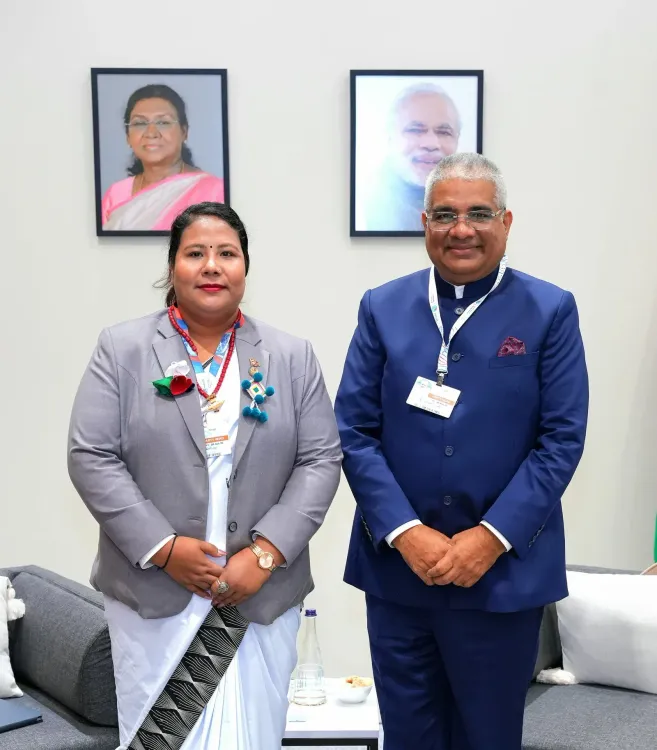
Union Environment Minister Bhupender Yadav met Nepal's Minister Gita Chaudhary at COP31 in Antalya, agreeing to deepen bilateral cooperation on mountain studies, disaster resilience, human-animal conflict, biodiversity, and ecological security, with CDRI and the Govind Vallabh Pant Institute named as key delivery institutions.
Key Takeaways
Bhupender Yadav met Nepal's Gita Chaudhary on the sidelines of COP31 in Antalya, Türkiye on 18 November 2026 .
The two sides agreed to cooperate on six areas : mountain region studies, disaster resilience, human-animal conflict, biodiversity conservation, capacity-building, and ecological security in the shared border region.
CDRI (Coalition for Disaster Resilient Infrastructure), launched by India in 2019 , and the Govind Vallabh Pant Institute were named as key institutional channels for the cooperation.
India-Nepal transboundary environmental cooperation dates to the 1990s , covering biodiversity and disaster management.
Human-animal conflict along the open India-Nepal border has intensified as climate-driven habitat shifts push wildlife across jurisdictions.
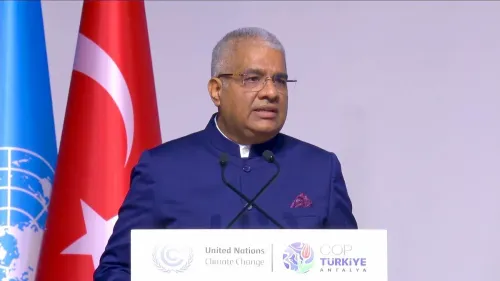
On the sidelines of a global climate summit in Antalya, Türkiye, Union Environment Minister Bhupender Yadav sat down with Nepal's Minister for Agriculture, Forests and Environment, H.E. Gita Chaudhary on Wednesday, November 18, 2026 — and the two neighbours left the room with a sharper shared agenda for the Himalayas.
The meeting, held on the margins of COP31, produced agreement across six concrete areas: mountain region studies, disaster resilience and preparedness, human-animal conflict, biodiversity conservation, capacity-building of stakeholders, and ecological security along the shared border. Two institutions were named as delivery vehicles — the Govind Vallabh Pant National Institute of Himalayan Environment and the Coalition for Disaster Resilient Infrastructure (CDRI).
Why the Himalayas demand a bilateral room inside every multilateral summit
India and Nepal share one of the world's most ecologically sensitive and disaster-prone frontiers. The Himalayan border region faces accelerating glacial-lake outburst floods, shifting wildlife corridors that push large animals into human settlements, and biodiversity hotspots that sit across both nations' jurisdictions. No single country can manage these pressures alone — which is why side meetings like Wednesday's have become a standing feature of every major climate conference the two nations attend together.
The bilateral cooperation architecture on transboundary environmental issues stretches back to the 1990s, covering periodic joint discussions on biodiversity and disaster management. Wednesday's meeting adds institutional specificity: by routing collaboration through the Govind Vallabh Pant Institute — India's dedicated Himalayan environment research body — and through CDRI, the India-led global partnership launched in 2019 to build disaster-resilient infrastructure worldwide, the two sides are plugging into mechanisms with established technical capacity rather than starting from scratch.
CDRI and the Pant Institute as the delivery architecture
CDRI, launched by Prime Minister Narendra Modi at the UN Climate Action Summit in 2019, now counts Nepal among its partner nations. Its mandate — making infrastructure survive climate shocks — maps directly onto the flood-prone river systems and mountain roads that are routinely battered in both countries. The Govind Vallabh Pant Institute, headquartered in Almora, Uttarakhand, has decades of research on Himalayan ecosystems and already engages with regional partners on knowledge exchange. Routing the new bilateral commitments through these bodies signals an intent to operationalise, not just announce.
The human-animal conflict strand is particularly pointed: as forest cover changes and wildlife populations shift under climate pressure, big-cat and elephant movement across the open India-Nepal border has intensified, posing lethal risks to border communities on both sides. A coordinated mitigation framework — rather than each country reacting independently — is overdue.
The next test is whether joint working groups materialise and project-level announcements follow. For now, the Antalya meeting has set a direction — and named the institutions that will have to deliver it.
Point of View
Not merely a scientific one. Whether this meeting translates into funded joint projects or remains a statement of intent will define its real diplomatic weight.
NationPress
18 Nov 2026
Frequently Asked Questions
What did Bhupender Yadav and Nepal's minister agree on at COP31?
The two ministers agreed to deepen cooperation in mountain region studies, disaster resilience and preparedness, human-animal conflict mitigation, biodiversity conservation, stakeholder capacity-building, and ecological security in the shared India-Nepal border region.
Where is COP31 being held?
According to the post, COP31 is being held in Antalya, Türkiye.
What is CDRI and how does it relate to India-Nepal cooperation?
CDRI — the Coalition for Disaster Resilient Infrastructure — is an India-led global partnership launched in 2019 to build infrastructure that can withstand climate shocks. It was named by both ministers as a key institution for advancing India-Nepal disaster resilience cooperation.
What is the Govind Vallabh Pant Institute?
The Govind Vallabh Pant National Institute of Himalayan Environment is an Indian research institution focused on Himalayan ecosystems. It was identified in the bilateral meeting as a channel for knowledge-sharing and capacity enhancement between India and Nepal.
Why is human-animal conflict an issue on the India-Nepal border?
Climate-driven changes in habitat and forest cover have altered wildlife movement patterns, pushing large animals such as big cats and elephants across the open India-Nepal border more frequently, increasing risks to border communities on both sides.