CM Yogi Marks Int'l Cooperatives Day, Backs 'Sahkar Se Samriddhi'
Synopsis
On International Day of Cooperatives, UP Chief Minister Yogi Adityanath called cooperatives India's 'fundamental soul,' backed PM Modi's 'Sahkar Se Samriddhi' mantra and Amit Shah's ministerial stewardship, and urged collective participation in building a Viksit Bharat by 2047.
Key Takeaways
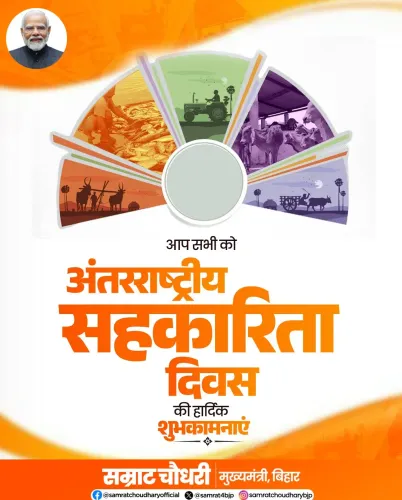
CM Yogi Adityanath greeted the nation on International Day of Cooperatives, 4 July 2026 , via a Hindi post on X.
He described cooperatives as central to India's Antyodaya philosophy — uplifting the poorest through collective economic action.
The post explicitly endorsed PM Modi 's 'Sahkar Se Samriddhi' (Prosperity Through Cooperation) vision as the sector's guiding framework.
Union Minister Amit Shah was credited with providing leadership to cooperative reforms since heading the dedicated Ministry of Cooperation created in July 2021 .
CM Yogi linked cooperative strengthening directly to the 'Viksit Bharat' goal of a developed India by 2047 .
The constitutional basis for cooperatives was laid by the 97th Constitutional Amendment Act, 2011 , inserting Article 43B and Part IXB .
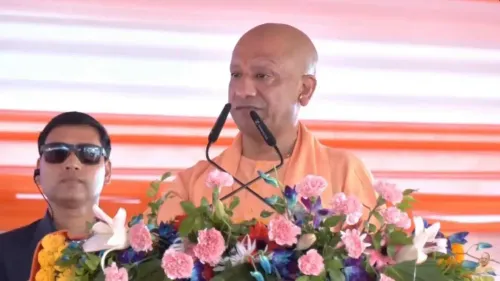
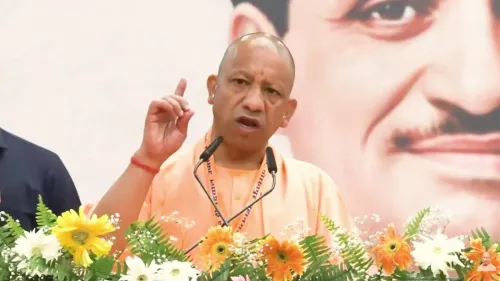
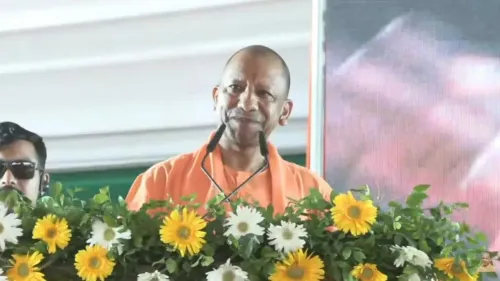
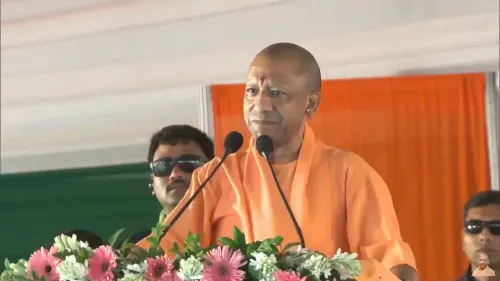
Uttar Pradesh Chief Minister Yogi Adityanath on Saturday, 4 July 2026, extended greetings on International Day of Cooperatives, calling the cooperative movement the 'fundamental soul of India' and urging citizens to deepen their participation in building a prosperous society and a 'Viksit Bharat' (Developed India).
Context
Posting in Hindi on X, CM Yogi described cooperatives as a life-philosophy embedded in India's social consciousness — one that 'saamoohik uttardaayitva se aatmanirbharta ka maarg prashast karta hai' (paves the path to self-reliance through collective responsibility). He directly linked this vision to the fulfilment of Antyodaya, the longstanding national commitment to uplifting the poorest sections of society.
The Chief Minister specifically invoked Prime Minister Narendra Modi's guiding mantra of 'Sahkar Se Samriddhi' (Prosperity Through Cooperation) and credited Union Minister Amit Shah, who holds the Cooperation portfolio, for steering the sector's transformation into what he called a 'powerful axis of the country's development journey.'
Policy Backdrop
The cooperative sector received fresh institutional momentum in July 2021 when the central government carved out a dedicated Ministry of Cooperation — the first of its kind — placing it under Amit Shah. The move was framed as giving focused, undivided attention to a sector that spans credit societies, dairy federations, sugar mills, and rural supply chains across the country.
The constitutional foundation for cooperatives was strengthened earlier by the 97th Constitutional Amendment Act, 2011, which inserted Article 43B and Part IXB, providing explicit constitutional recognition and governance rights to cooperative societies. Successive policy steps since 2021 have sought to modernise governance structures, expand credit access for small farmers and rural entrepreneurs, and integrate cooperatives into national supply chains.
Stakeholders and Impact
The cooperative ecosystem in India spans millions of small farmers, rural entrepreneurs, and self-help group members who depend on cooperative credit, marketing, and processing infrastructure for their livelihoods. Reforms aimed at multi-state cooperative registrations and model cooperative laws at the state level are expected to directly affect this constituency.
Uttar Pradesh, as one of India's largest states by population and agricultural output, holds particular significance in any national cooperative drive. The state's sugar cooperative sector and rural credit societies are among the most expansive in the country, making CM Yogi's endorsement of the central vision a signal of alignment between Lucknow and New Delhi on the sector's direction.
What's Next
Analysts watching the cooperative sector will look for state-level adoption of model cooperative laws, new multi-state cooperative registrations, and potential budgetary allocations for the sector in the next fiscal cycle. CM Yogi's public reaffirmation of the 'Sahkar Se Samriddhi' framework on a globally observed day suggests continued political prioritisation of the cooperative model as a vehicle for Viksit Bharat 2047 — the national goal of achieving developed-nation status by India's centenary of independence.
Point of View
The message signals vertical alignment within the party's governance hierarchy at a time when cooperative sector reforms remain a work in progress. The framing of cooperatives as the vehicle for 'Antyodaya' is politically significant: it attempts to connect a modernisation agenda with a welfare vocabulary that resonates with the BJP's core rural constituency. Observers will watch whether this rhetorical commitment translates into concrete UP-specific legislative or budgetary action in the near term.
NationPress
4 Jul 2026
Frequently Asked Questions
What is International Day of Cooperatives?
International Day of Cooperatives is an annual event observed on the first Saturday of July, designated by the United Nations to highlight the role of cooperative enterprises in sustainable development, poverty reduction, and self-reliance.
What is 'Sahkar Se Samriddhi'?
'Sahkar Se Samriddhi,' meaning 'Prosperity Through Cooperation,' is Prime Minister Narendra Modi's policy vision that positions cooperative societies as engines of inclusive, decentralised economic growth in India.
Why did India create a separate Ministry of Cooperation?
The dedicated Ministry of Cooperation was established in July 2021 under Amit Shah to give focused institutional attention to the cooperative sector, streamline governance, expand rural credit access, and integrate cooperatives into national supply chains.
What is Antyodaya and how does it relate to cooperatives?
Antyodaya is a longstanding Indian policy principle focused on uplifting the poorest sections of society first. Cooperative societies, by pooling community resources and distributing benefits collectively, are seen as a practical mechanism for realising this goal at the grassroots level.
What is Viksit Bharat and what role do cooperatives play in it?
'Viksit Bharat' is the national vision for India to achieve developed-nation status by 2047 , the centenary of independence. Cooperatives are positioned as a key development pillar within this framework, particularly for rural and agricultural communities.