CM Yogi: Sambhal products gain new market after Modi cuts mentha oil tax
Synopsis
PM Modi has cut tax rates on natural mentha oil, CM Yogi Adityanath announced on 18 July 2026, saying the move will give Sambhal district's products a new identity and access to wider markets, benefiting mentha farmers and essential oil exporters across Uttar Pradesh.
Key Takeaways
PM Narendra Modi has reduced tax rates on natural mentha oil, according to a statement from the Chief Minister's Office of Uttar Pradesh on 18 July 2026 .
CM Yogi Adityanath said the cut will give Sambhal district's products a new identity and access to a wider market.
Sambhal is a key mentha cultivation and essential oil processing hub in Uttar Pradesh .
Uttar Pradesh accounts for a large share of India's national mentha output, making the tax relief directly relevant to the state's rural economy.
The move aligns with periodic GST Council rationalisation of indirect taxes on farm-linked and essential oil commodities since 2017 .
Primary beneficiaries include mentha farmers and essential oil exporters concentrated in western Uttar Pradesh .
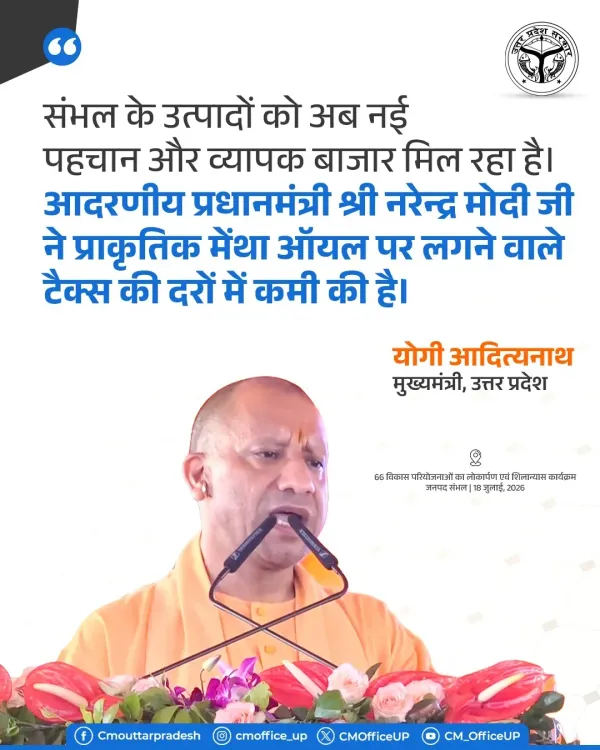
The Chief Minister's Office of Uttar Pradesh announced on Saturday, 18 July 2026 that Prime Minister Narendra Modi has reduced tax rates on natural mentha oil, a move Chief Minister Yogi Adityanath said will give Sambhal district's products a new identity and wider market access.
Context
The CM Office quoted CM Yogi Adityanath as saying: 'Sambhal ke utpadon ko ab nayi pahchaan aur vyapak baazaar mil raha hai' ('Sambhal's products are now getting a new identity and a wider market'). The statement credited Prime Minister Modi with reducing the tax burden on natural mentha oil, directly benefiting producers in the district.
Sambhal, a district in western Uttar Pradesh, is a significant centre for mentha cultivation and essential oil processing. The reduction in tax rates is expected to lower input costs for farmers and processors, making their produce more competitive domestically and in export markets.
Policy Backdrop
Tax rates on agricultural and essential oil commodities have been periodically reviewed by the GST Council since the unified indirect tax regime came into force in 2017. These reviews have aimed at easing compliance burdens for farmers and small processors who operate in the essential oils supply chain.
Uttar Pradesh accounts for a substantial share of India's total mentha output, making any central government adjustment on mentha oil taxation directly consequential for the state's rural economy. The latest reduction aligns with a broader pattern of rationalising indirect taxes on farm-linked products to boost agricultural competitiveness.
Stakeholders and Impact
The primary beneficiaries of the tax cut are mentha farmers and essential oil exporters concentrated in districts such as Sambhal, Barabanki, and Rampur in Uttar Pradesh. Lower tax incidence is expected to improve margins at the farm level and reduce the cost structure for exporters competing in global essential oil markets.
For Sambhal specifically, which has been the focus of state-level efforts to promote its artisanal and agricultural products, the measure adds economic momentum. Wider market access for local mentha oil could support rural livelihoods and increase the district's share in India's essential oil export basket.
What's Next
Attention will now turn to the next GST Council meeting, where further rationalisation of rates on essential oils may be on the agenda. Export figures for mentha oil from Uttar Pradesh in the coming quarters will serve as a key indicator of whether the tax relief translates into measurable gains for farmers and processors on the ground.
The Yogi Adityanath government is expected to build on this announcement through state-level promotional initiatives that link Sambhal's mentha oil identity to broader 'One District One Product' branding efforts, reinforcing the district's position as a national hub for natural essential oils.
Point of View
With the UP government amplifying a central measure to claim shared credit for rural economic relief. For CM Yogi, spotlighting Sambhal fits a deliberate pattern of using the 'One District One Product' framework to signal economic development in a politically sensitive western UP district. The mentha oil tax cut also reflects the GST Council's gradual shift toward easing the indirect tax burden on farm-linked value chains, a trend that has gained pace as the government seeks to shore up rural incomes. Whether the relief reaches farmers at the field level — rather than being absorbed by intermediaries — will be the real test of the policy's impact.
NationPress
18 Jul 2026
Frequently Asked Questions
Why has the tax on natural mentha oil been reduced?
The central government reduced tax rates on natural mentha oil to lower costs for farmers and processors, improve the competitiveness of Indian mentha products in domestic and export markets, and support the rural economy in major producing states like Uttar Pradesh.
How does the mentha oil tax cut benefit Sambhal district?
Sambhal is a significant centre for mentha cultivation and essential oil production in Uttar Pradesh. Lower tax rates reduce input costs for local farmers and processors, giving their products better pricing in wider markets, as highlighted by CM Yogi Adityanath.
What is the GST Council's role in mentha oil taxation?
The GST Council periodically reviews and adjusts tax rates on agricultural and essential oil commodities. Since 2017, it has made several revisions aimed at easing compliance for farmers and small processors in the essential oils supply chain.
Which farmers benefit most from the mentha oil tax reduction?
Mentha farmers and essential oil exporters in Uttar Pradesh — particularly in districts such as Sambhal, Barabanki, and Rampur — are the primary beneficiaries, as the state accounts for a large share of India's total mentha output.
What is the 'One District One Product' scheme and how does it relate to Sambhal?
The 'One District One Product' initiative promotes a signature product from each district in Uttar Pradesh to boost local industry and exports. Sambhal's mentha oil and artisanal products are among those being promoted under this framework, and the tax cut adds economic momentum to that effort.