CM Yogi: UP Now Makes 60% of India's Mobile Phones
Synopsis
CM Yogi Adityanath claims Uttar Pradesh now accounts for 60% of India's mobile-phone output and 55% of electronics components in under a decade, pointing to a ₹3,706 cr HCL-Foxconn chip plant at Jewar, 644 MW of data-centre proposals, and over 24,000 startups as proof of an industrial transformation.
Key Takeaways
CM Yogi Adityanath says UP produces ~60% of India's mobile phones and ~55% of electronics components — a shift achieved in roughly 9.5 years .
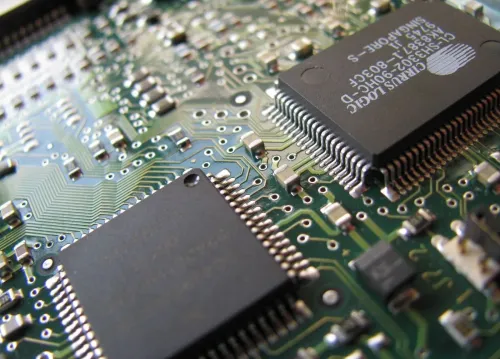
A ₹3,706 crore HCL-Foxconn semiconductor chip unit is being set up at Jewar , anchoring UP's move into chip manufacturing.
The state has received 644 MW worth of data-centre proposals , signalling growing digital-infrastructure investment.
UP's startup ecosystem now includes more than 24,000 startups and 8 unicorns .
CM Adityanath framed the transformation as a 'Mobile to Module to Microchip' value-chain journey aligned with PM Modi's Make in India and Aatmanirbhar Bharat frameworks.
The post drew an explicit contrast with pre-2017 governance, naming 2017 as the inflection point when the investment climate shifted.
From a state once tagged bimaru — a Hindi acronym for sick, backward, malaria-ridden — to manufacturing nearly 60 percent of India's mobile phones and 55 percent of its electronics components: Uttar Pradesh Chief Minister Yogi Adityanath laid out that transformation in a post on X on Tuesday, 6 October 2026, framing it as the direct result of nine-and-a-half years of policy focus and what he called a 'double-engine government' aligned with the Centre's industrial vision.
The numbers CM Yogi put on the table
In the post — written in Hindi and captioned 'Assembly se AI tak: naye Uttar Pradesh ki nayi udaan' ('From assembly to AI: the new flight of a new Uttar Pradesh') — CM Adityanath cited a string of specific figures to anchor his argument. A ₹3,706 crore HCL-Foxconn semiconductor chip unit is coming up in Jewar, near the Noida International Airport corridor. The state has received proposals for 644 megawatts of data-centre capacity. And the startup ecosystem now counts more than 24,000 startups and 8 unicorns within UP's borders.
The progression he described is deliberate and sequential: 'Mobile to Module to Microchip.' It is a shorthand for how the state's electronics ambition has moved up the value chain — from assembling finished handsets to producing sub-components and now positioning itself to fabricate semiconductors domestically.
The Jewar-Foxconn chip bet and what it signals
The HCL-Foxconn chip unit at Jewar is the headline investment in CM Adityanath's narrative. Jewar — home to the under-construction Noida International Airport (Jewar Airport) — has rapidly become the anchor for UP's high-technology corridor, sitting at the intersection of the Delhi-Mumbai Industrial Corridor and the emerging Yamuna Expressway industrial belt. A semiconductor fabrication or testing unit in that zone would position UP inside India's broader push to build domestic chip capacity, a strategic priority the central government has backed with multi-billion-dollar incentive schemes.
The 644 MW of data-centre proposals is equally telling. Data centres are infrastructure for the AI economy — they require reliable power, land, connectivity, and a business environment that attracts hyperscalers. Their arrival signals that investors now see UP as a credible host for capital-intensive, long-horizon digital infrastructure.
The political contrast CM Yogi drew
The post was not purely celebratory — it was explicitly comparative. CM Adityanath named 2017 as the before-and-after inflection point, arguing that previous governments kept the state 'bimaru by design,' prioritising family political dynasties over development. He invoked the Saifai Mahotsav — the annual cultural festival held in the home village of the Yadav political family — as a symbol of misplaced state patronage, and used the phrase 'mafiakaran hi audyogikaran ka model' ('mafiaisation was the model of industrialisation') to describe the pre-2017 investment climate. The pointed rhetorical question he closed with — 'when the concern is more for the family than the state, and more for criminals than investors, how will an environment for future technology ever be built?' — was clearly aimed at the Samajwadi Party without naming it.
He credited Prime Minister Narendra Modi's Make in India, Digital India, and Aatmanirbhar Bharat frameworks as the strategic scaffolding that UP's state policy, investment drive, and production push have been built upon.
Why the 'bimaru' reversal claim matters now
UP is India's most populous state, with an economy that — if it were a country — would rank among South Asia's largest. For decades the bimaru label was a genuine economic descriptor: low per-capita income, weak industrial base, chronic out-migration of skilled labour, and poor ease-of-doing-business metrics. If the mobile-manufacturing share figures CM Adityanath cited hold up, they represent a structural shift, not just cyclical growth. Sixty percent of national mobile-phone output from a state that barely registered on electronics maps a decade ago would be one of the more striking industrial geography stories in India's recent economic history.
With assembly elections on UP's political horizon and the 2027 state polls already shaping campaign narratives, the 'Mobile to Module to Microchip' arc is likely to become a central BJP talking point — built around the argument that governance quality, not just central transfers, determines whether a large state rises or stagnates.
Point of View
Contrast-second — designed to cement the BJP's claim that UP's industrial pivot is a governance story, not a geography story. By anchoring specifics like the HCL-Foxconn chip unit and data-centre megawatts alongside the 'bimaru by design' indictment of rivals, he is simultaneously making an economic argument and a political one heading into the 2027 UP assembly cycle. The 'Mobile to Module to Microchip' framing mirrors central government vocabulary around Aatmanirbhar Bharat, tying state achievement tightly to PM Modi's brand — a classic double-engine dividend pitch. Whether the production-share figures are independently verified will be the question opposition parties and economic analysts will press next.
NationPress
6 Oct 2026
Frequently Asked Questions
What share of India's mobile phones does Uttar Pradesh produce?
According to CM Yogi Adityanath's post on 6 October 2026, Uttar Pradesh accounts for approximately 60% of India's mobile-phone production and around 55% of electronics components output.
What is the HCL-Foxconn chip unit at Jewar?
The HCL-Foxconn semiconductor chip unit is a ₹3,706 crore project being set up at Jewar in Uttar Pradesh, near the under-construction Noida International Airport, as part of India's push for domestic chip manufacturing.
How many unicorns and startups does Uttar Pradesh have in 2026?
CM Yogi Adityanath stated that UP has more than 24,000 startups and 8 unicorns as of October 2026, citing this as evidence of the state's growing technology ecosystem.
What does 'bimaru' mean and why did CM Yogi use it?
'Bimaru' is an acronym historically used to describe economically lagging Indian states — Bihar, Madhya Pradesh, Rajasthan, and Uttar Pradesh. CM Adityanath used it to argue that previous governments deliberately kept UP in that condition rather than unlocking its economic potential.
What is the 'double-engine government' that CM Yogi refers to?
The 'double-engine government' is a BJP phrase describing a state and central government both run by the same party — in this case, BJP governments in both Uttar Pradesh and at the Centre — arguing that aligned political leadership accelerates policy implementation and investment.