CM Yogi: UP Sends School Kits to 1.6 Crore Children via DBT
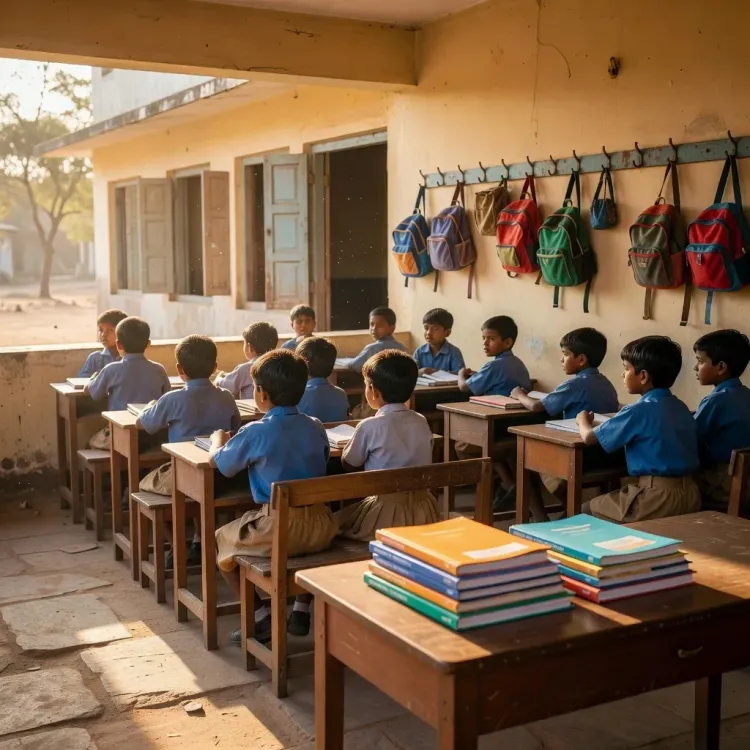
Synopsis
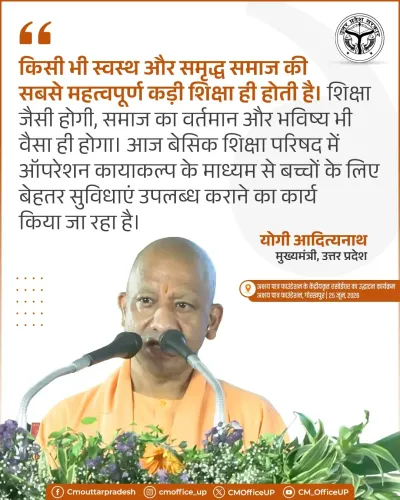
Uttar Pradesh is delivering uniforms, bags, books and shoes to 1.6 crore schoolchildren through Direct Benefit Transfer to parents, while Operation Kayakalp has pushed Basic Education Council school infrastructure availability from 30-36 percent to 96 percent, CM Yogi Adityanath's office reported.
Key Takeaways
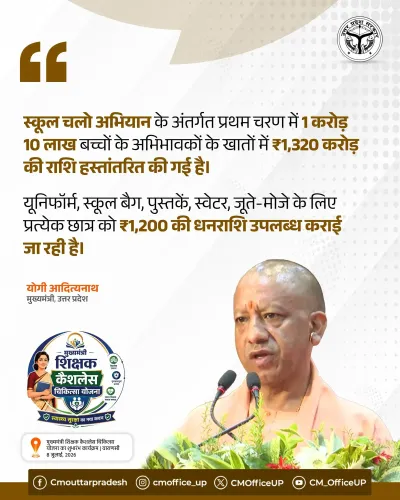
1 crore 60 lakh children in Uttar Pradesh are receiving two uniforms, a school bag, books, shoes and socks as state entitlements.
Funds are transferred directly to parents' bank accounts via DBT, bypassing intermediaries to reduce leakage.
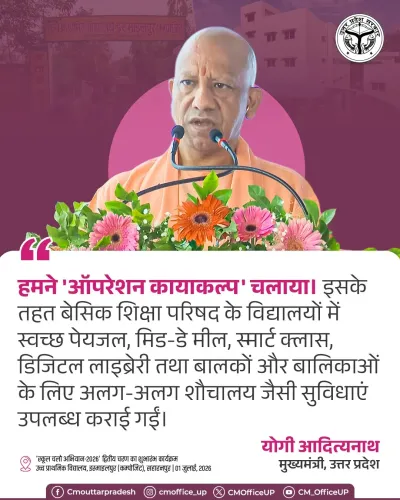
Operation Kayakalp , launched in 2017-18, uses community participation to build basic school infrastructure in Basic Education Council schools.
Basic facility availability in UP government schools has risen from 30-36 percent to 96 percent under the programme.
The delivery model aligns with the Samagra Shiksha framework's DBT-first approach for school entitlements.
Independent verification through UDISE+ or ASER data will be the next benchmark for assessing learning-outcome impact.
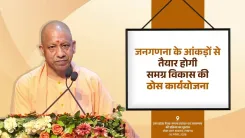
Uniforms, bags, books, shoes and socks — for 1 crore 60 lakh children across Uttar Pradesh, these are no longer aspirations but entitlements arriving directly in their parents' bank accounts. The Chief Minister's Office of Uttar Pradesh shared remarks by Chief Minister Yogi Adityanath on Monday, November 16, 2026, detailing the scale of the state's basic education push and a headline number that tells its own story: school infrastructure availability has climbed from barely 30-36 percent to 96 percent.
Kits, cash and cutting out the middleman
The state is providing each enrolled child with two sets of uniforms, a school bag, books, shoes and socks, along with other essential materials. Rather than distributing supplies through the school chain — a route historically prone to leakage and shortfalls — the government routes the corresponding funds straight to parents via Direct Benefit Transfer (DBT). The model mirrors the DBT-first philosophy embedded in Samagra Shiksha, the central framework that has underpinned state-level school entitlement programmes since 2018.
DBT removes every intermediary between the treasury and the household. Parents receive the amount, make the purchase, and the child arrives at school equipped. The accountability is reversed: the state no longer has to track stock; parents have the cash and the responsibility.
Operation Kayakalp's infrastructure turnaround
Operation Kayakalp, launched in 2017-18, is the other pillar of this transformation. The programme mobilises community participation — jansahbhagita (public co-ownership) — to supply basic facilities to government schools managed by the Basic Education Council of Uttar Pradesh. Think functional toilets, clean drinking water, proper furniture and classrooms that don't leak.
The jump in the facility-availability index — from roughly 30-36 percent to 96 percent — is the number CM Yogi's office leads with, and it carries weight. At the starting point, nearly two-thirds of Basic Education Council schools lacked adequate infrastructure. At 96 percent, that gap has been nearly closed. If verified by independent audit data such as UDISE+ returns, it would represent one of the most significant school-infrastructure turnarounds in the country's most populous state.
Why UP's scale makes this count nationally
Uttar Pradesh runs the largest network of government primary and upper-primary schools in India. What moves the needle here moves the needle for a significant share of India's out-of-pocket school expenses and rural learning environments. A delivery model that works across 1.6 crore children in UP is a template other states watch closely — particularly in the Hindi belt, where DBT-plus-facelift combinations have been attempted at smaller scales.
The next test is outcomes. Infrastructure availability and kit delivery are inputs. The question policy watchers will ask — and what the next round of ASER or UDISE+ data will begin to answer — is whether classrooms that now have walls, water and well-dressed students are also producing measurably better learning. That is the unfinished sentence at the end of this otherwise striking report card.
Point of View
Validate with an infrastructure metric (30-36% to 96%), and anchor both to a system change (DBT). It is a governance-credibility argument ahead of what remains a competitive political landscape in UP. The DBT pivot is structurally sound — it closes the classic last-mile delivery gap — but the administration's larger challenge is shifting the conversation from input delivery to learning outcomes, where data from independent assessments have historically been more sobering. Operation Kayakalp's community-participation model, if the 96 percent figure holds up to audit, would also mark a replicable template for other large states struggling with school-infrastructure backlogs.
NationPress
16 Nov 2026
Frequently Asked Questions
What items are being given to children under UP's school entitlement scheme?
The Uttar Pradesh government is providing each enrolled child with two sets of uniforms, a school bag, textbooks, shoes and socks, along with other essential materials, funded through Direct Benefit Transfer to parents' bank accounts.
How does DBT work for UP school uniforms and supplies?
Instead of distributing physical goods through schools, the government transfers the equivalent amount of money directly into the bank accounts of parents, who then purchase the required items for their children, reducing the risk of leakage or shortfall.
What is Operation Kayakalp in Uttar Pradesh?
Operation Kayakalp is a state government initiative launched in 2017-18 that mobilises public participation to provide basic infrastructure — such as toilets, drinking water, furniture and classrooms — to government schools managed by the Basic Education Council of UP.
How much has UP school infrastructure improved under Operation Kayakalp?
According to the Chief Minister's Office, basic facility availability in Basic Education Council schools has risen from 30-36 percent to 96 percent since the initiative began.
How many children are covered by UP's school kit DBT programme?
The programme covers approximately 1 crore 60 lakh (16 million) boys and girls enrolled in Basic Education Council schools across Uttar Pradesh.