Gujarat Minister Criticizes Congress for UCC Bill Opposition
Synopsis
Gujarat Minister Jitu Vaghani accuses the Congress party of trying to obstruct the Uniform Civil Code Bill, warning of electoral backlash. He emphasizes the bill's significance for equality, particularly for women, and highlights public support.
Key Takeaways
Gujarat's UCC Bill aims to promote equality.
Minister Vaghani accuses Congress of obstruction.
Significant public support was noted during discussions.
The UCC is seen as a landmark legislation for women's rights.
Opposition concerns focus on tribal customs and traditions.
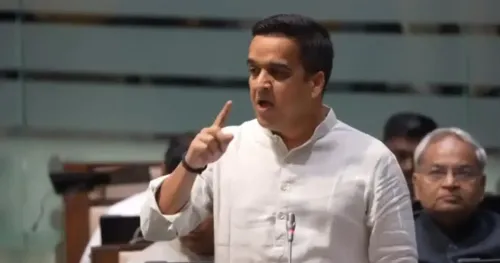
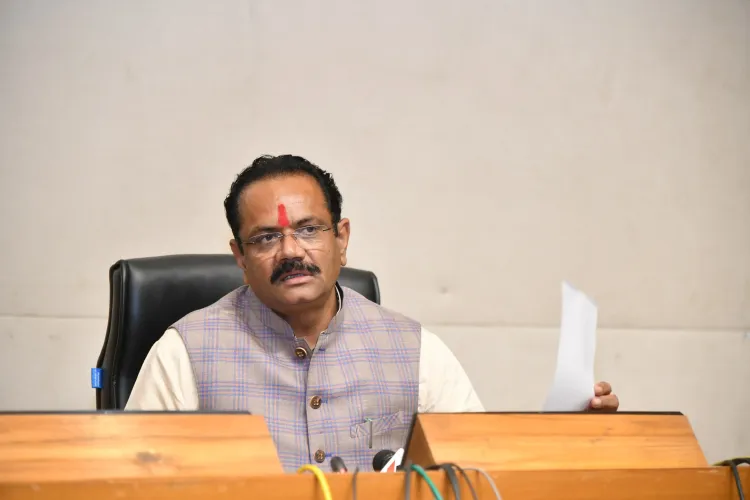
Gandhinagar, March 25 (NationPress) - Gujarat's government spokesperson and Minister Jitu Vaghani claimed on Wednesday that the Congress party is making efforts to obstruct the passage of the Uniform Civil Code (UCC) Bill in the Assembly. He cautioned that voters would retaliate by rejecting the party in the upcoming elections.
Vaghani stated, “Congress members voiced their intention to ‘defeat’ the bill, which aims to ensure that the mothers and sisters of our state receive equal rights.” He added, “The citizens of Gujarat will respond by politically dismissing the Congress through their votes.”
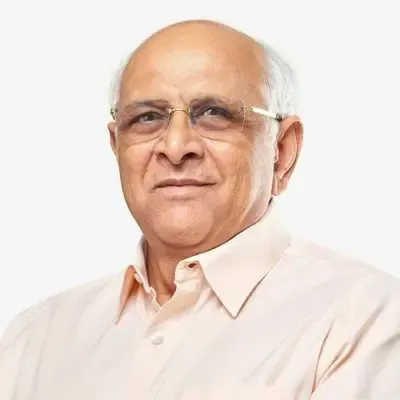
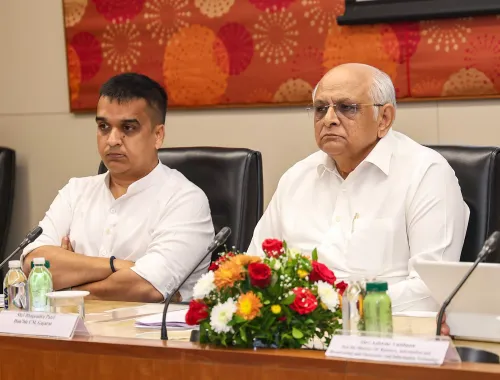
The bill was approved in the state Legislative Assembly on Tuesday after an extensive discussion lasting over seven hours. Vaghani hailed this as a landmark achievement and extended his congratulations to Chief Minister Bhupendra Patel and Deputy Chief Minister Harsh Sanghavi for the Bill's passage.
He emphasized that the legislation initiated by the Chief Minister mirrors public sentiment. “Chief Minister Patel, affectionately referred to as ‘Dada’, introduced the UCC law in the Assembly. This is not just a Bill; it represents the ‘heart’ of the Gujarat populace. This law resonates with the demands and aspirations of our people over many years,” Vaghani remarked.
Touching on the origins of the UCC, he noted that the concept was envisioned by the framers of the Constitution, including B.R. Ambedkar, K. M. Munshi, and Alladi Krishnaswamy Iyer, and alleged that the Congress made multiple attempts to hinder the bill in the Assembly.
In response to opposition concerns regarding the exclusion of tribal communities, Vaghani asserted, “The BJP government has constitutionally safeguarded the traditional customs of tribal groups. The Congress is employing tactics to mislead these communities.”
He further inquired whether the opposition intended to amend the Bill in ways that could disrupt tribal traditions. Vaghani accused Congress of attempting to incite unrest by referencing protests and legal challenges.
“Out of fear of the elections, Congress is trying to obstruct the bill, while the BJP government aligns with the sentiments of the state's people,” he stated.
He also mentioned a committee formed for the UCC that has engaged with citizens and political parties over the past year, with approximately two million participants contributing their views. “From the outset, the Congress has adopted an antagonistic stance towards the UCC,” he noted.
Quoting Prime Minister Narendra Modi, Vaghani stated, “A country cannot operate under a ‘dual legal system’. Equality before the law embodies the true spirit of the Constitution of India.”
He referenced Union Home Minister Amit Shah, asserting, “The UCC does not target any religion; rather, it promotes equality and justice for all citizens.”
He concluded by reiterating that the UCC is not against any faith but aims to ensure fairness and justice, particularly for women.
Point of View
The discourse surrounding the UCC Bill in Gujarat showcases a critical juncture in Indian politics. The accusations against the Congress party reveal the deep-seated tensions between political entities and underscore the importance of legislation aimed at promoting equality. The public's response in the upcoming elections will be a decisive factor in determining the future of such reforms in India.
NationPress
22 Sept 2026
Frequently Asked Questions
What is the Uniform Civil Code (UCC)?
The UCC aims to replace personal laws based on the scriptures and customs of each major religious community in India with a common set governing every citizen.
Why is the UCC significant?
The UCC is significant as it seeks to ensure equality before the law and protect the rights of women, particularly in matters of marriage, divorce, and inheritance.
Who are the key figures mentioned in the discussion about the UCC?
Key figures include Gujarat Minister Jitu Vaghani, Chief Minister Bhupendra Patel, and Prime Minister Narendra Modi.
What were the Congress party's objections to the UCC?
The Congress party raised concerns about the impact of the UCC on traditional customs, particularly for tribal communities.
How did the public participate in the UCC discussion?
A committee formed for the UCC sought input from citizens and political parties, with around two million people actively participating.