Gujarat's Deputy CM Advocates UCC for Women's Rights
Synopsis
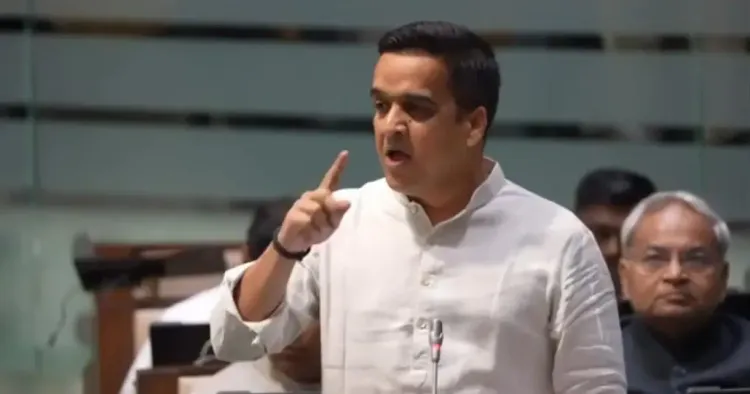
Deputy Chief Minister Harsh Sanghavi asserts that the Uniform Civil Code is vital for women’s legal rights during an Assembly discussion, emphasizing its neutrality towards religions and the necessity for justice.
Key Takeaways
UCC aims to promote gender justice.
Legal rights for women are a priority.
Goa serves as a successful UCC example.
Public feedback has been significant.
Implementation is planned post-Uttarakhand.
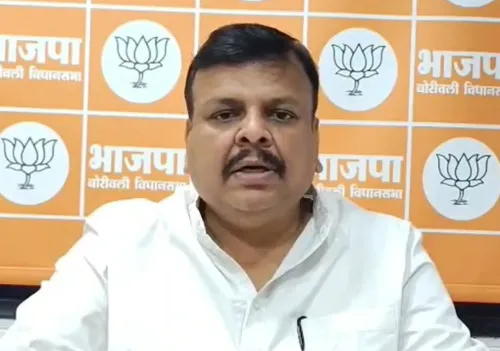
Gandhinagar, March 24 (NationPress) Deputy Chief Minister Harsh Sanghavi presented a compelling case in the Gujarat Assembly on Tuesday, advocating for the introduction of the Uniform Civil Code (UCC) as a necessary measure to rectify legal disparities affecting women.
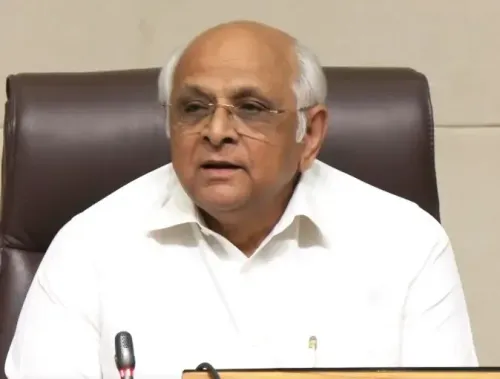
As he contributed to the debate following the legislation introduced by Chief Minister Bhupendra Patel, Sanghavi emphasized that personal law disparities have resulted in situations where women find it challenging to obtain justice.
“Our Constitution guarantees legal rights to all citizens,” he stated, arguing that those who genuinely respect the Constitution and democratic values should not oppose the UCC.
He portrayed the proposed UCC framework as founded upon “four pillars: gender justice, legality, national interest, and democracy”, asserting that “Gujarat will proceed with its implementation following Uttarakhand.”
Referencing Goa, where a uniform civil code has been operational since before Independence, he remarked that “not a single injustice has occurred there.”
Sanghavi took aim at the opposition, criticizing them for their historical tendency towards appeasement and conservative ideologies.
In response to Gujarat Congress president Amit Chavda’s remarks about the necessity of publicizing the draft report for scrutiny, Sanghavi countered, “If you had reviewed the Bill, you would have expressed concerns on at least two clauses.”
He noted that during UCC committee meetings, Congress members consistently held the stance: “We don’t need UCC now.”
“The residents of Gujarat will not delay their progress based on the Congress party’s views,” he declared.
Sanghavi revealed that nearly 20 lakh suggestions and feedback were collected during public consultations.
He reiterated that the proposed legislation is not aimed against any particular religion, echoing statements from Union Home Minister Amit Shah that the UCC intends to “ensure equal legal rights.”
Quoting judicial perspectives, he referenced a 2016 ruling from the Gujarat High Court in the Jafar Abbas Mohammad Rufal case, which underscored the necessity for a uniform civil code.
Highlighting a case from Bhavnagar, he detailed a woman’s experience of harassment following her husband’s second marriage, where the man claimed adherence to his Islamic personal law in defense.
He argued that this case exemplifies how legal inequality can adversely impact women.
Another case involved a woman named Saira Banu, who was reportedly subjected to dowry-related harassment and expelled from her home after her husband’s second marriage.
“Legal inequality forces many women to confront significant challenges in seeking justice,” he remarked.
Addressing broader implications, he stated: “If a marriage occurs under false pretenses, it will be deemed null and void; any forced, threatened, or deceitful marriage will be classified as a non-bailable offense.”
He emphasized that marriage registration would be compulsory under the proposed code.
Additionally, he mentioned practices like halala, pointing out how a lack of awareness has negatively impacted women.
Sanghavi encouraged any member to identify a flaw in the Bill’s clauses, offering to engage in extensive discussions.
He assured that the rights of tribal communities would remain protected, stating, “As long as the BJP governs, tribal rights will be upheld.”
The Bill aims to establish a unified legal framework governing personal matters, including marriage, and is currently under review in the Assembly.
Point of View
Suggesting a pivotal moment in the state's legislative framework.
NationPress
24 Sept 2026
Frequently Asked Questions
What is the Uniform Civil Code?
The Uniform Civil Code (UCC) aims to replace personal laws based on the scriptures and customs of each major religious community in India with a common set governing every citizen.
Why is the UCC considered necessary?
Supporters argue that the UCC is essential to eliminate legal inequalities, particularly those affecting women, and to ensure equal rights for all citizens.
How does the UCC impact different religions?
The UCC is designed to apply uniformly across all religions, ensuring that no particular religion is favored or discriminated against in matters of personal law.
What has been the reaction of opposition parties to the UCC?
Opposition parties, including Congress, have expressed concerns about the UCC, arguing that its implications should be thoroughly examined and discussed.
What examples support the need for a UCC?
Instances of legal challenges faced by women, such as those highlighted by Sanghavi, illustrate how personal laws can lead to injustice and inequality.