DAC clears ₹2.12 lakh crore defence acquisition proposals, 82% from Indian industry
Synopsis
India's Defence Acquisition Council has cleared its single largest batch of capital acquisition proposals at ₹2.12 lakh crore — with 82% to be sourced domestically. From kamikaze drones and counter-UAS systems for the Army to anti-missile decoys for the Navy and X-Band radars for the IAF, the approvals signal a sweeping modernisation push anchored in Atmanirbhar Bharat.
Key Takeaways
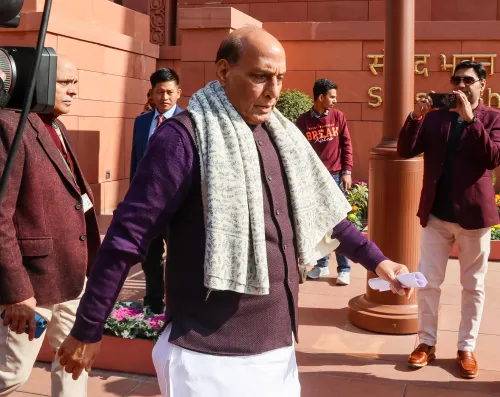
The DAC , chaired by Defence Minister Rajnath Singh , cleared proposals worth ₹2.12 lakh crore on 26 October 2026 .
Nearly 82 per cent of the procurement value will be sourced from Indian industry .
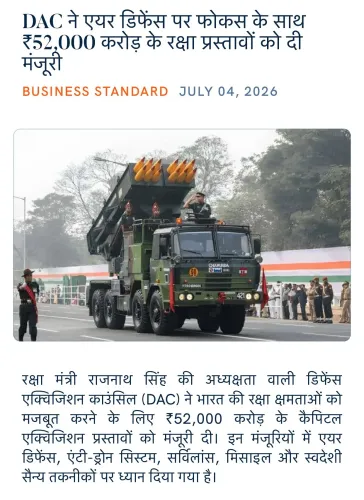
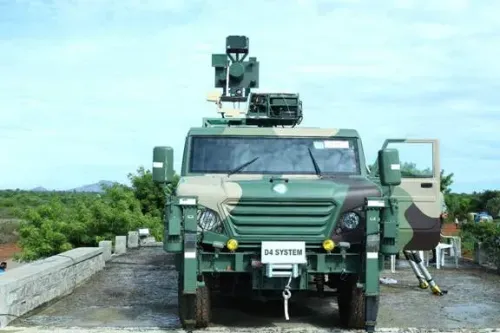
The Indian Army will receive high mobility vehicles, self-propelled tracked guns, kamikaze drones, surveillance UAVs, VSHORADS, and C-UAS systems, among others.
The Indian Navy gets an Active Offboard Decoy System (AODS) and major indigenously designed naval platforms.
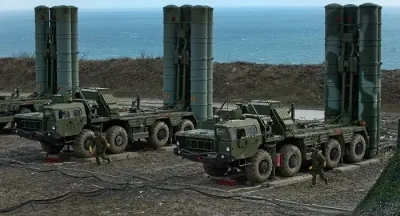
The Indian Air Force is approved for helicopters, air defence systems, weapons, and a mobile X-Band Doppler weather radar .
AoN is an in-principle administrative approval — detailed tendering and contracts will follow in subsequent stages.
The Defence Acquisition Council (DAC), chaired by Defence Minister Rajnath Singh, on Monday, 26 October 2026, accorded Acceptance of Necessity (AoN) for capital acquisition proposals worth ₹2,12,000 crore for the Indian Army, Indian Navy, and Indian Air Force. Crucially, nearly 82 per cent of the total procurement value will be sourced from Indian industry, marking a significant push for domestic defence manufacturing self-reliance.
What the Indian Army Gets
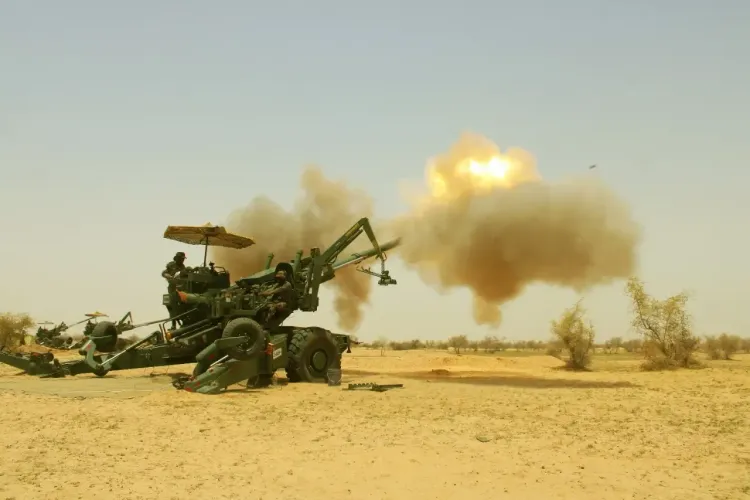
The Army's approved acquisitions span a wide range of platforms and systems. These include high mobility vehicles (HMV), self-propelled tracked gun systems, gun shot response systems (GSRS), light multi-role helicopters (LMRH), very short-range air defence systems (VSHORADS), platform-based counter unmanned aerial systems (C-UAS), unmanned aerial system brick long range, surveillance UAVs, an integrated surveillance and strike system, and a long-range kamikaze drone system.
According to the official ministry statement, the HMVs will 'enhance operational capabilities, logistic support and mobility in challenging terrains,' while the self-propelled tracked gun system will 'provide matching mobility and firepower to mechanised formations.' The GSRS will act as a 'force multiplier, providing real-time situational awareness of the forces.' The VSHORADS is designed to engage new-generation small-size aerial threats, while C-UAS will enhance tank survivability on the modern battlefield.
Naval and Air Force Approvals
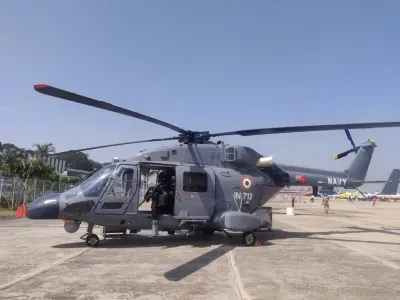
For the Indian Navy, the DAC approved the procurement of an Active Offboard Decoy System (AODS) and other major naval platforms. The AODS is intended to strengthen anti-missile defence, particularly against modern anti-ship missiles deployed by adversaries. The indigenously designed and constructed naval platforms will, according to the ministry, 'possess modern-day warfare capabilities and enhance the combat capability of the Navy.'
For the Indian Air Force (IAF), approvals cover helicopters, air defence systems, weapons, and a mobile X-Band Doppler weather radar system. Special utility helicopters will address critical air transport requirements, while the X-Band radar will provide high-resolution, localised weather surveillance in forward operational areas.
The Atmanirbhar Bharat Defence Push
The 82 per cent domestic sourcing commitment is consistent with the Centre's broader Atmanirbhar Bharat policy framework, which has progressively mandated higher indigenous content in defence procurement. This comes amid an accelerating global arms race and heightened regional security concerns, with India having significantly raised its defence capital expenditure over recent years. Notably, the LMRH will serve both the Army and the Air Force, fulfilling roles ranging from reconnaissance and combat to humanitarian assistance and disaster relief operations.
What Happens Next
AoN approval is the first formal step in India's defence acquisition process — it clears the administrative path for detailed tendering, vendor qualification, and contract negotiations, which can take several years to conclude. Industry bodies representing Indian defence manufacturers are expected to respond positively, given the scale of the domestic procurement mandate. The full contract pipeline emerging from this round will be closely tracked by both public-sector undertakings and private defence players seeking a share of the ₹2.12 lakh crore outlay.
Point of View
Which — if enforced through contract conditions — would be a genuine inflection point for India's private and public defence sector. The AoN stage, however, is the easiest part; India's defence acquisition history is littered with approvals that stalled at vendor qualification or cost negotiation. The real test of Atmanirbhar Bharat in defence is not the headline figure approved but the share that reaches contract signature and, ultimately, delivery. The inclusion of kamikaze drones and counter-UAS systems also signals that the military has drawn clear lessons from the drone-warfare evolution visible in recent global conflicts — an acknowledgement that is long overdue.
NationPress
27 Oct 2026
Frequently Asked Questions
What is the ₹2.12 lakh crore DAC approval for defence forces?
The Defence Acquisition Council on 26 October 2026 granted in-principle administrative approval — called Acceptance of Necessity (AoN) — for capital acquisition proposals worth ₹2,12,000 crore covering new weapons, platforms, drones, helicopters, and radar systems for the Army, Navy, and Air Force. About 82 per cent of the procurement is to be sourced from Indian industry.
What is Acceptance of Necessity (AoN) in Indian defence procurement?
AoN is the first formal stage in India's defence capital acquisition process, representing in-principle administrative clearance for a procurement project. It does not mean contracts have been signed; detailed tendering, vendor qualification, and negotiations follow before a final contract is awarded.
Which systems will the Indian Army receive under the new approvals?
The Army has been approved for high mobility vehicles, self-propelled tracked gun systems, gun shot response systems, light multi-role helicopters, VSHORADS, counter-UAS platforms, long-range surveillance UAVs, an integrated surveillance and strike system, and a long-range kamikaze drone system.
What does the 82 per cent domestic sourcing figure mean?
It means that approximately ₹1.74 lakh crore of the ₹2.12 lakh crore approved procurement is earmarked for Indian manufacturers — both public-sector defence PSUs and private firms. This is consistent with the Centre's Atmanirbhar Bharat policy, which mandates progressively higher indigenous content in defence contracts.
What did the DAC approve for the Indian Navy and Indian Air Force?
The Navy was approved for an Active Offboard Decoy System to counter modern anti-ship missiles, along with indigenously designed major naval platforms. The Air Force received approval for helicopters, air defence systems, weapons, and a mobile X-Band Doppler weather radar for high-resolution weather surveillance in forward areas.