Dausa bus fire: Six victims identified via DNA testing, bodies returned to families
Synopsis
Six passengers killed in the Dausa bus fire — so badly charred they could not be identified visually — have been named through DNA testing within 48 hours of the crash. All eight victims of the Delhi-Mumbai Expressway collision are now identified, with bodies returned to families across Madhya Pradesh and Rajasthan.
Key Takeaways
Six victims of the Dausa bus fire were identified through DNA testing after being burnt beyond recognition.
The accident on the Delhi-Mumbai Expressway on 1 July killed eight people — six in the blaze, two from head injuries.
Identified victims include Bhumi Bhaur , Priyanka Pandey , Deepak Tanwar , Nirmala Gupta , Devendra Singh , and bus driver Ram Avtar .
Kuldeep (bus operator) and Dharamsingh (Jhabua district, MP) were identified earlier by conventional means.
22 passengers were injured and admitted to Dausa District Hospital .
All bodies have been handed over to families following post-mortem examinations.
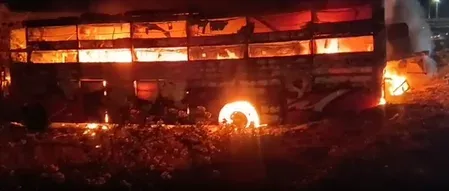
Six of the eight passengers killed in a catastrophic bus-trailer collision and fire on the Delhi-Mumbai Expressway in Rajasthan's Dausa district have been identified through DNA testing, police officials confirmed on 3 July. The victims, whose bodies were burnt beyond visual recognition, have since had post-mortem examinations conducted and their remains handed over to their families.
The Victims Identified
DNA analysis confirmed the identities of Bhumi Bhaur, a resident of Bajrang Nagar, Indore; Priyanka Pandey, a resident of Barwah; Deepak Tanwar, also from Barwah in Madhya Pradesh's Khargone district; Nirmala Gupta, a resident of Annapurna Nagar, Indore; Devendra Singh, a resident of Rampura Kalan, Sidhganj, Madhya Pradesh; and Ram Avtar, the driver of the sleeper bus, according to police officials.
DNA samples of the first four victims were dispatched to Jaipur for laboratory testing on Wednesday evening. After reports confirmed their identities, post-mortems were conducted and their bodies released to relatives. Samples for Devendra Singh and bus driver Ram Avtar were sent on Thursday morning, with the same procedure followed upon confirmation.
Two Other Victims Identified Earlier
The remaining two fatalities had been identified through conventional means prior to the DNA process. Kuldeep, the bus operator, died from head injuries sustained in the crash; his body was handed over to his family after post-mortem. Dharamsingh, a resident of Bhutedi village in Madhya Pradesh's Jhabua district, had his remains returned to his family on Wednesday evening.
How the Accident Unfolded
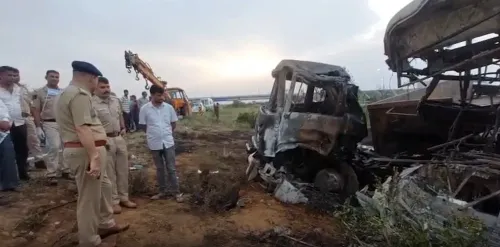
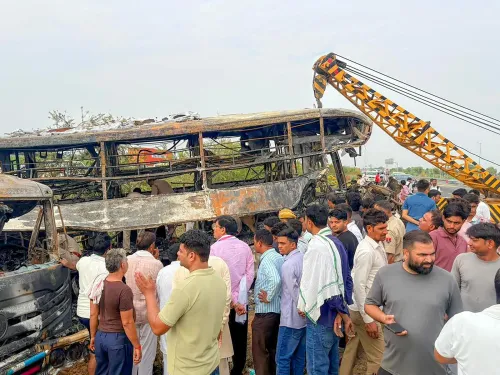
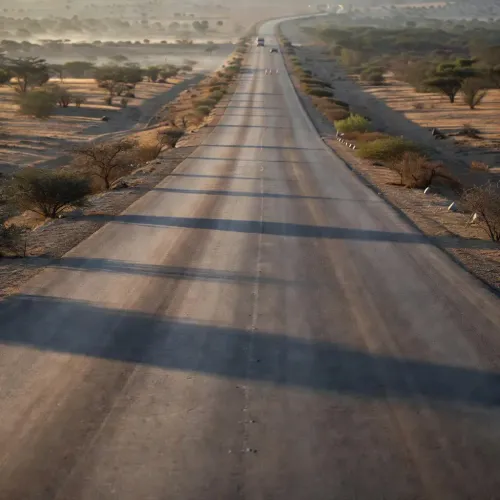
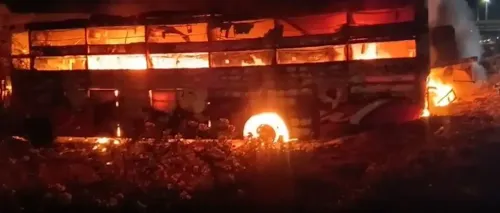
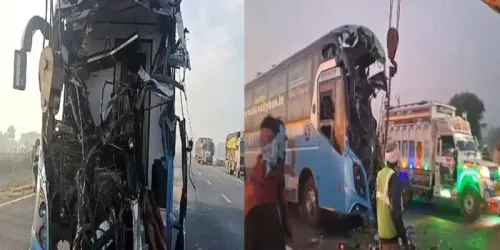
The tragedy struck late on 1 July, in the early morning hours, when a sleeper bus collided with a trailer on the Delhi-Mumbai Expressway, triggering a massive fire that rapidly engulfed the vehicle. Of the eight people who lost their lives, six died trapped in the blaze while two others succumbed to head injuries from the impact. Police and emergency responders shifted all eight deceased and 22 injured passengers to Dausa District Hospital.
Why DNA Testing Was Necessary
The severity of the fire left several bodies so badly charred that visual identification was impossible. Authorities initiated DNA profiling — sending samples in two batches to Jaipur — to establish identities before the bodies could legally be released to families. This is standard forensic protocol in mass-casualty fire incidents where conventional identification methods fail. Notably, the entire identification and handover process was completed within roughly 48 hours of the accident, reflecting coordinated effort by district police and hospital authorities.
What Comes Next
With all eight victims now identified and bodies returned to families, authorities are expected to focus on the accident investigation — including the condition of the vehicles, road lighting, and driver fatigue — on a stretch of expressway that has seen multiple fatal collisions since its opening. The 22 injured passengers remain under medical care at Dausa District Hospital, and their condition has not been officially updated.
Point of View
But it should not obscure the larger question: why does the Delhi-Mumbai Expressway keep producing mass-casualty accidents? The collision profile here — a sleeper bus hitting a trailer in early-morning darkness — is a pattern repeated on India's high-speed corridors. Until investigators publish findings on vehicle fitness, driver hours, and road infrastructure at the collision point, the forensic efficiency will remain a footnote to a preventable tragedy.
NationPress
1 Oct 2026
Frequently Asked Questions
Who were the six victims identified through DNA testing in the Dausa bus fire?
The six victims identified via DNA are Bhumi Bhaur (Bajrang Nagar, Indore), Priyanka Pandey (Barwah), Deepak Tanwar (Barwah, Khargone district, MP), Nirmala Gupta (Annapurna Nagar, Indore), Devendra Singh (Rampura Kalan, Sidhganj, MP), and bus driver Ram Avtar. Their identities were confirmed through samples sent to Jaipur in two batches on Wednesday evening and Thursday morning.
What caused the Dausa bus fire on the Delhi-Mumbai Expressway?
A sleeper bus collided with a trailer on the Delhi-Mumbai Expressway in Rajasthan's Dausa district in the early hours of 1 July, triggering a massive fire that engulfed the bus. Six passengers were killed in the blaze and two others died from head injuries sustained in the collision.
Why was DNA testing needed to identify the victims?
Several bodies were so severely charred in the fire that visual identification was not possible. Authorities conducted DNA profiling — sending samples to a Jaipur laboratory — to legally establish identities before releasing the remains to families.
How many people were injured in the Dausa bus accident?
Twenty-two passengers were injured in the accident and were shifted to Dausa District Hospital along with the eight deceased. Their current medical condition has not been officially updated.
Have all eight victims' bodies been returned to their families?
Yes. All eight victims have been identified — six through DNA testing and two by conventional means — and their bodies handed over to families following post-mortem examinations. The process was completed by Thursday, 3 July.