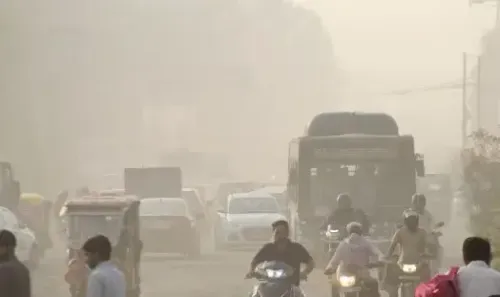
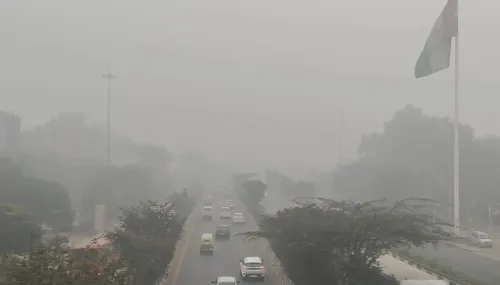
Delhi's Air Quality on the Rise: GRAP Restrictions Fully Lifted
Synopsis
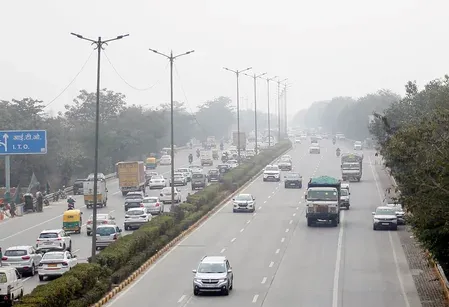
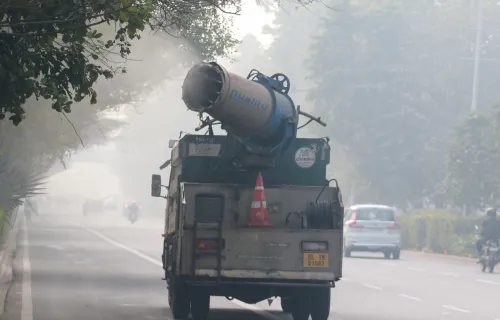
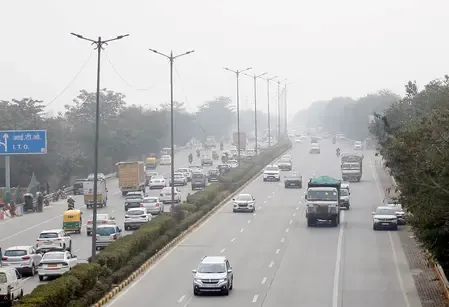
On March 17, New Delhi experienced a significant uptick in air quality, leading to the complete lifting of all Graded Response Action Plan (GRAP) restrictions. This positive change marks a hopeful turn for the Delhi-NCR region, as officials anticipate continued improvement.
Key Takeaways
Delhi's AQI improved significantly , with many areas in the 'satisfactory' and 'moderate' categories.
GRAP restrictions have been fully lifted, allowing for greater flexibility in operations.
Favorable meteorological conditions played a crucial role in this improvement.
The AQI is expected to remain moderate in the coming days.
GRAP stages were gradually lifted as air quality improved.
On March 17, New Delhi (NationPress) experienced a significant enhancement in its air quality, with the Air Quality Index (AQI) categorizing many monitoring stations as 'satisfactory' and 'moderate.' Given this positive turn of events, all measures under the Graded Response Action Plan (GRAP) have been completely lifted in the Delhi-NCR area, as confirmed by officials on Monday.
Data from monitoring stations revealed that AQI levels showed remarkable improvement. Ashok Vihar reported an AQI of 144, while Aya Nagar stood at 132, Bawana at 165, Burari Crossing at 120, CRRI Mathura Road at 121, Delhi Cantonment at 122, Chandni Chowk at 134, and the Commonwealth Sports Complex at 133. Other locations, including DTU at 93, Dwarka Sector-8 at 157, IGI Airport (T3) at 129, IIT Delhi at 127, JNU at 113, and Narela at 140, also showed positive results. However, some areas such as Mundka (170), Patparganj (164), Rohini (174), Shadipur (185), and Wazirpur (197) remained in the moderate category.
The Commission for Air Quality Management (CAQM) credited the improvement to favorable meteorological conditions. On Monday, Delhi's overall AQI was recorded at 119. An official stated, "Forecasts from the India Meteorological Department (IMD) and IITM suggest that the AQI is expected to stay in the moderate range in the upcoming days."
With GRAP measures being revoked, several restrictions have been lifted. This includes the prohibition of coal and firewood usage in tandoors at hotels, restaurants, and outdoor eateries, alongside the relaxation of limitations on diesel generators, which are now allowed beyond emergencies.
GRAP consists of four stages that are activated based on AQI levels. GRAP-1 is applicable when AQI ranges from 201 to 300, GRAP-2 from 301 to 400, GRAP-3 from 401 to 500, and GRAP-4 when AQI exceeds 450.
This year, GRAP-4 restrictions were imposed on January 17 due to severe pollution levels. As air quality improved gradually, these measures were eased progressively. GRAP-4 was lifted on January 20, followed by GRAP-3 two days later, and GRAP-2 restrictions were removed on February 18.
Point of View
It is essential to highlight that the recent enhancement in Delhi's air quality is a positive development for residents and the environment. The lifting of GRAP restrictions reflects a hopeful trend, although continued monitoring is necessary to maintain this improvement.
NationPress
3 Oct 2026
Frequently Asked Questions
What prompted the lifting of GRAP restrictions in Delhi?
The lifting of GRAP restrictions in Delhi was prompted by a significant improvement in air quality, with many areas recording AQI levels in the 'satisfactory' and 'moderate' categories.
How did the air quality improve in Delhi?
The improvement in air quality was attributed to favorable meteorological conditions, which contributed to lower pollution levels across various monitoring stations.
What are the stages of the Graded Response Action Plan (GRAP)?
GRAP consists of four stages: GRAP-1 (AQI 201-300), GRAP-2 (AQI 301-400), GRAP-3 (AQI 401-500), and GRAP-4 (AQI above 450).
When were the GRAP restrictions first implemented this year?
GRAP-4 restrictions were first implemented on January 17 due to severe pollution levels.
What areas in Delhi reported higher AQI levels?
Areas like Mundka, Patparganj, and Wazirpur reported higher AQI levels, remaining in the moderate range despite the overall improvement.