CAQM lifts GRAP Stage-I in Delhi-NCR after AQI drops to 123
Synopsis
Delhi's AQI fell from 207 to 123 in a single day — enough for CAQM to unanimously lift all GRAP Stage-I curbs across NCR with immediate effect on 29 May. The rollback, driven by strong winds and light rain, comes just ten days after restrictions were imposed, and hinges on forecasts that 'Moderate' conditions will hold through the coming days.
Key Takeaways
CAQM revoked all GRAP Stage-I restrictions across NCR with immediate effect on 29 May .
Delhi's daily average AQI dropped from 207 to 123 within 24 hours, aided by strong winds and light rain.
GRAP Stage-I had been invoked on 19 May after Delhi's AQI began rising into the 'Poor' band.
IMD and IITM forecasts indicate AQI is likely to remain in the 'Moderate' category in the near term.
All agencies have been directed to maintain compliance with statutory norms to prevent air quality from slipping back to 'Poor'.
The Sub-Committee will continue monitoring and may re-invoke GRAP stages if conditions deteriorate.
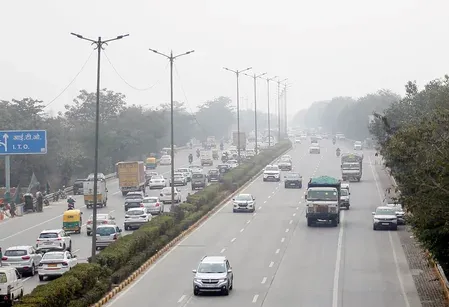
The Commission for Air Quality Management in NCR and Adjoining Areas (CAQM) on Friday, 29 May revoked all restrictions under Stage-I of the Graded Response Action Plan (GRAP) across the entire National Capital Region (NCR) with immediate effect, after Delhi's air quality index improved sharply from 207 on Thursday to 123 on Friday — moving from the 'Poor' category to 'Moderate'.
What Triggered the Rollback
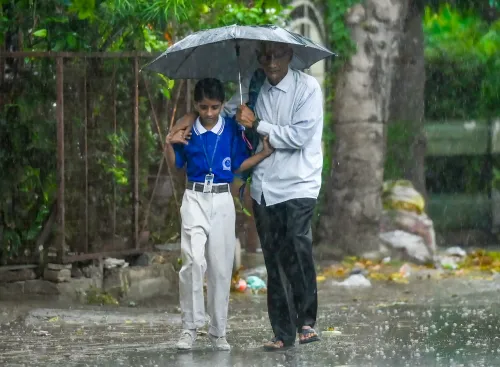
The CAQM Sub-Committee on GRAP met on Friday to assess current air quality data and meteorological forecasts from the India Meteorological Department (IMD) and the Indian Institute of Tropical Meteorology (IITM). Strong winds accompanied by light rain drove a significant improvement in Delhi's ambient air quality, with the AQI recorded at 123 at 4 pm on Friday. Both IMD and IITM forecasts indicate the AQI is likely to remain in the 'Moderate' category over the coming days.
The Sub-Committee had originally invoked GRAP Stage-I on 19 May, when Delhi's daily average AQI began showing a sustained upward trend. The revocation, taken unanimously, comes just ten days after those restrictions were put in place.
What GRAP Stage-I Restrictions Covered
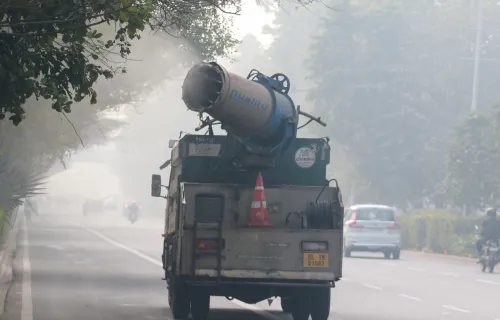
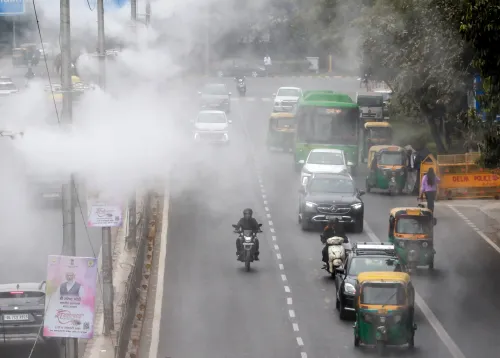
GRAP Stage-I — triggered when Delhi's AQI enters the 'Poor' band (201–300) — typically imposes curbs on dust-generating construction activity, diesel generator use, and open burning of waste and biomass. Its revocation means these sector-specific restrictions are no longer in force across NCR, though baseline statutory norms remain applicable.
What Agencies Have Been Told
The CAQM Sub-Committee has directed all relevant agencies of state governments and the Government of the National Capital Territory of Delhi to strictly implement all statutory directions, advisories, and orders issued by the Commission. Agencies have also been asked to comply with rules and guidelines from the Ministry of Environment, Forest and Climate Change, the Central Pollution Control Board (CPCB), and respective state pollution control boards and the Delhi Pollution Control Committee (DPCC). These baseline measures are considered essential to sustain the improved AQI and prevent a relapse into the 'Poor' category.
Monitoring Continues
The Sub-Committee has stated it will continue to closely track air quality across the region and will review the situation periodically. Further decisions — including potential re-invocation of GRAP stages — will depend on real-time AQI readings and updated forecasts from IMD and IITM. With the pre-monsoon season underway, meteorological conditions remain a key variable in Delhi's air quality trajectory.
Point of View
Rather than pre-emptive, Delhi's air quality governance remains. Each GRAP cycle follows the same arc: AQI spikes, restrictions are imposed, weather intervenes, restrictions are lifted. The structural drivers — construction dust, vehicular emissions, stubble burning — are unaddressed between episodes. Until baseline enforcement is consistent year-round, GRAP will keep functioning as an emergency patch rather than a durable solution.
NationPress
27 Sept 2026
Frequently Asked Questions
Why did CAQM revoke GRAP Stage-I in Delhi-NCR on 29 May?
CAQM revoked GRAP Stage-I because Delhi's AQI improved sharply from 207 to 123 within a day, moving from 'Poor' to 'Moderate', driven by strong winds and light rain. IMD and IITM forecasts also indicate the AQI is likely to stay in the 'Moderate' range in the coming days.
What is GRAP Stage-I and what restrictions does it impose?
GRAP Stage-I is activated when Delhi's AQI enters the 'Poor' band (201–300) and imposes curbs on dust-generating construction, diesel generator use, and open burning of waste or biomass across NCR. Its revocation lifts these specific restrictions, though baseline statutory environmental norms remain in force.
When was GRAP Stage-I originally invoked this time?
The CAQM Sub-Committee invoked GRAP Stage-I on 19 May 2025, when Delhi's daily average AQI began showing a sustained upward trend. The revocation on 29 May came ten days later after conditions improved.
Will GRAP restrictions be re-imposed if air quality worsens again?
Yes. The CAQM Sub-Committee has stated it will continue to monitor air quality closely and will review the situation periodically. If Delhi's AQI deteriorates and re-enters the 'Poor' or worse category, the relevant GRAP stage can be re-invoked.
What are agencies required to do now that GRAP Stage-I is lifted?
All agencies of NCR state governments and the Delhi government have been directed to strictly implement all statutory directions and advisories from CAQM, CPCB, the Ministry of Environment, and respective state pollution control boards. These baseline measures are meant to sustain the current improvement and prevent a relapse.