Delhi AQI at 349 on Nov 14: IIT Delhi, ITO still in severe zone

Synopsis
Delhi's AQI edged down to 349 on 14 November, but the improvement is thin — IIT Delhi and ITO are still in the 'severe' zone above 400, and PM2.5 remains the dominant pollutant. After Friday's eight-hour severe spell, the capital's air remains hazardous for large swaths of its population.
Key Takeaways
Delhi's overall AQI stood at 349 on 14 November 2026 , a marginal improvement from Friday's severe levels.
IIT Delhi recorded an AQI of 419 and ITO registered 414 — both in the 'severe' category.
Chandni Chowk (395), JNU (390), and Anand Vihar (389) remained in the 'very poor' range.
On Friday, Delhi's AQI crossed 400 and stayed in the severe category for nearly eight hours .
The CPCB classifies AQI from 301–400 as 'very poor' and 401–500 as 'severe'.
PM2.5 and PM10 remain the primary pollutants driving elevated readings across the city.
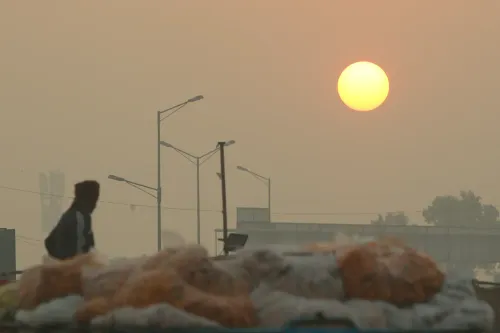
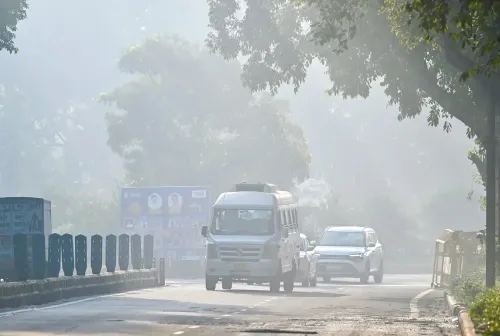
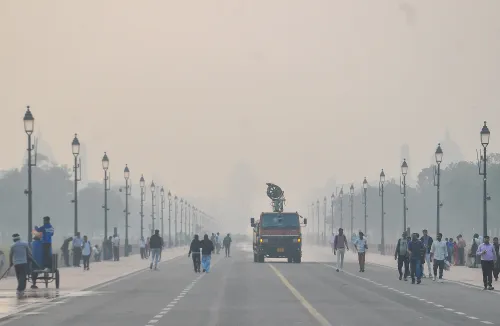
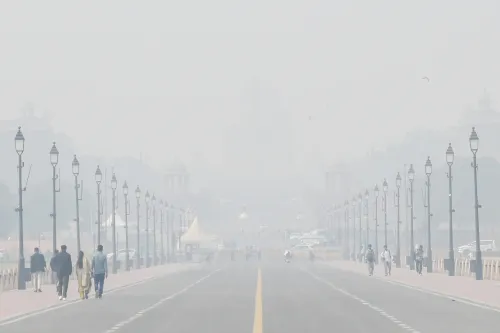
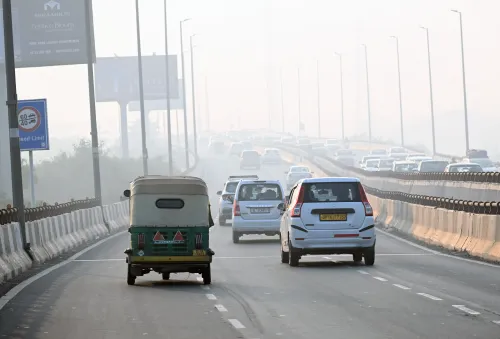
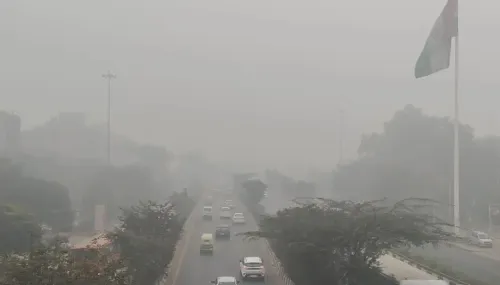
Delhi's overall Air Quality Index (AQI) stood at 349 on Saturday, 14 November 2026, registering a marginal improvement from the previous day, when pollution levels breached the 400-mark and remained in the 'severe' category for nearly eight hours. Despite the slight easing, the national capital's air quality stayed firmly in the 'very poor' bracket, with PM2.5 and PM10 identified as the primary pollutants.
Hotspots Still in Severe Category
Even as the city-wide average edged lower, two monitoring stations continued to log 'severe' readings. IIT Delhi recorded an AQI of 419, while the ITO monitoring station registered 414 — both well above the 401 threshold that the Central Pollution Control Board (CPCB) defines as the floor for the severe category.
Other stations across the capital also reported elevated readings. Chandni Chowk posted an AQI of 395, Jawaharlal Nehru University (JNU) recorded 390, and Anand Vihar stood at 389. Rohini clocked 366 and Narela registered 359, indicating that pollution burden remained substantial across north and central Delhi.
Comparatively Lower Readings at Airport and RK Puram
Delhi Airport recorded an AQI of 348, while the RK Puram monitoring station logged 315. Both readings fall within the 'very poor' range, according to the CPCB's classification scale, though they were markedly lower than the severe-zone stations.
How the CPCB Classifies AQI Levels
According to the CPCB, an AQI between 301 and 400 is categorised as 'very poor', indicating that prolonged exposure can cause respiratory illness in the general population. Readings between 401 and 500 are classified as 'severe', posing health risks even for healthy individuals and potentially triggering emergency-level restrictions under the Graded Response Action Plan (GRAP).
Context and What to Watch
This comes amid Delhi's annual winter pollution cycle, when a combination of stubble burning in neighbouring states, dropping temperatures, and calm winds traps pollutants close to ground level. The city had spent a significant portion of Friday morning under severe-category air, underscoring how fragile the current improvement is. Authorities and residents will be closely watching whether weekend conditions allow further recovery or whether pollution climbs again as temperatures dip further into the week.
Point of View
And the city's overall reading still exposes millions to conditions the CPCB itself flags as causing respiratory illness across the general population. The annual ritual of marginal-improvement headlines risks normalising what is, by any public-health standard, an emergency. What is conspicuously absent from the data is a meaningful policy response timed to this year's pollution window rather than a reactive scramble after the numbers peak.
NationPress
14 Nov 2026
Frequently Asked Questions
What was Delhi's AQI on 14 November 2026?
Delhi's overall AQI was 349 on 14 November 2026, placing it in the 'very poor' category. This was a marginal improvement from Friday, when the city's AQI exceeded 400 for nearly eight hours.
Which areas in Delhi had the worst air quality on 14 November?
IIT Delhi recorded the highest AQI at 419, followed by ITO at 414 — both in the 'severe' category. Chandni Chowk (395), JNU (390), and Anand Vihar (389) were also among the most polluted areas.
What do 'very poor' and 'severe' AQI categories mean?
According to the CPCB, an AQI between 301 and 400 is 'very poor', meaning prolonged exposure can cause respiratory illness in the general population. An AQI between 401 and 500 is 'severe', posing health risks even to healthy individuals.
What are the main pollutants driving Delhi's poor air quality?
PM2.5 and PM10 are the primary pollutants identified by the CPCB as responsible for the elevated AQI readings across Delhi. Stubble burning in neighbouring states, low temperatures, and calm winter winds trap these particles near ground level.
How does Saturday's AQI compare to Friday's levels?
On Friday, Delhi's AQI crossed the 400 mark and remained in the 'severe' category for nearly eight hours from early morning until around noon. Saturday's city-wide average of 349 represents a marginal decline, though several stations remained in the severe zone.