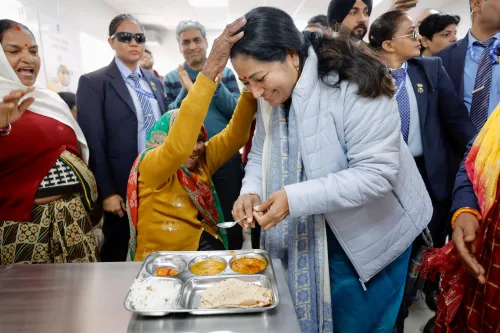
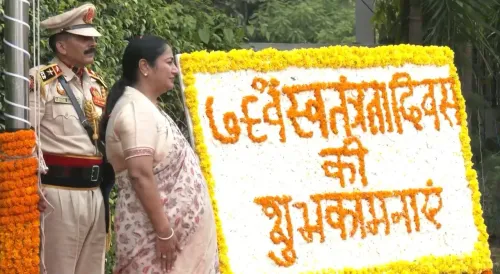
CM Rekha Gupta: 100 Atal Canteens Now Feed 1 Lakh Daily in Delhi

Synopsis
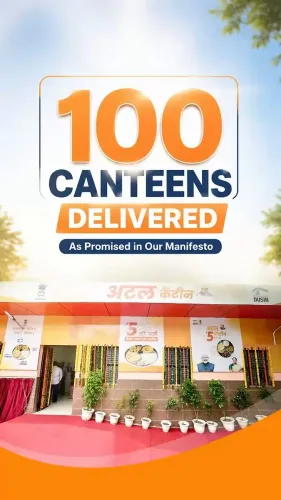
Delhi Chief Minister Rekha Gupta announced on September 25, 2026 that 100 Atal Canteens are now operational across the capital, collectively serving nearly one lakh people daily with affordable, nutritious meals — achieving the milestone in under eight months.
Key Takeaways
100 Atal Canteens have become operational across Delhi in under 8 months .
The canteens collectively serve nearly 1 lakh people every day with subsidised, nutritious meals.
The scheme is framed under the Antyodaya welfare philosophy, targeting the city's most economically vulnerable residents.
Delhi's rollout follows similar subsidised meal initiatives in other BJP-governed states , reflecting a party-wide governance pattern.
The announcement was made as part of the #SevaSankalpAbhiyan campaign, highlighting service delivery under PM Narendra Modi 's leadership.
Future expansion and independent nutritional or performance audits will determine the programme's long-term credibility.
Eight months, 100 canteens, and nearly one lakh meals served every single day — Delhi Chief Minister Rekha Gupta on Friday, September 25, 2026, announced a significant milestone in the capital's subsidized meal programme, framing it as the ground-level expression of Prime Minister Narendra Modi's Antyodaya vision.
What Atal Canteens Are — and Who They Serve
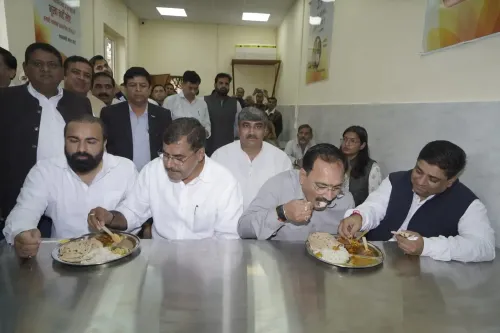
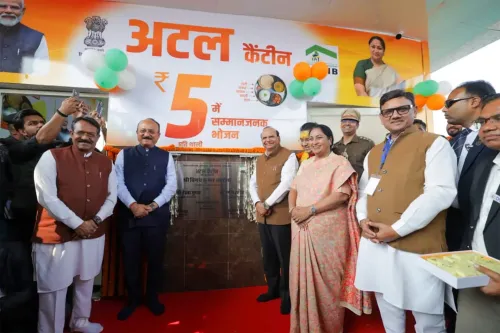
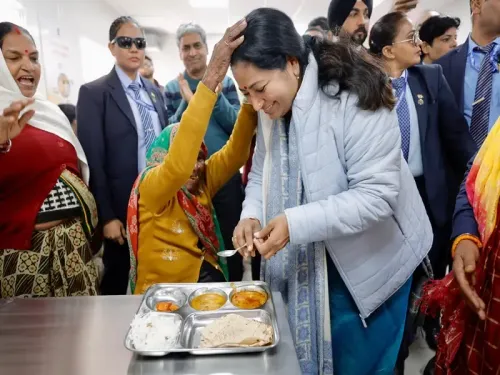
The Atal Canteen scheme is the Delhi government's initiative to put affordable, nutritious and hygienic food within reach of the city's most economically vulnerable residents — daily wage workers, construction labourers, street vendors, and others who live on the margins of the formal economy. Posting on X, CM Gupta wrote: 'Atal Canteens are making affordable, nutritious and hygienic meals accessible to those who need them the most.'
The canteens operate under the ideological umbrella of Antyodaya — a Sanskrit phrase meaning 'rise of the last person' — which has been a defining welfare framework for the BJP since its roots in the thought of Pandit Deendayal Upadhyaya. The approach received institutional form when the Antyodaya Anna Yojana was launched in 2000, creating targeted, subsidised food access for the country's poorest households.
Delhi's Rollout Within a Larger BJP Playbook
Delhi's programme is not without precedent. Similar subsidised canteen models have been rolled out in other BJP-governed states, each localising the Antyodaya framework to urban and semi-urban realities. What distinguishes Delhi's version is the speed of scale: 100 operational outlets in under eight months signals an aggressive deployment strategy in a densely populated city where food insecurity in the informal workforce is acute.
The announcement was made under the hashtag #SevaSankalpAbhiyan — the party's ongoing campaign spotlighting service delivery and welfare outreach — positioning the canteens as a living proof-point of governance, not just policy intent.
What Comes Next for the Network
The question the milestone naturally raises: can quality hold as the network expands further? Official performance audits or nutritional assessments from the Delhi government will be the real test of whether the canteens are delivering on dignity as well as caloric count. Watchdogs and citizens alike will be looking for transparency in how the programme is monitored and whether access is genuinely reaching the intended beneficiaries — not just the numbers on a government press release.
For now, seva ki kahani (the story of service) is being written in meal counters across the capital. Whether it becomes a durable urban welfare model — or a political footnote — depends on what happens after the milestone.
Point of View
Tangible, ground-level scheme that generates both welfare outcomes and political messaging. Delhi, as the national capital and a city the BJP returned to power after a prolonged absence, is a particularly high-stakes laboratory for this approach. The speed of rollout — 100 canteens in eight months — signals political urgency as much as administrative efficiency. The durability of the model, however, will hinge on independent verification of quality and reach, which remain the missing piece of the public record so far.
NationPress
25 Sept 2026
Frequently Asked Questions
What are Atal Canteens in Delhi?
Atal Canteens are a Delhi government initiative that provides affordable, nutritious and hygienic subsidised meals to economically vulnerable residents, including daily wage workers and urban poor. As of September 2026 , 100 such canteens are operational across the city.
How many people do Delhi's Atal Canteens serve daily?
According to Delhi CM Rekha Gupta , the Atal Canteens serve nearly 1 lakh (100,000) people every day across the capital.
What is the Antyodaya vision CM Rekha Gupta mentioned?
'Antyodaya' — meaning 'rise of the last person' — is a welfare philosophy central to the BJP 's governance framework. It was institutionalised through the Antyodaya Anna Yojana in 2000 , which provided targeted subsidised food access to the poorest households in India.
What is Seva Sankalp Abhiyan?
Seva Sankalp Abhiyan is a BJP campaign that spotlights service delivery and welfare outreach programmes at the state level, under which the Atal Canteen milestone was announced.
Are Atal Canteens unique to Delhi?
No. Similar subsidised meal canteen models have been implemented in other BJP-governed states before Delhi. Delhi's scheme, however, has scaled to 100 outlets in under 8 months , making it one of the faster rollouts of such a programme.