Delhi HC issues notice on PIL against 3-year Bar rule for APP recruitment
Synopsis
The Delhi High Court has issued notice on a PIL that directly challenges the 3-year Bar practice barrier blocking fresh law graduates from Delhi's Assistant Public Prosecutor recruitment — citing Supreme Court precedent and alternative models from Haryana, UP, and Rajasthan that show the rule is not the only path to prosecutorial competence.
Key Takeaways
The Delhi High Court bench of Chief Justice Devendra Kumar Upadhyaya and Justice Tejas Karia issued notice on 23 September 2026 .
The PIL, filed by Bhumika Trust , challenges the 3-year Bar practice rule under the APP Recruitment Rules, 2025 , notified on 19 January 2026 .
The petition argues the rule unconstitutionally excludes fresh law graduates and newly enrolled advocates from the Assistant Public Prosecutor recruitment process.
Respondents — the Union government , Delhi government , and Directorate of Prosecution — have been asked to file replies.
Eight vacancies in the current recruitment are reserved for Persons with Benchmark Disabilities , raising additional equity concerns flagged by the petitioner.
Interim relief sought includes provisionally allowing eligible candidates to apply pending the PIL's final outcome.
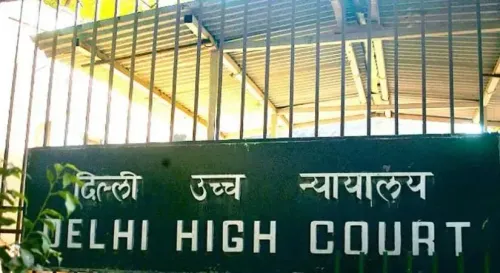
The Delhi High Court on Wednesday, 23 September 2026, issued notice on a Public Interest Litigation (PIL) challenging the mandatory requirement of three years' practice at the Bar as an eligibility condition for direct recruitment to the post of Assistant Public Prosecutor (APP) in Delhi. The notice was issued to the Union government, the Delhi government, and the Directorate of Prosecution.
The Bench and the Petition
A bench comprising Chief Justice Devendra Kumar Upadhyaya and Justice Tejas Karia sought responses from the three respondents on the plea filed by Bhumika Trust through advocate Jayant Singh Raghav. The petition challenges the three-year Bar experience condition prescribed under the Directorate of Prosecution, Government of NCT of Delhi, Assistant Public Prosecutor Recruitment Rules, 2025, notified on 19 January 2026.
Core Challenge: Exclusion of Fresh Law Graduates
The petitioner argues that the three-year Bar practice requirement effectively shuts out otherwise qualified law graduates and newly enrolled advocates from even participating in the recruitment process. The petition contends that while professional competence is a legitimate objective, it need not be achieved exclusively through a fixed period of prior Bar practice.
According to the plea, less exclusionary alternatives — such as structured induction training, probation, practical attachments, and supervised prosecutorial training — could equally ensure professional preparedness without categorically excluding a qualified class of candidates. The petition invokes constitutional guarantees of equality and equality of opportunity in public employment, arguing that an eligibility condition which entirely bars an otherwise qualified class from competing must withstand strict constitutional scrutiny.
Supreme Court Precedents Cited
The petitioner has drawn on two Supreme Court judgments to buttress its challenge. In Ayush Yardi v. State of Madhya Pradesh, the Supreme Court held that the three-year Bar practice requirement could not be applied against candidates with disabilities, striking it down for Persons with Disabilities (PwD) candidates. The plea also references the Supreme Court's subsequent ruling in Bhumika Trust v. Union of India, which modified earlier directions that had prescribed three years' practice for recruitment to the Civil Judge (Junior Division) cadre, indicating that professional preparedness can be achieved through structured institutional training rather than a fixed period of Bar practice alone.
Other States' Models and PwD Concerns
The petition points to recruitment practices in Haryana, Uttar Pradesh, and Rajasthan, where three years' prior Bar practice was not prescribed as an essential eligibility condition for Assistant District Attorney or Assistant Prosecution Officer posts, respectively. These models, the petitioner argues, demonstrate viable alternative approaches to entry-level prosecutorial recruitment.
The plea has also flagged concerns specific to candidates with disabilities, noting that the ongoing Delhi APP recruitment carries eight vacancies reserved for Persons with Benchmark Disabilities. It submits that reservations alone may not deliver substantive equality if an upstream eligibility condition unjustifiably excludes such candidates from the selection pool.
Relief Sought
The petitioner has sought a declaration that the three-year practice requirement is unconstitutional and arbitrary. It has also requested interim protection — specifically, a direction to provisionally permit educationally qualified candidates to submit applications and participate in the selection process, pending the PIL's final outcome. The matter is now before the court for responses from all three named respondents.
Point of View
Posts go unfilled or draw only a narrow socioeconomic pool. The PwD angle is particularly pointed: reserving seats while maintaining an eligibility bar that the Supreme Court already found problematic for disabled candidates is a contradiction the court will likely probe closely.
NationPress
23 Sept 2026
Frequently Asked Questions
What is the Delhi High Court PIL about Assistant Public Prosecutors?
The PIL, filed by Bhumika Trust, challenges the mandatory requirement of three years' practice at the Bar as an eligibility condition for direct recruitment to the post of Assistant Public Prosecutor (APP) in Delhi. The petition argues the rule is unconstitutional as it bars otherwise qualified law graduates from even applying.
Which recruitment rules are being challenged in the PIL?
The petition challenges the Directorate of Prosecution, Government of NCT of Delhi, Assistant Public Prosecutor Recruitment Rules, 2025, which were notified on 19 January 2026. These rules prescribe three years of Bar practice as a mandatory eligibility criterion for direct recruitment.
What alternative approach does the petitioner suggest?
The petitioner argues that structured induction training, probation, practical attachments, and supervised prosecutorial training could replace the rigid three-year Bar practice requirement. It cites Haryana, Uttar Pradesh, and Rajasthan as states that recruit prosecutors without such a pre-condition.
How have Supreme Court judgments supported the PIL's arguments?
The petition cites Ayush Yardi v. State of Madhya Pradesh, where the Supreme Court struck down the three-year Bar practice rule as applied to PwD candidates, and Bhumika Trust v. Union of India, where the court modified directions prescribing Bar practice for Civil Judge recruitment. Both rulings support the view that structured training is a valid substitute.
What interim relief has the petitioner sought from the Delhi High Court?
The petitioner has sought a direction to provisionally allow educationally qualified candidates — who lack three years' Bar experience — to submit applications and participate in the ongoing APP selection process, subject to the final outcome of the PIL.