Delhi HC seeks NIA reply on Asiya Andrabi's plea against life sentence
Synopsis
The Delhi High Court has put the NIA on notice over Asiya Andrabi's challenge to her life sentence in the Dukhtaran-e-Millat terror conspiracy case — the first major judicial test of a verdict the trial court said struck at the 'very existence of India.' With the case listed for October, the appeals of all three convicts now hang before a Division Bench.
Key Takeaways
The Delhi High Court issued notice to the NIA on Monday on a plea by Asiya Andrabi challenging her life sentence in a terror conspiracy case.
A Division Bench of Justice Prathiba M.
Singh and Justice Vikas Mahajan also noticed the NIA on appeals by associates Sofi Fehmeeda and Nahida Nasreen , who are contesting 30-year jail terms.
All three convicts have sought suspension of their sentences pending the appeals.
The trial court had held that their acts struck at the 'very existence of India' and were aimed at the secession of Jammu and Kashmir .
The case originated from a 2018 NIA investigation into the banned outfit Dukhtaran-e-Millat (DeM) , founded by Andrabi in 1987 .
The matter is listed for hearing in October .
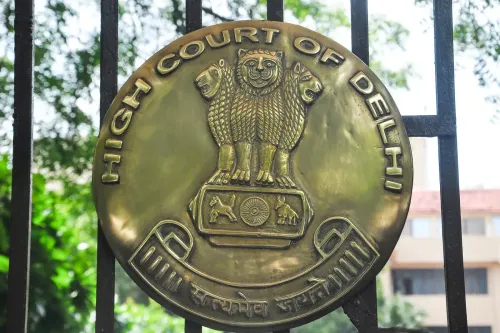
The Delhi High Court on Monday issued notice to the National Investigation Agency (NIA), seeking its response to a petition filed by Kashmiri separatist leader Asiya Andrabi challenging the life sentence handed to her in a terror conspiracy case. The court has listed the matter for hearing in October.
Key Developments
A Division Bench comprising Justice Prathiba M. Singh and Justice Vikas Mahajan also issued notice to the NIA on separate appeals filed by Andrabi's associates, Sofi Fehmeeda and Nahida Nasreen, who are contesting their 30-year jail terms. All three convicts have additionally sought suspension of their sentences pending the appeals.
Earlier this year, a Delhi sessions court sentenced Andrabi to life imprisonment on charges including conspiracy to commit terrorist acts and waging war against the Government of India. Fehmeeda and Nasreen were each awarded 30-year sentences by the same court.
What the Trial Court Found
Additional Sessions Judge Chander Jit Singh of the Karkardooma Courts, while pronouncing the quantum of sentence, held that the acts of the convicts struck at the 'very existence of India' and were aimed at the secession of Jammu and Kashmir, an integral part of the country.
The trial court observed that the evidence on record showed the convicts had 'not abhorred violence' and had indirectly promoted it by glorifying slain militants and propagating secessionist ideology. It further noted that infusing — particularly among the youth — the idea that Kashmir was not a part of India could evoke sentiments driving individuals toward violence.
Background of the Case
The case stems from a 2018 NIA investigation alleging that the banned outfit Dukhtaran-e-Millat (DeM), headed by Andrabi, used social media, public speeches, and other platforms to advocate Jammu and Kashmir's merger with Pakistan. According to the prosecution, the accused eulogised militants, incited unlawful activities including stone-pelting, and promoted narratives rooted in the two-nation theory through videos and online posts.
Andrabi was convicted under multiple provisions of the Unlawful Activities (Prevention) Act (UAPA), including Section 18 (conspiracy for terrorist acts) and Section 20 (membership of a terrorist organisation), along with Indian Penal Code offences of criminal conspiracy and waging war against the state. Fehmeeda and Nasreen were also convicted under several provisions of the anti-terror law and the IPC.
Andrabi, who founded the all-women separatist organisation Dukhtaran-e-Millat in 1987, was arrested in April 2018. The trial court noted that the organisation had largely become defunct following her arrest.
Political Reactions to the Sentencing
The original sentencing drew mixed political responses. Bharatiya Janata Party (BJP) leaders described the verdict as a strong message against terrorism. National Conference leader Sheikh Bashir said the judgment should be respected as it was delivered after due judicial process, while noting that Andrabi was free to pursue legal remedies before a higher court.
Peoples Democratic Party (PDP) chief Mehbooba Mufti, while acknowledging ideological differences with Andrabi, urged consideration of humanitarian aspects, pointing out that Andrabi had already spent several years in prison and appealing for reconsideration of her case.
What Happens Next
The Delhi High Court has scheduled the matter for hearing in October, by which time the NIA is expected to file its counter-response to the convicts' pleas. The outcome of the appeals could have significant implications for how higher courts interpret UAPA sentencing in long-running separatist conspiracy cases.
Point of View
But the stakes are anything but. This is the first appellate scrutiny of a conviction that the trial court framed in existential terms — 'the very existence of India.' The real question the Division Bench will have to grapple with is whether the UAPA sentencing framework, as applied here, meets the proportionality standards that higher courts have increasingly demanded. Andrabi's case also sits at the intersection of national security law and free-speech jurisprudence: the prosecution's reliance on social media posts and speeches as evidence of terrorist conspiracy will face close examination. How the court rules could shape how the NIA builds future UAPA cases rooted in ideological expression rather than direct violence.
NationPress
17 Sept 2026
Frequently Asked Questions
Why did the Delhi High Court issue notice to the NIA in Asiya Andrabi's case?
The Delhi High Court issued notice to the NIA because Asiya Andrabi filed a plea challenging her life sentence in a terror conspiracy case, and the court is required to hear the agency's response before deciding on the appeal. The court has also sought the NIA's reply on separate appeals by her associates Sofi Fehmeeda and Nahida Nasreen.
What was Asiya Andrabi convicted of?
Asiya Andrabi was convicted under multiple provisions of the Unlawful Activities (Prevention) Act (UAPA), including Section 18 (conspiracy for terrorist acts) and Section 20 (membership of a terrorist organisation), along with IPC offences of criminal conspiracy and waging war against the state. The trial court found that her outfit Dukhtaran-e-Millat used social media and public speeches to advocate Kashmir's merger with Pakistan.
What sentences were awarded to Andrabi's associates?
Sofi Fehmeeda and Nahida Nasreen were each awarded 30-year jail terms by the Delhi sessions court. Both have filed appeals before the Delhi High Court challenging their sentences, and the court has sought the NIA's response on those petitions as well.
When is the next hearing in this case?
The Delhi High Court has listed the matter for hearing in October, by which time the NIA is expected to file its counter-response to the convicts' pleas, including their request for suspension of sentences.
What is Dukhtaran-e-Millat and why was it banned?
Dukhtaran-e-Millat (DeM) is an all-women separatist organisation founded by Asiya Andrabi in 1987. It was banned by the Indian government as an unlawful association. A 2018 NIA investigation alleged the outfit used social media, videos, and public speeches to advocate Jammu and Kashmir's merger with Pakistan and to glorify militants.