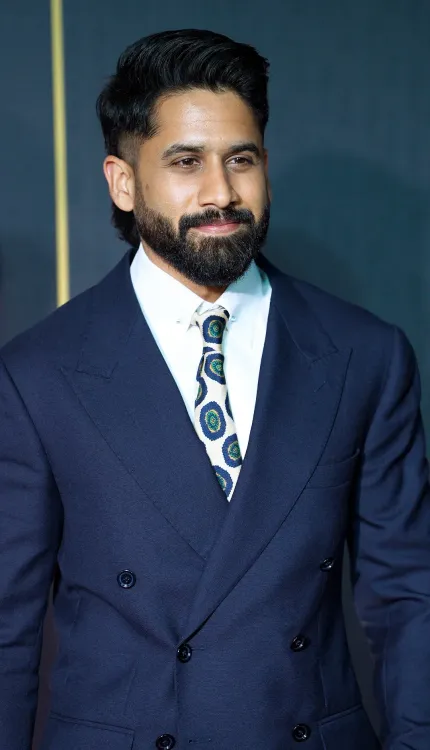
Delhi HC grants Naga Chaitanya interim relief in personality rights case
Synopsis
The Delhi High Court has ordered websites and platforms to remove pornographic, defamatory, and AI-generated content misusing Naga Chaitanya's identity — adding the Telugu star to a rapidly growing list of Indian celebrities winning court protection against deepfakes and digital impersonation. Defendants have just 24 hours to comply.
Key Takeaways
The Delhi High Court granted an ex parte ad-interim injunction in favour of Naga Chaitanya on 2 June 2025 .
Justice Jyoti Singh ordered removal of pornographic, defamatory, and AI-generated content misusing the actor's name and likeness within 24 hours .
The court restrained use of the actor's persona through AI, Deepfakes, Generative AI, Machine Learning , and face morphing technologies.
Naga Chaitanya has a career spanning more than 15 years , debuting with 'Josh' in 2009 .
The case adds to a growing list of celebrities including Allu Arjun , Gautam Gambhir , Aishwarya Rai Bachchan , and others who have sought similar relief from the Delhi HC.
The matter is next listed on 27 July (Joint Registrar) and 30 September (full court hearing).
The Delhi High Court on 2 June 2025 granted an ex parte ad-interim injunction in favour of Telugu actor Akkineni Naga Chaitanya, ordering the removal of pornographic, defamatory, and AI-generated content that exploits his name and persona, while restraining unauthorised sale of merchandise bearing his image and likeness. The order was passed by a single-judge bench of Justice Jyoti Singh in a commercial suit filed by the actor against multiple websites, intermediaries, online platforms, and unidentified 'John Doe' entities.
What the Court Ordered
Justice Singh restrained the defendants and their associates from using or exploiting Naga Chaitanya's name, image, voice, likeness, or any other attribute of his persona without authorisation — including through technologies such as Artificial Intelligence, Generative AI, Machine Learning, Deepfakes, AI chatbots, and face morphing. The court also directed specific product listings on online platforms to be taken down and ordered pornographic websites to remove URLs associating the actor's name with obscene content.
Additionally, the bench directed the removal of multiple YouTube videos alleged to infringe the actor's personality and publicity rights. Defendants have been given 24 hours from receipt of the order to comply with the takedown directions.
What the Suit Alleged
According to the plaint, several pornographic websites were using the actor's name as categories, tags, and trending labels for obscene content, creating a false and injurious association between him and such material. The suit also flagged the unauthorised sale of merchandise bearing his name, image, and likeness, and the circulation of defamatory and AI-generated content on online platforms.
The court recorded that Naga Chaitanya made his debut with the Telugu film 'Josh' in 2009 and subsequently delivered acclaimed performances in films including 'Ye Maaya Chesave', '100% Love', 'Manam', 'Premam', 'Majili', 'Love Story', and 'Bangarraju'. His career spans more than 15 years in the Telugu film industry, with additional national recognition through Hindi cinema.
Court's Prima Facie Findings
Justice Singh observed that the actor enjoys immense goodwill and celebrity status, and that his name, image, voice, and likeness constitute valuable personality attributes entitled to legal protection. The bench held that the actor had made out a prima facie case for interim relief, noting that the balance of convenience lay in his favour and that he was likely to suffer irreparable harm if the injunction were not granted.
'Plaintiff is unquestionably a renowned actor in the Indian film industry with an illustrious career spanning over 15 years,' the order stated, noting that his performances had earned him several awards and accolades across Telugu and Hindi cinema.
On the AI-generated content specifically, Justice Singh held: 'Plaintiff is entitled to protection against dissemination of pornographic content as well as AI-generated images portraying him in an inappropriate scenario. Such distasteful content is harming and damaging the reputation of the Plaintiff and may mislead the public into believing what is depicted may be true.'
The Broader Pattern at Delhi HC
The Naga Chaitanya case is part of a growing wave of high-profile personalities invoking personality and publicity rights before the Delhi High Court. In recent months, former cricketer and current head coach Gautam Gambhir, former India captain Sunil Gavaskar, spiritual leader Sri Sri Ravi Shankar, actors Arjun Kapoor, Allu Arjun, Nagarjuna, Varun Dhawan, Kajol, Aishwarya Rai Bachchan, and Abhishek Bachchan, singer Jubin Nautiyal, filmmaker Karan Johar, podcaster Raj Shamani, and Congress MP Shashi Tharoor have secured or sought court protection against the unauthorised use of their identity, likeness, or AI-generated imitations.
This pattern signals an emerging jurisprudence around digital personality rights in India, with the Delhi High Court increasingly serving as the primary forum. The matter is next listed before the Joint Registrar on 27 July and before the court on 30 September for further hearing.
Point of View
Case by case. What is striking is the breadth of the injunction: restraining AI, Generative AI, Deepfakes, and face morphing in a single order reflects judicial awareness of how fast the technology is moving. The harder question — whether 24-hour takedown compliance from anonymous 'John Doe' defendants is enforceable in practice — remains unanswered, and that gap between the order and its execution will define whether this emerging jurisprudence has teeth.
NationPress
19 Sept 2026
Frequently Asked Questions
What did the Delhi High Court order in the Naga Chaitanya case?
The Delhi High Court granted an ex parte ad-interim injunction directing the removal of pornographic, defamatory, and AI-generated content misusing Naga Chaitanya's name and persona. It also restrained unauthorised sale of merchandise bearing his image and likeness, with defendants required to comply within 24 hours.
Why did Naga Chaitanya file the suit?
The actor filed a commercial suit alleging that pornographic websites were using his name as categories and tags for obscene content, creating a false association with such material. The suit also flagged AI-generated deepfakes and unauthorised merchandise as violations of his personality and publicity rights.
Which technologies did the court specifically restrain?
The court's order covers Artificial Intelligence, Generative AI, Machine Learning, Deepfakes, AI chatbots, and face morphing — a broad technological sweep reflecting the range of tools being used to misuse celebrity identities online.
When is the next hearing in the case?
The matter is listed before the Joint Registrar on 27 July and before the Delhi High Court on 30 September for further hearing.
Which other celebrities have sought similar relief from the Delhi High Court?
In recent months, Gautam Gambhir, Sunil Gavaskar, Sri Sri Ravi Shankar, Arjun Kapoor, Allu Arjun, Nagarjuna, Varun Dhawan, Kajol, Aishwarya Rai Bachchan, Abhishek Bachchan, Jubin Nautiyal, Karan Johar, Raj Shamani, and Shashi Tharoor have all secured or sought court protection against unauthorised use of their identity or AI-generated imitations.