Delhi-NCR Faces Rising Temperatures and Poor Air Quality: Yellow Alert Issued

Synopsis
As temperatures soar beyond 40°C in Delhi-NCR, a yellow alert for a heatwave has been issued. With rising humidity and deteriorating air quality, residents are urged to take precautions and stay hydrated. The IMD predicts that challenging conditions will persist in the coming days, making it crucial for the public to remain vigilant.
Key Takeaways
Temperatures in Delhi-NCR are exceeding 40°C.
A **yellow alert** for a heatwave has been issued.
Humidity levels may reach up to 70% on April 24.
Air quality has worsened, with many areas reporting 'poor' or 'very poor' AQI.
Residents are advised to stay hydrated and avoid outdoor activities during peak heat.
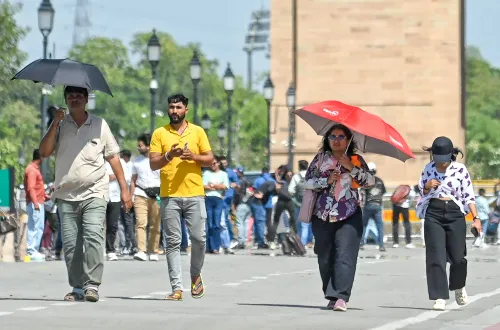
New Delhi, April 20 (NationPress) The intensifying heat in the Delhi-NCR region has resulted in temperatures exceeding 40 degrees Celsius. The India Meteorological Department (IMD) has issued a yellow alert for a heatwave, effective for the next two days, advising residents to exercise caution.
According to the IMD, the maximum temperature in the NCR is anticipated to reach around 41 degrees Celsius, while the minimum temperature is projected to be near 21 degrees Celsius on April 20 and 21. The skies are expected to be mostly clear, with no immediate weather disturbances, although conditions are likely to deteriorate significantly from April 22 onwards.
On April 22, temperatures might rise to a high of 42 degrees Celsius, with the minimum nudging up to 22 degrees Celsius. The IMD has cautioned that heatwave conditions are expected to persist throughout the day, impacting morning, afternoon, and evening periods. The scenario is not predicted to improve on April 23 and 24, with maximum temperatures remaining near 42 degrees Celsius and minimum temperatures around 23 degrees Celsius.
Adding to public discomfort, humidity levels are forecasted to sharply rise, reaching as high as 70 percent on April 24. This combination of elevated temperatures and humidity is likely to create oppressive conditions. Authorities have urged the public to minimize outdoor activities during peak afternoon hours and to stay well-hydrated.
In tandem with the rising temperatures, air quality in the NCR has also become a significant concern. Data from the Central Pollution Control Board and other monitoring entities indicate that the Air Quality Index (AQI) in several areas of Delhi has shifted from 'moderate' to 'poor'.
In Delhi, an AQI of 282 was recorded in Anand Vihar, 226 in Ashok Vihar, and 218 in Bawana, all categorized as 'poor'. Meanwhile, Aya Nagar reported an AQI of 169, which is still within the 'moderate' range. In Noida, AQI readings were similarly alarming, with Sector 1 at 233, Sector 116 at 209, Sector 125 at 185, and Sector 62 at 182.
The situation is even more dire in Ghaziabad, where AQI levels have reached the 'very poor' category. Loni recorded an AQI of 321, while Ved Vihar-Loni reported 317. Other localities like Govindpuram and Vasundhara noted AQI levels of 257 and 234, respectively.
Experts attribute the decline in air quality to rising temperatures and low wind speeds, which facilitate the accumulation of pollutants in the atmosphere. Vulnerable populations, including children, the elderly, and individuals with pre-existing respiratory issues, are advised to take additional precautions.
With both severe heat and declining air quality creating challenges, the upcoming days are expected to be tough for residents throughout the NCR. Authorities and health officials have called on the public to adhere to safety protocols and stay tuned to weather advisories.
Point of View
The current weather conditions in Delhi-NCR highlight the urgent need for public awareness and proactive measures. With extreme heat and deteriorating air quality, it is crucial for authorities to communicate effectively with residents, ensuring their safety and well-being during these challenging times.
NationPress
9 Oct 2026
Frequently Asked Questions
What temperatures can we expect in Delhi-NCR in the coming days?
Delhi-NCR is forecasted to experience maximum temperatures around 41-42 degrees Celsius in the coming days, with minimum temperatures ranging from 21-23 degrees Celsius.
What precautions should residents take during the heatwave?
Residents are advised to stay hydrated, avoid outdoor activities during peak afternoon hours, and follow safety guidelines issued by health authorities.
How is the air quality in Delhi-NCR currently?
The air quality has deteriorated, with several areas reporting AQI levels in the 'poor' to 'very poor' categories, prompting health warnings for vulnerable groups.
What is a yellow alert?
A yellow alert indicates a warning of a potential heatwave, urging residents to remain cautious and take protective measures against extreme weather conditions.
How does humidity affect the heat experience?
Increased humidity can make hot temperatures feel even more uncomfortable, leading to sultry conditions that can pose health risks.