Delhi Police busts ₹2.02 crore 'digital arrest' cyber fraud; three held in Lucknow

Synopsis
A retired Ministry of Defence officer lost ₹2.02 crore after fraudsters impersonated law enforcement, convinced him he was under investigation, and pressured him into repeated bank transfers. Delhi Police's IFSO unit cracked the case with arrests in Lucknow, uncovering a layered syndicate that used account mules and USDT cryptocurrency to move and conceal the money.
Key Takeaways
Delhi Police IFSO arrested three accused from Lucknow in connection with a 'digital arrest' cyber fraud.
A 66-year-old retired Ministry of Defence Section Officer was defrauded of approximately ₹2.02 crore .
Fraudsters impersonated law enforcement, claiming his Aadhaar was used for suspicious transactions worth ₹70 lakh in Jammu and Kashmir .
Accused include Mohd Imran Khan (37), Ram Kishore (28), and Rupender Pratap Singh (25), who allegedly used USDT cryptocurrency for commission payouts.
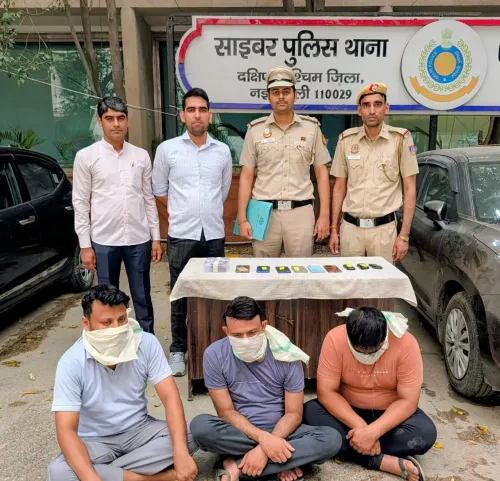
Police recovered 4 mobile phones , 8 debit cards , and a cheque book ; an e-FIR has been filed under the BNS .
Investigation is continuing to trace remaining funds and identify other syndicate members.
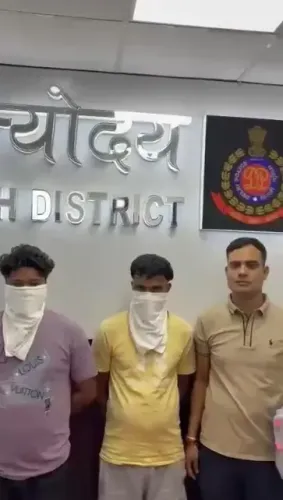
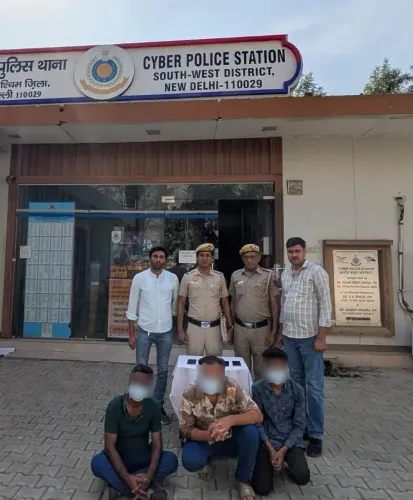
The Intelligence Fusion and Strategic Operations (IFSO) unit of the Delhi Police has arrested three individuals in connection with a 'digital arrest' cyber fraud in which a 66-year-old retired Section Officer from the Ministry of Defence was allegedly swindled out of approximately ₹2.02 crore. The accused were apprehended from Lucknow during a targeted operation, with police recovering four mobile phones, eight debit cards, and a cheque book from their possession.
How the Fraud Unfolded
According to investigators, the victim was first contacted by fraudsters who falsely claimed that a bank account had been opened in Jammu and Kashmir using his Aadhaar details, and that suspicious transactions worth ₹70 lakh had been detected against it. The callers then impersonated law enforcement and other authorities, pressing him to believe he was under active investigation and at risk of imminent arrest.
Under sustained psychological pressure and intimidation, the victim was reportedly persuaded on multiple occasions to visit his bank and wire money to accounts supplied by the accused. He ultimately transferred approximately ₹2.02 crore in total to various beneficiary accounts controlled by members of the cyber fraud syndicate.
The Money Trail and Syndicate Structure
Investigators traced the funds through several bank accounts used to receive and route the proceeds. The probe revealed a layered operation: intermediaries who arranged bank accounts, operators who handled transactions, and others who facilitated the movement and distribution of the money. One accused allegedly routed commission payments through cryptocurrency, including USDT (Tether), pointing to a sophisticated attempt to obscure the financial trail.
Who Was Arrested
The three accused have been identified as Mohd Imran Khan (37), allegedly a company director whose bank account received ₹17 lakh of the defrauded funds; Ram Kishore (28), accused of sourcing and arranging bank accounts for the fraud network; and Rupender Pratap Singh (25), who allegedly operated beneficiary accounts and handled commission disbursements via cryptocurrency. An e-FIR has been registered under relevant provisions of the Bharatiya Nyaya Sanhita (BNS) at the Special Cell police station.
Investigation Ongoing
Delhi Police said further investigation is underway to identify other members of the syndicate, trace the remaining proceeds of crime, and map the full extent of the network. This case is among a rising number of 'digital arrest' scams reported across India, in which fraudsters impersonate officials from agencies such as the CBI, Enforcement Directorate, or TRAI to extort money from unsuspecting victims — a threat that Prime Minister Narendra Modi had specifically flagged in his Mann Ki Baat address earlier this year. The arrest underscores growing law enforcement focus on cyber fraud syndicates that blend traditional account-mule networks with cryptocurrency-based laundering.
Point of View
Transaction operators, and crypto off-ramps working in coordinated layers, mirroring the structure of organised crime. Law enforcement's challenge is not just arresting the front-end operators but dismantling the account-sourcing networks and crypto corridors that make the money near-impossible to trace at speed.
NationPress
18 Nov 2026
Frequently Asked Questions
What is a 'digital arrest' cyber fraud?
A 'digital arrest' scam is a type of cyber fraud in which criminals impersonate law enforcement or government officials — such as CBI, ED, or TRAI officers — and falsely tell victims they are under investigation or facing imminent arrest. Victims are psychologically pressured into transferring large sums of money to avoid fabricated legal consequences.
How much money did the Delhi 'digital arrest' victim lose?
The victim, a 66-year-old retired Section Officer from the Ministry of Defence, transferred approximately ₹2.02 crore in total to multiple beneficiary accounts controlled by the fraud syndicate, according to Delhi Police investigators.
Who were the three accused arrested by Delhi Police?
The three accused are Mohd Imran Khan (37), allegedly a company director whose account received ₹17 lakh of the defrauded money; Ram Kishore (28), accused of arranging bank accounts for the syndicate; and Rupender Pratap Singh (25), who allegedly operated beneficiary accounts and handled commission payments via USDT cryptocurrency. All three were arrested from Lucknow.
What action has Delhi Police taken in this case?
An e-FIR has been registered under relevant provisions of the Bharatiya Nyaya Sanhita (BNS) at the Special Cell police station. Police have seized four mobile phones, eight debit cards, and a cheque book, and are continuing the investigation to trace remaining proceeds and identify other syndicate members.
How can people protect themselves from digital arrest scams?
Authorities have consistently advised that no legitimate government agency contacts citizens via phone or video call to conduct an 'investigation' or demand money transfers. Any such call should be treated as a scam, and the incident should be reported immediately to the National Cyber Crime Reporting Portal (cybercrime.gov.in) or by calling the helpline number 1930.