Delhi's Ambitious Semiconductor Policy Unveiled by CM Rekha Gupta
Synopsis
On April 19, Chief Minister Rekha Gupta revealed plans for the 'Delhi Semiconductor Policy', a strategic initiative to transform the capital into a leading center for semiconductor innovation and manufacturing. This policy promises to enhance job creation and attract investments.
Key Takeaways
Delhi Semiconductor Policy aims to elevate Delhi as a global semiconductor hub.
Focus on job creation in high-tech sectors.
Incentives designed for ease of doing business .
Five key pillars structure the policy framework.
Alignment with national initiatives enhances investor confidence.
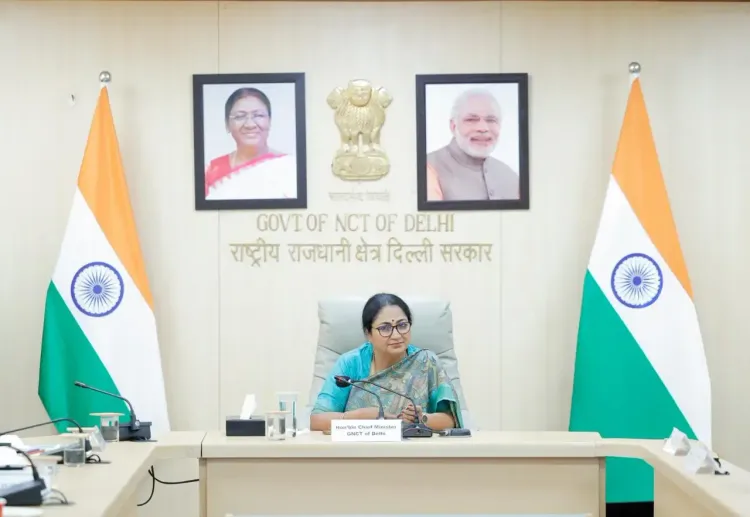
New Delhi, April 19 (NationPress) Chief Minister Rekha Gupta has initiated the creation of the 'Delhi Semiconductor Policy', which aims to establish the capital as a pivotal center for semiconductor design, cutting-edge research and development, as well as assembly and related activities.
Gupta indicated that this initiative represents a significant move towards fostering high-value technology sectors in Delhi.
The Chief Minister emphasized that the policy aligns with Prime Minister Narendra Modi's vision for an Atmanirbhar Bharat and will secure Delhi's proactive involvement in the expansion of India's semiconductor industry.
Rekha Gupta highlighted the semiconductor sector's emergence as a vital component of the global economy, noting that the Delhi Government is devising a thorough policy framework to facilitate its balanced and systematic growth.
The proposed policy includes both financial and non-financial incentives to promote a favorable business environment, innovation, and an industry-led ecosystem.
This policy is based on five essential pillars: semiconductor design and intellectual property development; research, development, and innovation; manufacturing-enabling activities such as Assembly, Testing, Marking and Packaging (ATMP), and Outsourced Semiconductor Assembly and Testing (OSAT), along with the establishment of ancillary industries; talent cultivation and skills enhancement; and the fortification of the startup and industrial ecosystem.
The Chief Minister expressed that this policy is anticipated to bolster Delhi's standing in high-value segments of the semiconductor value chain, particularly in design, research and development, and advanced packaging. It is also expected to draw investments from fabless semiconductor companies, startups, and ATMP and OSAT units.
Furthermore, the policy is designed to support the growth of ancillary industries connected to testing, packaging, and semiconductor inputs.
Focusing on employment opportunities, the Chief Minister remarked that the policy will create high-quality jobs in fields like chip design, semiconductor research, and advanced packaging. It aims to enhance skills through targeted training programs, internships, and partnerships between industry and academia.
This initiative is expected to attract and retain skilled professionals, further establishing Delhi as a center of knowledge and innovation.
The policy emphasizes targeted incentives, lowering operational costs, and fostering a conducive business atmosphere to stimulate private investment.
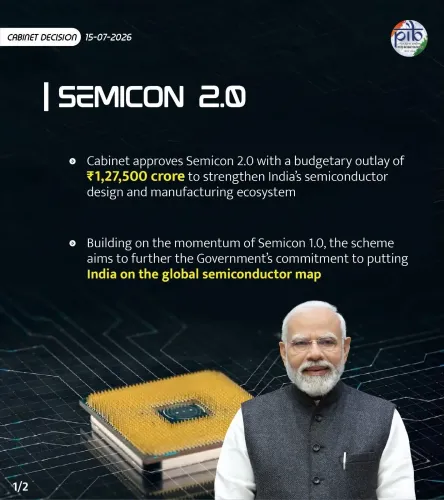
Initiatives such as capital subsidies, infrastructure development, and alignment with national programs, notably the India Semiconductor Mission, are expected to boost investor confidence and encourage participation from both local and international stakeholders.
Point of View
The introduction of the 'Delhi Semiconductor Policy' by Chief Minister Rekha Gupta represents a significant step forward for India's semiconductor sector. By aligning with national initiatives and focusing on innovation, this policy aims to enhance Delhi's role in the global semiconductor landscape while fostering economic growth and job creation.
NationPress
19 Sept 2026
Frequently Asked Questions
What is the objective of the Delhi Semiconductor Policy?
The Delhi Semiconductor Policy aims to establish Delhi as a key hub for semiconductor design, research and development, and manufacturing activities.
How will the policy impact job creation?
The policy is expected to generate high-quality job opportunities in areas such as chip design, semiconductor research, and advanced packaging.
What incentives does the policy offer?
The policy includes both financial and non-financial incentives to facilitate ease of doing business and promote innovation.
What are the key pillars of the policy?
The policy is structured around semiconductor design, research and innovation, manufacturing activities, talent development, and strengthening the startup ecosystem.
How does this policy align with national initiatives?
The Delhi Semiconductor Policy is aligned with the India Semiconductor Mission, focusing on boosting investor confidence and participation.