Delhi Air Quality Declines Amid Rising Temperatures
Synopsis
Delhi's air quality remains in the 'poor' category as temperatures rise unusually, sparking concerns among residents. With new monitoring stations introduced, the city seeks to enhance air quality tracking while facing an uncomfortable warming trend.
Key Takeaways
Delhi's air quality remains 'poor' with Anand Vihar at AQI 342.
New monitoring stations are enhancing pollution tracking.
Temperatures in Delhi are rising, with highs expected to reach 33°C soon.
Residents are advised to stay informed about air quality levels.
February temperatures have been significantly above average.
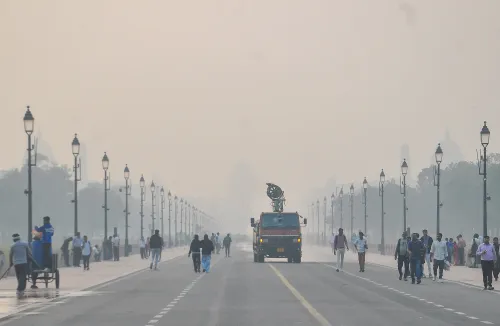
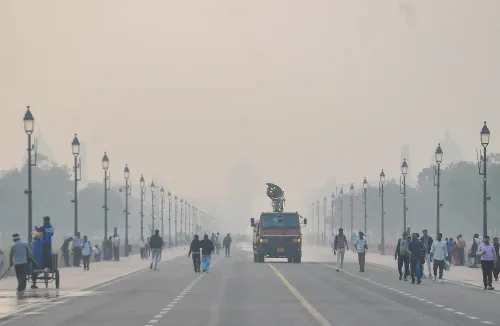
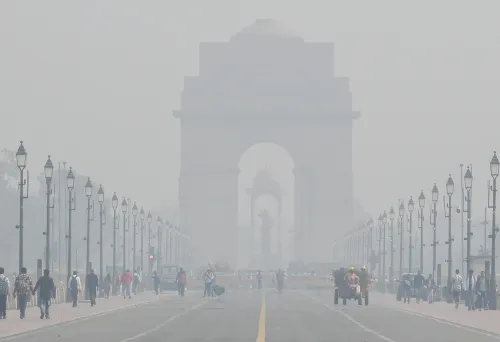
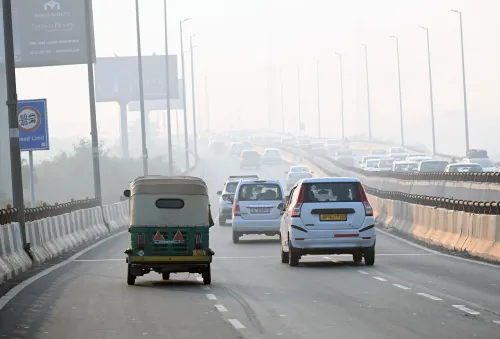
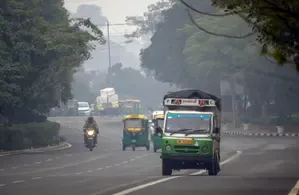
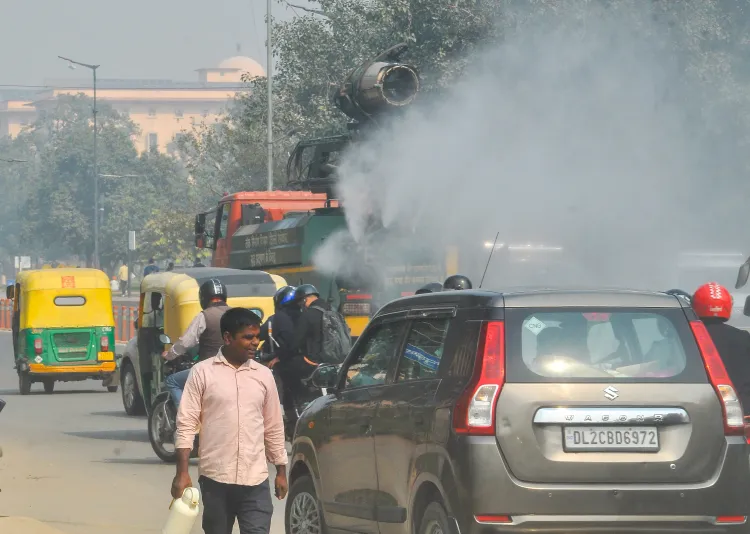
New Delhi, February 25 (NationPress) The air quality in Delhi continues to be classified as 'poor' on Wednesday, with Anand Vihar reporting a 'very poor' air quality index (AQI) of 342. The Delhi-NCR area is experiencing a gradual rise in temperatures, while mornings and evenings still provide some cooler relief.
The Central Pollution Control Board (CPCB) has noted that various monitoring stations throughout the capital have reported differing levels of air quality. Notable readings include Anand Vihar at 342 (very poor), Ashok Vihar at 258, Burari Crossing at 265, Chandni Chowk at 275, DTU at 229, Dwarka Sector-8 at 254, IIT Delhi at 173, ITO at 284, Jahangirpuri at 292, Lodhi Road at 159, Mandir Marg at 165, North Campus at 241, Punjabi Bagh at 261, Pusa at 192, R.K. Puram at 262, Rohini at 282, Sonia Vihar at 260, and Wazirpur at 299. The majority of these locations fall into the 'poor' category, with a few showing 'moderate' air quality levels.
To enhance air quality monitoring, Delhi has launched six new Continuous Ambient Air Quality Monitoring Stations (CAAQMS), raising the total to 46—making it the highest number in the nation. This initiative aims to improve real-time tracking of air pollution and supports more informed policy decisions.
The newly introduced stations are located at Jawaharlal Nehru University (JNU), Indira Gandhi National Open University (IGNOU), the ISRO Earth Station near Malcha Mahal, Delhi Cantonment, Commonwealth Sports Complex, and Netaji Subhash University of Technology (West Campus). These stations now provide live air quality data on the Delhi Pollution Control Committee (DPCC) website, which enhances the accessibility of information for both residents and officials.
Simultaneously, temperatures in the national capital are on an upward trajectory. Forecasts indicate a potential spike in temperatures around Holi, with strong sunlight expected to make daytime conditions uncomfortable. This warming trend is not solely limited to NCR but is also anticipated across much of North India, including Haryana, Punjab, Uttar Pradesh, and Rajasthan.
Currently, Delhi's maximum temperature is around 30 degrees Celsius, with a minimum of approximately 13 degrees Celsius. However, a steady increase is predicted in the coming days. By Saturday, maximum temperatures may reach 32 degrees Celsius, while the minimum could rise to about 16 degrees Celsius. By March 4, a maximum of 33 degrees Celsius is expected, with minimums near 17 degrees Celsius.
On Wednesday, the minimum temperature is expected to stay around normal, while maximum temperatures could be significantly higher—approximately 3.1 to 5.0 degrees Celsius above normal. February 26 is likely to see mostly clear skies, with maximum temperatures ranging from 30 to 32 degrees Celsius and minimums between 13 and 15 degrees Celsius.
As February comes to a close, Delhi is poised to finish the month with unusually high temperatures, significantly exceeding seasonal averages, while winter departs weeks earlier than usual. Notably, mid-February saw daytime temperatures consistently several degrees above the long-term average, including a sharp peak of 31.6 degrees Celsius on February 16 at Safdarjung, which is about 7.2 degrees Celsius above normal, marking the earliest occurrence of temperatures exceeding 30 degrees Celsius in five years.
The all-time high for February in Delhi stands at 34.1 degrees Celsius (recorded on February 26, 2006), with recent notable highs of 33.6 degrees Celsius (February 21, 2023) and 32.4 degrees Celsius (February 26, 2025). Whether 2026 will set a new record remains to be seen, as it depends on temperature spikes towards the end of the month; thus far, 31.6 degrees Celsius remains the peak for this month.
Beginning the month with an average temperature of 18.35 degrees Celsius on February 1—already about 3 degrees above normal—Delhi experienced only brief temperature drops. For instance, February 2 saw a mean temperature of 13.95 degrees Celsius, slightly below the climatological average. Subsequently, temperatures rose consistently, with several days registering mean values 2-4 degrees Celsius above normal. After a temporary dip due to light rain and gusty winds around February 18, temperatures surged again under clear skies. Observations from Safdarjung, Palam, Ridge, Lodhi Road, and Ayanagar confirmed widespread above-normal temperatures throughout the city.
Point of View
It is vital to recognize the implications for public health and environmental policy. With new monitoring stations in place, there is hope for better tracking and management of pollution levels. However, the rising temperatures add another layer of complexity that must be addressed. A proactive approach is essential to safeguard the well-being of Delhi's residents.
NationPress
7 Oct 2026
Frequently Asked Questions
What is the current air quality in Delhi?
Delhi's air quality is currently classified as 'poor,' with Anand Vihar registering a very poor AQI of 342.
What are the AQI readings in different areas of Delhi?
AQI readings vary across Delhi, with Anand Vihar at 342, Ashok Vihar at 258, and several other areas falling in the 'poor' or 'moderate' categories.
How many air quality monitoring stations are there in Delhi?
Delhi has activated six new Continuous Ambient Air Quality Monitoring Stations, bringing the total to 46, the highest in the country.
What are the expected temperature trends in Delhi?
Temperatures in Delhi are expected to rise, potentially reaching 32 degrees Celsius by Saturday and 33 degrees Celsius by March 4.
How does Delhi's current temperature compare to historical averages?
Currently, Delhi's temperatures are significantly above seasonal norms, with maximums running well above the average for February.