Milind Deora writes to BMC chief over exclusion from Colaba Ashray event
Synopsis
Shiv Sena MP Milind Deora was left off the guest list at a high-profile BMC event in his own constituency — where the CM and Deputy CM distributed homes to sanitation workers. His formal complaint to the BMC Commissioner signals protocol friction inside the Maharashtra ruling alliance, even as the state pushes an ambitious plan to house all 29,000 BMC sanitation workers by 2028.
Key Takeaways
Milind Deora , Rajya Sabha MP and former two-time MP from South Mumbai , was not invited to a BMC Ashray scheme event in Colaba on 6 November .
Deora has written to BMC Commissioner Ashwini Bhide , calling the exclusion a breach of protocol for elected representatives.
The ceremony was attended by Chief Minister Devendra Fadnavis , Deputy CM Eknath Shinde , Assembly Speaker Rahul Narwekar , and Mayor Ritu Tawde .
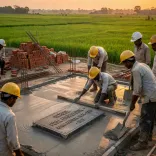
Under the Ashray Yojana Phase-2 , BMC sanitation workers received 300-square-foot homes built using prefabricated technology — the first such municipal building of its kind.
The state targets service quarters for all 29,000 BMC sanitation workers by 2028 , with 146 staff colonies to be redeveloped phase by phase.
Two additional welfare schemes — Dr.
Babasaheb Ambedkar Shram Safalya and Valmiki Housing Scheme — have been launched for sanitation workers.
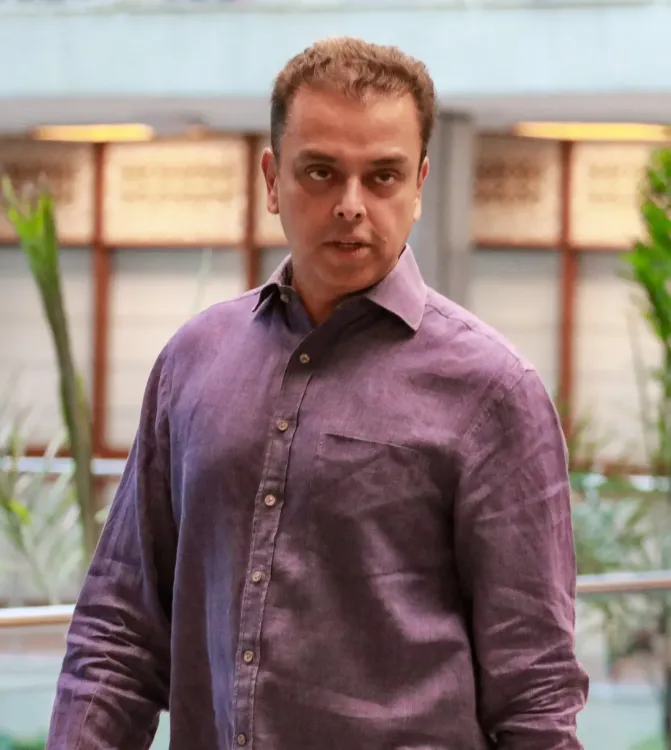
Shiv Sena Rajya Sabha MP Milind Deora on Friday, 6 November wrote a formal letter to Brihanmumbai Municipal Corporation (BMC) Commissioner Ashwini Bhide, expressing strong displeasure over his exclusion from a government ceremony in Colaba, Mumbai, where homes were distributed to sanitation workers under the Ashray scheme. Deora, a former two-time MP from South Mumbai and a former Union Minister, flagged the omission as a breach of established protocol for elected public representatives.
The Event and Who Was Present
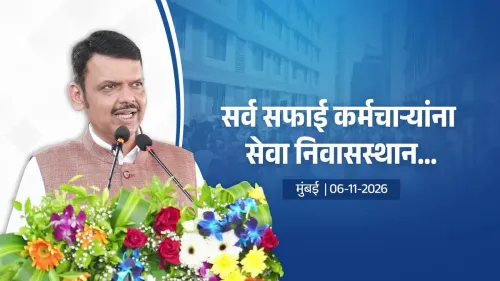
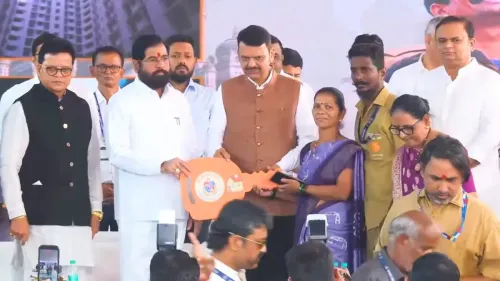
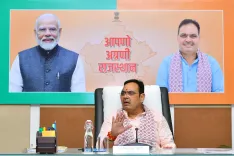
The ceremony, held at Panchsheel Nagar in Colaba, marked the distribution of keys to beneficiaries under Phase-2 of the Ashray Yojana Cell for BMC sanitation workers. Maharashtra Chief Minister Devendra Fadnavis and Deputy Chief Minister Eknath Shinde presided over the function. Also present were Assembly Speaker Rahul Narwekar, Mayor Ritu Tawde, Deputy Mayor Sanjay Ghadi, and senior civic officials.
Notably absent from the guest list, however, was Deora — the sitting elected representative with a long association with the South Mumbai constituency that encompasses Colaba. His exclusion has drawn attention because the event was a development initiative directly concerning residents of his region.
Deora's Objection and Demand
In his letter to Commissioner Bhide, Deora underlined that elected public representatives must be accorded due respect at government functions, particularly those addressing development and welfare in their constituencies. He called on the BMC to strictly adhere to established protocol and ensure all concerned representatives are appropriately invited and acknowledged at future events. The letter is being read as a signal of internal friction within the ruling alliance at the municipal level.
What the Ashray Scheme Delivers
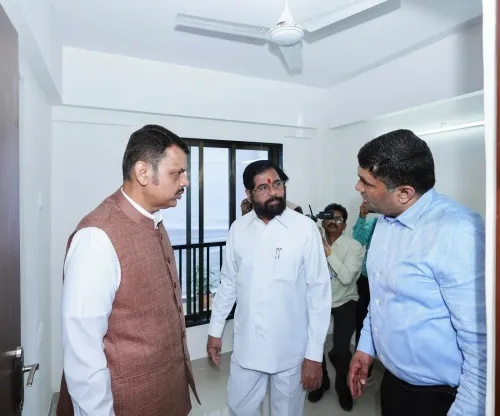
The Ashray Yojana aims to provide ownership houses alongside service quarters to all sanitation workers in Maharashtra. The state government has set a target of making service quarters available to all sanitation workers by 2028. Under Phase-2, 300-square-foot homes have been allocated — double the earlier 150-square-foot norm — using prefabricated technology, which the BMC has deployed for the first time in a municipal building.
Deputy Chief Minister Shinde disclosed that the first phase covering 29,000 BMC sanitation workers has commenced, and 146 staff colonies across Mumbai will be redeveloped phase by phase. He also instructed the BMC to formulate a dedicated higher-education scheme for sanitation workers' children.
What the Government Said
Chief Minister Fadnavis described sanitation workers as 'providers of good health,' noting that the state had also launched two complementary welfare programmes — the Dr. Babasaheb Ambedkar Shram Safalya scheme and the Valmiki Housing Scheme. He added that the state had revived the Lad-Page Committee in 2015 through a fresh Government Resolution to restore the compassionate appointment system, and that a decision had been taken to offer Class-3 jobs to qualified children of sanitation workers.
The BMC is among the more financially robust municipal corporations in Asia, and the state has maintained that its sanitation workforce deserves spacious and dignified housing within the city limits. Deputy CM Shinde argued that providing in-city accommodation would reduce long commutes, improve worker health, and ultimately raise the cleanliness standards of Mumbai.
What Comes Next
Deora's formal complaint to the BMC Commissioner is likely to put the civic body under pressure to revise its invitation protocols ahead of future Ashray-related functions. The larger housing drive, meanwhile, is expected to gain pace as the 2028 deadline for full sanitation-worker coverage approaches. Whether the protocol lapse leads to any formal corrective action from the BMC administration remains to be seen.
Point of View
Shiv Sena, and NCP factions share power but not always the stage. Excluding a sitting Rajya Sabha MP from a constituency-level event involving senior ministers is an unusual oversight, raising questions about whether it was an administrative lapse or a deliberate slight. More broadly, the Ashray scheme's 2028 deadline and the shift to prefabricated construction are substantive commitments that deserve scrutiny on delivery timelines — given the BMC's historically sluggish project execution record. The focus on sanitation workers' dignity is welcome, but the target of housing all 29,000 workers within two years is ambitious, and the absence of an independent monitoring mechanism for the scheme deserves attention.
NationPress
6 Nov 2026
Frequently Asked Questions
Why did Milind Deora write to the BMC Commissioner?
Milind Deora wrote to BMC Commissioner Ashwini Bhide on 6 November to protest his exclusion from a government event in Colaba, where homes were distributed to sanitation workers under the Ashray scheme. He argued that elected public representatives must be accorded due protocol at all government functions, particularly those concerning development in their constituencies.
What is the Ashray Yojana scheme for sanitation workers?
The Ashray Yojana is a Maharashtra government initiative to provide ownership houses and service quarters to all BMC sanitation workers. Under Phase-2, 300-square-foot homes were distributed in Colaba using prefabricated technology, and the state has set a target to cover all 29,000 BMC sanitation workers by 2028.
Who attended the Colaba Ashray scheme event on 6 November?
Chief Minister Devendra Fadnavis and Deputy Chief Minister Eknath Shinde presided over the event. Assembly Speaker Rahul Narwekar, Mayor Ritu Tawde, Deputy Mayor Sanjay Ghadi, and senior civic officials were also present. Milind Deora, the area's Rajya Sabha MP, was notably not invited.
What welfare schemes has the Maharashtra government launched for sanitation workers?
In addition to the Ashray Yojana for housing, the state has launched the Dr. Babasaheb Ambedkar Shram Safalya scheme and the Valmiki Housing Scheme. The government has also committed to Class-3 jobs for qualified children of sanitation workers and minimum wages for contractual and daily-wage workers.
What is the significance of prefabricated technology in the new BMC housing?
This is the first time the BMC has used prefabricated technology to construct a municipal building, enabling faster construction of sanitation worker quarters. The technology, previously used only in large private structures, has allowed the BMC to deliver 300-square-foot homes — double the earlier 150-square-foot standard — with common amenities within the building premises.