CM Dhami Invokes 2024 Property Recovery Act Against Rioters
Synopsis
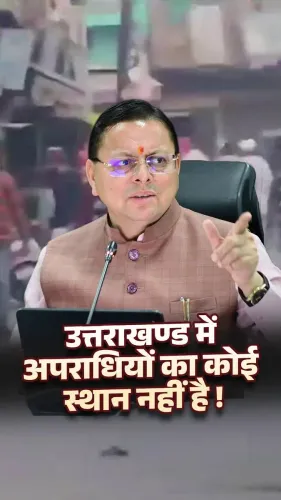
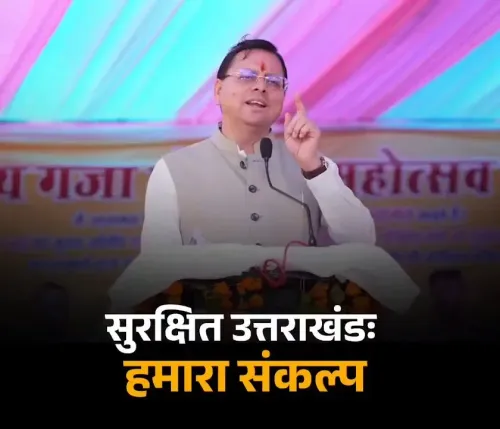
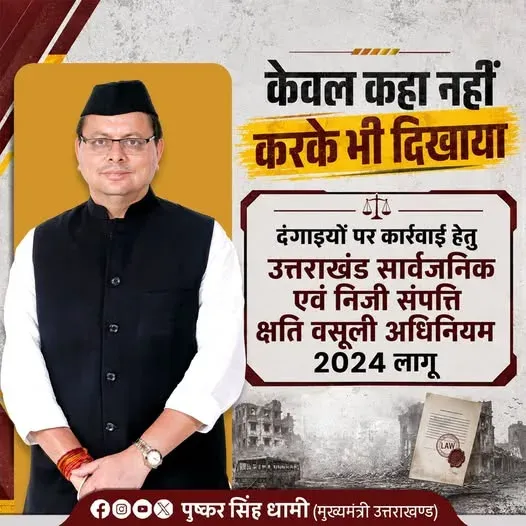
Uttarakhand CM Pushkar Singh Dhami has invoked the state's Public and Private Property Damage Recovery Act 2024, warning rioters will be made to compensate for losses and that law and order in Devbhoomi will not be compromised for appeasement politics.
Key Takeaways
CM Pushkar Singh Dhami confirmed the Uttarakhand Public and Private Property Damage Recovery Act 2024 is in force as of 28 May 2026 .
The Act enables recovery of damages to public and private property directly from rioters and troublemakers.
Dhami explicitly rejected 'appeasement politics' as a reason to weaken law enforcement in the state.
The legislation mirrors a similar property damage recovery law enacted by Uttar Pradesh around 2020 .
The move fulfils a BJP manifesto commitment made ahead of the 2022 Uttarakhand assembly elections .
Future scrutiny will focus on actual recovery notices issued and potential constitutional challenges before higher courts.
Uttarakhand Chief Minister Pushkar Singh Dhami on Thursday, 28 May 2026, reaffirmed his government's zero-tolerance stance on public disorder, stating that the Uttarakhand Public and Private Property Damage Recovery Act 2024 is now in force to ensure rioters and troublemakers pay for losses they cause to both public and private property in the state.
Context
In his post on X, CM Dhami wrote in Hindi: 'देवभूमि उत्तराखंड की शांति, सुरक्षा और कानून व्यवस्था से खिलवाड़ करने वालों के लिए हमारी सरकार की नीति शुरू से स्पष्ट रही है' ['Our government's policy has been clear from the beginning for those who tamper with the peace, security and law and order of Devbhoomi Uttarakhand']. He added that a promise had been made to the public that rioters and troublemakers would be made to compensate for damage to public and private property, and that the 2024 Act has been enacted to fulfil precisely that commitment.
The Chief Minister also declared: 'हम तुष्टिकरण की राजनीति के लिए देवभूमि की कानून व्यवस्था को कमजोर नहीं होने देंगे' ['We will not allow the law and order of Devbhoomi to be weakened for the politics of appeasement']. He warned that strict action would be taken against those who spread riots, anarchy and violence in Uttarakhand.
Policy Backdrop
The Uttarakhand Public and Private Property Damage Recovery Act 2024 creates a legal mechanism to recover riot-related losses directly from perpetrators, shifting the financial burden away from the state exchequer and onto those responsible for the damage. The legislation follows a similar model pioneered by Uttar Pradesh, which enacted its own property damage recovery law around 2020.
The BJP government in Uttarakhand had flagged strict anti-riot measures as a manifesto commitment ahead of the 2022 state assembly elections. The 2024 Act represents the legislative fulfilment of that pledge, providing law enforcement and courts with a statutory tool to pursue financial restitution from individuals convicted or found liable for inciting or participating in public disturbances.
Stakeholders and Impact
Property owners — both private citizens and public bodies — stand to benefit most directly from the Act, as it creates an enforceable right to compensation that did not previously exist under a dedicated state statute. Law enforcement agencies in Uttarakhand are now empowered to initiate recovery proceedings alongside criminal prosecution, adding a significant financial deterrent to potential offenders.
The framing of the announcement also carries a pointed political message. CM Dhami's explicit rejection of 'appeasement politics' signals that the government intends to apply the law uniformly, without making exceptions based on community or electoral considerations — a position consistent with the BJP's broader national messaging on law and order.
What's Next
Attention will now turn to the operational rollout of the Act: how many recovery notices are issued, the quantum of damages assessed, and whether affected parties challenge the legislation before the Uttarakhand High Court or the Supreme Court of India. Constitutional questions around due process and the scope of state power to impose civil liability in riot cases have been raised in similar legislation elsewhere and could surface here as well.
For CM Dhami, the announcement reinforces a law-and-order brand that has been central to his administration since 2021. Whether the Act translates into measurable recoveries — or faces legal hurdles that delay implementation — will determine its real-world impact and its political resonance ahead of future electoral cycles in the state.
Point of View
Combined with the explicit 'no appeasement' framing, is calibrated to distinguish the BJP government's posture from Opposition-ruled states on the charged question of riot accountability. The move fits a wider BJP playbook of enacting state-level deterrence laws that serve dual purposes: genuine law-enforcement utility and sharp electoral differentiation. The real test will come in implementation — if recovery proceedings are seen to be applied selectively or stall in courts, the political dividend could be limited. Longer term, the Act's constitutional durability will shape whether it becomes a replicable template for other BJP-governed states or a cautionary lesson in legislative overreach.
NationPress
19 Sept 2026
Frequently Asked Questions
What is the Uttarakhand Public and Private Property Damage Recovery Act 2024?
It is a state law enacted by the Uttarakhand government that allows authorities to recover the cost of damages caused to public and private property directly from individuals found responsible for riots or public disturbances.
Why did CM Dhami invoke this law on 28 May 2026?
CM Dhami reaffirmed the law's existence and intent in a post on X, warning that those who disturb peace in Uttarakhand will be held financially liable, and that the government will not weaken law enforcement for appeasement politics.
Which other state has a similar property damage recovery law?
Uttar Pradesh enacted a comparable law around 2020 that served as a legislative precedent for Uttarakhand's 2024 Act.
Can the Uttarakhand property damage recovery law be challenged in court?
Yes, such laws can be challenged before the Uttarakhand High Court or the Supreme Court of India on constitutional grounds related to due process and the scope of state power to impose civil liability alongside criminal proceedings.
What did Pushkar Singh Dhami promise before the 2022 Uttarakhand elections regarding rioters?
The BJP manifesto and statements ahead of the 2022 assembly elections included a commitment to enact strict measures against rioters and ensure that those who damage public property are made to pay for it — a promise the 2024 Act is meant to fulfil.