CM Dhami eyes global markets for Munsyari Rajma via House of Himalayas
Synopsis
CM Pushkar Dhami has highlighted the 'House of Himalayas' initiative as Uttarakhand's key vehicle to market Munsyari's GI-tagged Rajma, woolen textiles and carpets in major Indian cities and international markets, aiming to raise hill-district rural incomes and curb out-migration.
Key Takeaways
CM Pushkar Dhami publicly championed the House of Himalayas initiative on 14 November 2026 as the state's primary market-linkage vehicle for hill products.
Munsyari in Pithoragarh district is the focal origin, known for its GI-tagged Rajma beans , woolen textiles, and handwoven carpets.
The stated goal is to reach major Indian cities and international markets , moving beyond local middlemen.
Uttarakhand has pursued GI tagging of hill products since the early 2010s; House of Himalayas is the next commercial phase of that strategy.
The initiative directly targets out-migration from hill districts by making traditional livelihoods economically viable.
Key milestones to watch include new retail or e-commerce outlets and confirmed export partnerships under the scheme.
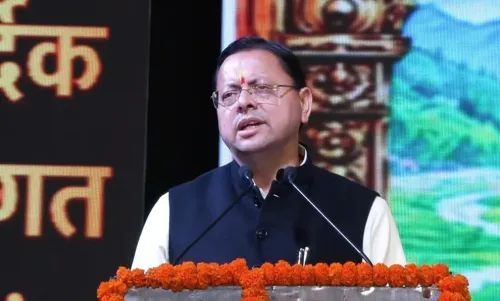
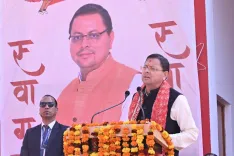
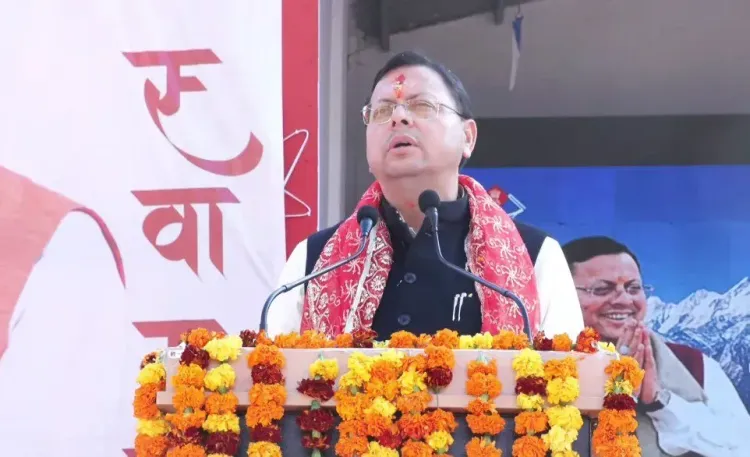
From the high-altitude fields of Munsyari to the shelves of India's biggest cities — and potentially the world — Chief Minister Pushkar Singh Dhami has spelled out an ambitious market-linkage vision for one of Uttarakhand's most distinctive hill economies. Speaking on Saturday, 14 November 2026, the Chief Minister's Office of Uttarakhand shared his remarks underlining the state's push to take Munsyari's Rajma beans, woolen products, and handwoven carpets far beyond their mountain origins.
What Munsyari makes — and why it matters
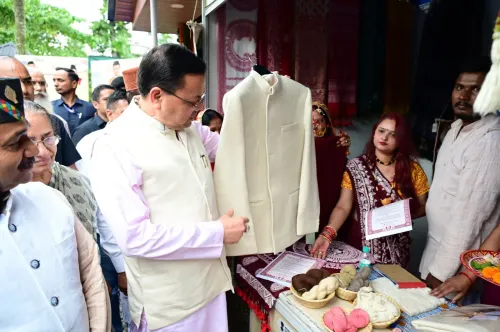
Munsyari, a remote town in Pithoragarh district of Uttarakhand, sits at the edge of the inner Himalayas and produces three goods that have carved out a loyal following: its GI-tagged Rajma — a small, intensely flavoured kidney bean grown at high altitude — along with hand-spun woolen textiles and intricately patterned carpets. These are not commodity goods; they carry a provenance that mass-produced alternatives cannot replicate. CM Dhami's statement acknowledged exactly that: 'Munsyari ki Rajma, yahan ke uni utpad aur kaleen apni alag pehchaan rakhte hain' — 'Munsyari's Rajma, its woolen products and carpets hold a distinct identity of their own.'
That identity, however, has historically been trapped behind poor road connectivity, thin supply chains, and the absence of a credible retail brand. Hill farmers and artisans have long sold at distress prices to local middlemen, with little visibility into what their products fetch downstream.
House of Himalayas: the brand Uttarakhand is betting on
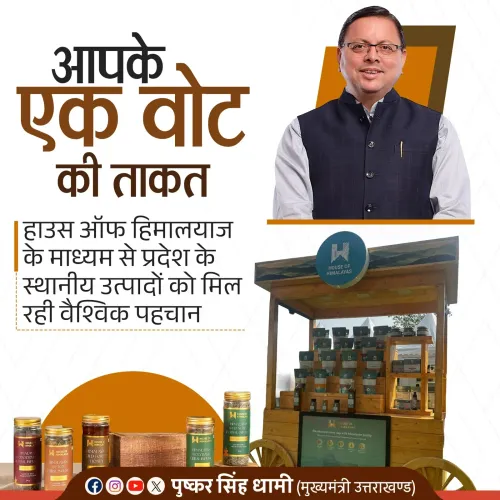
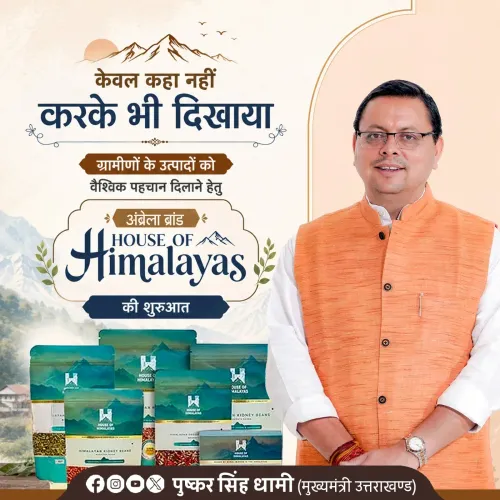
The vehicle for change, according to the Chief Minister, is 'House of Himalayas' — the Uttarakhand government's initiative designed to aggregate, brand, and distribute these niche hill products in major Indian cities and international markets. Dhami described it as 'ek mahatvapurna pehel' — 'an important initiative' — in the direction of connecting producers directly to wider demand.
Uttarakhand has been pursuing GI tagging of hill-specific products since the early 2010s as a first step toward premium positioning. House of Himalayas represents the next logical move: converting that GI credential into actual shelf space and export orders. The broader pattern is familiar across Himalayan states — branded retail and e-commerce channels are increasingly seen as the most viable tool for raising rural incomes without waiting for industrial investment to arrive in difficult terrain.
The out-migration problem behind the market push
There is a harder economic reality driving this initiative. Uttarakhand's hill districts have faced persistent out-migration as young people leave for plains cities in search of income. Strengthening the commercial value of what the hills produce — so that farming and weaving can sustain a livelihood — is one of the few levers a state government can pull without relocating populations or building factories. If Munsyari's Rajma commands a premium price in Delhi or Dubai, the incentive to stay and grow it rises. The logic is simple. The execution is not.
Stakeholders watching House of Himalayas will be looking for concrete milestones: new retail or e-commerce touchpoints, announced trade-fair participation, and any confirmed export partnerships that move the initiative from policy statement to supply-chain reality.
The mountains have always produced something worth selling. The question House of Himalayas must now answer is whether it can build the bridge that gets it there.
Point of View
Signalling a regional consensus that niche provenance goods are the Himalayan belt's most defensible export proposition. The political calculus is equally clear: visible progress on rural incomes in remote constituencies like Pithoragarh strengthens the ruling dispensation's credibility ahead of any electoral cycle. The real test, however, is operational — whether House of Himalayas can scale beyond symbolic retail points into a self-sustaining supply chain that actually changes producer prices on the ground.
NationPress
15 Nov 2026
Frequently Asked Questions
What is House of Himalayas in Uttarakhand?
House of Himalayas is an Uttarakhand government initiative aimed at branding and marketing distinctive local agricultural and handicraft products — such as Munsyari Rajma, woolen textiles and carpets — in major Indian cities and international markets to improve rural incomes.
What is Munsyari Rajma and why is it famous?
Munsyari Rajma is a small, intensely flavoured kidney bean grown at high altitude in Munsyari town of Pithoragarh district, Uttarakhand. It holds a Geographical Indication (GI) tag, distinguishing it from mass-produced varieties and giving it a premium market identity.
What did CM Pushkar Dhami say about Munsyari products?
CM Dhami stated that Munsyari's Rajma, woolen products and carpets hold a distinct identity of their own, and that the government's effort is to take these products to major cities across India and to international markets, with House of Himalayas being the key initiative for this.
How does House of Himalayas help Uttarakhand farmers and artisans?
By creating a branded retail and potential e-commerce channel, House of Himalayas aims to connect hill farmers and artisans directly to higher-value markets, reducing dependence on local middlemen and making traditional livelihoods more economically viable.
What is the link between Uttarakhand's out-migration problem and schemes like House of Himalayas?
Persistent out-migration from Uttarakhand's hill districts is driven largely by lack of income opportunities. Initiatives like House of Himalayas try to raise the commercial value of locally produced goods so that farming and weaving can sustain a livelihood, giving residents an economic reason to stay.