NSA Doval raises Indian seafarers' safety with Iran's Rezaei: MEA
Synopsis
NSA Ajit Doval personally raised the safety of Indian seafarers and tankers in a call with Iran's top security official on 12 October — the second time in months India has escalated the issue, following EAM Jaishankar's July démarche. With Hormuz attacks continuing, New Delhi is now pressing Tehran through its highest security channels.
Key Takeaways
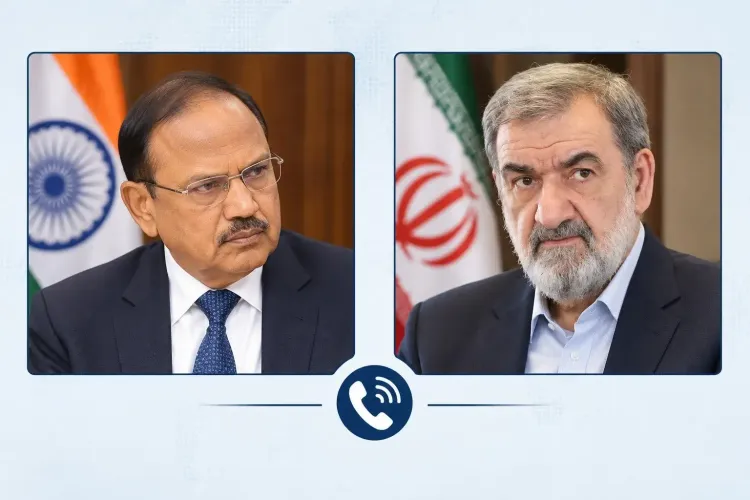
NSA Ajit Doval spoke with Iran's Mohsen Rezaei on 12 October , raising the safety and security of Indian seafarers and Indian tankers .
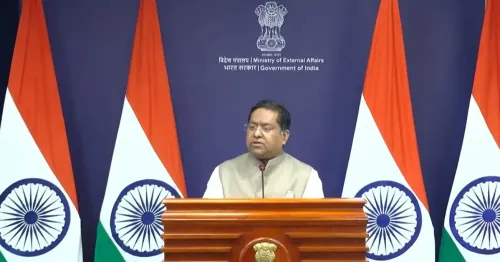
The MEA confirmed the details at a media briefing on 14 October ; Iran's Embassy had announced the call earlier without specifying the maritime safety dimension.
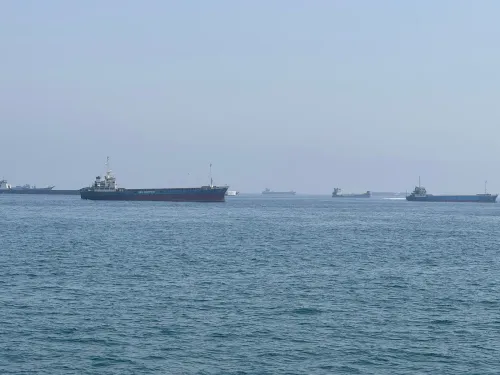
The conversation took place amid continuing attacks on shipping in the Strait of Hormuz , a critical energy corridor linking the Persian Gulf to the Arabian Sea.
Jaishankar had similarly urged Tehran to avoid attacks on commercial shipping and seafarers under any circumstances.
India's escalation to the NSA level signals that maritime security concerns remain unresolved and are being pursued through back-channel security diplomacy.
National Security Advisor Ajit Doval raised the safety and security of Indian seafarers and Indian tankers during a telephonic conversation with Mohsen Rezaei, Secretary of the Supreme National Security Council of Iran, the Ministry of External Affairs (MEA) confirmed on Wednesday, 14 October. The call took place on 12 October and covered bilateral issues, the regional situation, and international developments, according to MEA spokesperson Randhir Jaiswal.
What Was Discussed
Addressing the bi-weekly media briefing in New Delhi, Jaiswal said the two sides discussed the full spectrum of India-Iran ties alongside pressing regional dynamics. 'This conversation happened on 12th of October. National Security Advisor spoke to the Secretary of the Supreme National Security Council of Iran, His Excellency Dr Mohsen Rezaei. They discussed bilateral issues. They also discussed regional situation and international developments, and during the meeting, the safety and security of Indian seafarers was raised, as also the safety and security of Indian tankers was also raised,' Jaiswal said in response to a question about the discussions.
Iran's Embassy Also Confirmed the Call
On Monday, Iran's Embassy in India had separately confirmed the conversation in a post on X, stating that Rezaei and Doval 'exchanged views on the latest regional and international developments and issues of mutual interest to the two countries.' The Embassy's statement did not explicitly mention the seafarers issue, making Wednesday's MEA briefing the first official Indian account to specify that maritime security concerns were put on the table.
The Strait of Hormuz Backdrop
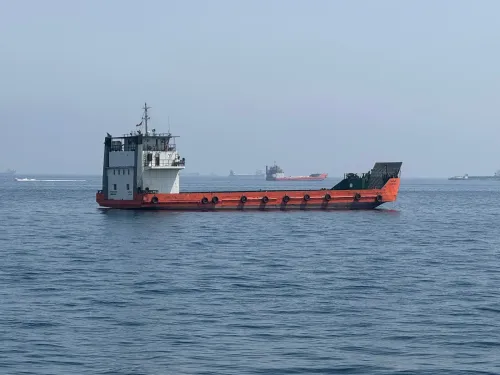
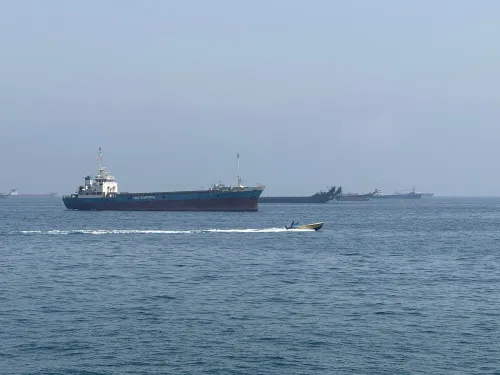
The telephonic exchange comes amid continuing attacks on shipping in the Strait of Hormuz, the critical waterway linking the Persian Gulf with the Gulf of Oman and the Arabian Sea. The strait is one of the world's most vital energy corridors, channelling oil and Liquefied Natural Gas (LNG) exports from major Gulf producers to global markets. Disruptions in the strait directly threaten India's energy imports and the livelihood of Indian crew members aboard commercial vessels transiting the region.
India's Consistent Position on Shipping Safety
This is not the first time India has formally flagged the danger to seafarers with Tehran. In July, External Affairs Minister S. Jaishankar held a telephonic conversation with his Iranian counterpart Seyed Abbas Araghchi and conveyed New Delhi's 'deep concerns at the ongoing hostilities in the region.' Jaishankar wrote on X: 'Strongly urged that attacks on commercial shipping and seafarers be avoided under any circumstances. India condemns any such attack by any party.' The recurrence of the issue at the NSA level signals that India's concerns remain unresolved and are being escalated through security channels.
What This Means for Indian Mariners and Energy Security
India has a large community of seafarers, many of whom serve aboard tankers and commercial vessels operating in the Gulf region. Any sustained escalation in the Strait of Hormuz carries direct consequences for both crew safety and India's crude oil supply chain, given the country's reliance on Gulf producers. The Doval-Rezaei call suggests New Delhi is pursuing back-channel diplomacy to protect these interests even as regional tensions remain elevated.
With diplomatic engagement now spanning both ministerial and national-security-advisor levels, India appears set to keep maritime safety on the bilateral agenda until the situation in the Strait of Hormuz stabilises.
Point of View
Not a routine courtesy call. It signals that Tehran has not provided satisfactory assurances through the foreign-ministry channel, and that New Delhi is now using its security establishment to press harder. The subtext matters: India's energy dependence on Gulf producers means a prolonged Hormuz crisis is an economic risk, not just a diplomatic one. What is missing from public readouts is any indication of what, if anything, Iran has offered in return — and that silence is telling.
NationPress
14 Oct 2026
Frequently Asked Questions
Why did NSA Ajit Doval call Iran's Mohsen Rezaei?
NSA Ajit Doval spoke with Mohsen Rezaei, Secretary of Iran's Supreme National Security Council, on 12 October to discuss bilateral issues, the regional situation, and international developments. Crucially, Doval raised the safety and security of Indian seafarers and tankers, amid ongoing shipping attacks in the Strait of Hormuz.
What is the Strait of Hormuz and why does it matter to India?
The Strait of Hormuz is a narrow waterway linking the Persian Gulf with the Gulf of Oman and the Arabian Sea, and is one of the world's most important energy corridors. It carries a significant share of global oil and LNG exports, including supplies that India depends on, making any disruption there a direct threat to India's energy security and to Indian crew members working on tankers in the region.
Has India raised the seafarers issue with Iran before?
Yes. In July, External Affairs Minister S. Jaishankar held a telephonic conversation with Iranian FM Seyed Abbas Araghchi and strongly urged that attacks on commercial shipping and seafarers be avoided under any circumstances. The NSA-level call in October suggests the issue remains unresolved.
What did Iran's Embassy say about the Doval-Rezaei call?
Iran's Embassy in India confirmed the call in a post on X, saying the two officials exchanged views on the latest regional and international developments and issues of mutual interest. The Embassy's statement did not specifically mention Indian seafarers or tankers.
What does India's escalation to NSA level mean?
Raising the seafarers issue through the National Security Advisor — rather than only at the foreign-minister level — indicates India views maritime safety in the Gulf as a matter of national security, not just diplomacy. It reflects New Delhi's intent to keep the matter on Tehran's radar through the highest security channels until concrete assurances are received.