Dr. Jitendra Singh Highlights DBT's Role in India's Health Innovation
Synopsis
Union Minister Dr. Jitendra Singh has spotlighted the Department of Biotechnology's record of indigenous health innovation, citing the world's first DNA COVID vaccine, ROTAVAC, CERVAVAC, Nafithromycin, and India's first 1.5 Tesla MRI Scanner as proof of the country's growing self-reliance in affordable healthcare.
Key Takeaways
Jitendra Singh highlighted DBT achievements in health security on 14 June 2026 under the #12YearsofSeva milestone.
India developed ZyCoV-D , the world's first plasmid DNA vaccine against COVID-19, which received emergency authorisation in 2021 .
ROTAVAC , India's first indigenous rotavirus vaccine, has been part of the Universal Immunisation Programme since 2016 .
CERVAVAC , an indigenously developed HPV vaccine, is being positioned for broader inclusion in state immunisation schedules.
India's first indigenous 1.5 Tesla MRI Scanner and the antibiotic Nafithromycin (Miqnaf) mark DBT's expansion into medical devices and novel antimicrobials.
All achievements are framed within the Atmanirbhar Bharat self-reliance framework launched in May 2020 .
Union Science and Technology Minister Dr. Jitendra Singh on Sunday, 14 June 2026 highlighted the Department of Biotechnology's (DBT) contributions to India's health security, citing a string of indigenous breakthroughs ranging from the world's first DNA vaccine for COVID-19 to an indigenously developed 1.5 Tesla MRI Scanner. The post, shared under the hashtag #12YearsofSeva, frames these achievements as evidence of India's emergence as a global leader in affordable healthcare innovation.
Context
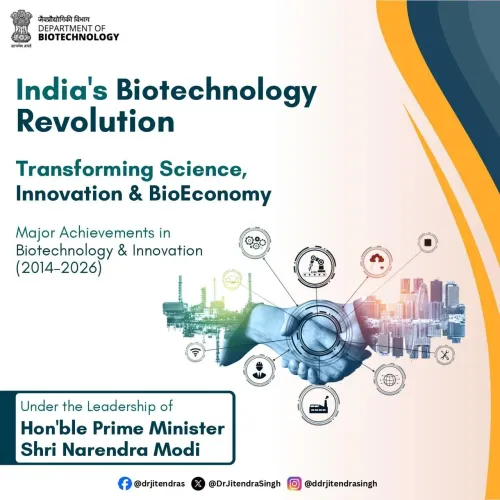
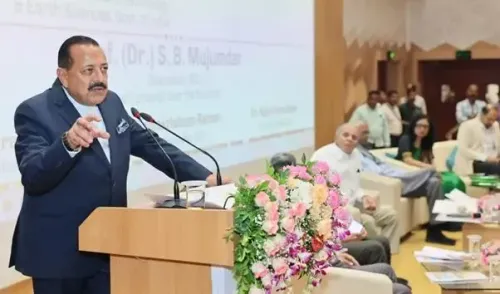
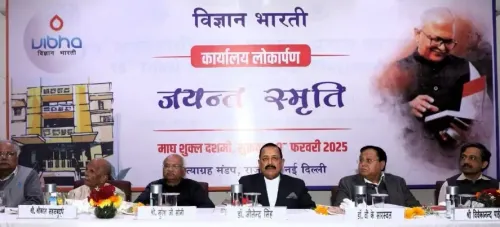
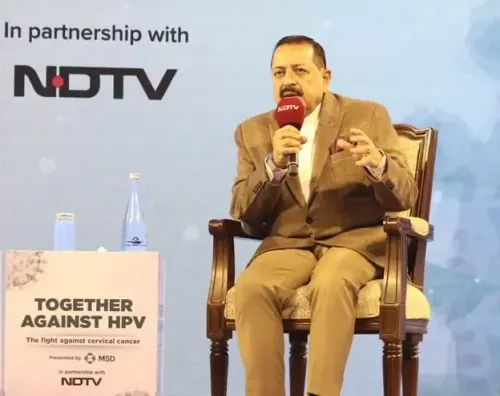
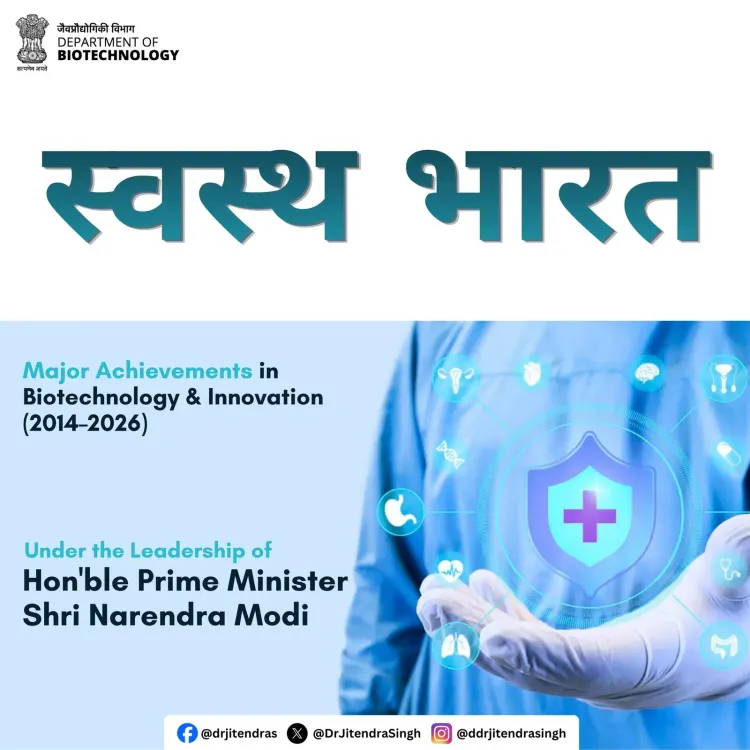
In his post, the Minister stated that India has 'developed first ever DNA Vaccine for Covid followed by HPV Vaccine,' positioning the country as a 'global leader in affordable healthcare innovation, powered by visionary leadership, scientific excellence, and indigenous research.' He specifically named ROTAVAC and CERVAVAC among flagship products, alongside newer breakthroughs such as Nafithromycin (Miqnaf) and next-generation COVID-19 vaccines. The post was accompanied by four images underscoring the visual breadth of DBT's portfolio.
The #12YearsofSeva hashtag situates the announcement within a broader political milestone, marking twelve years of the current government's tenure and cataloguing sectoral achievements across that period.
Policy Backdrop
The Department of Biotechnology, established in 1986 under the Ministry of Science and Technology, has served as the nodal agency coordinating India's biotechnology research and public health applications for four decades. Its early mandate to build domestic capacity has progressively expanded to encompass advanced vaccine platforms and medical devices.
ROTAVAC, India's first indigenous rotavirus vaccine developed with DBT support, was integrated into the Universal Immunisation Programme from 2016 and has since become a reference point for cost-effective domestic vaccine development. ZyCoV-D, the world's first plasmid DNA vaccine against COVID-19, received emergency authorisation in India in 2021, cementing the country's claim to a pioneering role in DNA-based immunisation. The Atmanirbhar Bharat initiative, announced in May 2020, further accelerated public-private partnerships aimed at reducing India's dependence on imported health technologies.
The CERVAVAC HPV vaccine, developed indigenously, represents a critical step toward making cervical cancer prevention accessible at scale in a country that bears one of the world's highest burdens of HPV-related disease. The government has been working toward its inclusion in state immunisation schedules.
Stakeholders and Impact
The beneficiaries of DBT's innovation pipeline span a wide spectrum: biotechnology researchers and academic institutions gain policy backing and funding pathways, while vaccine manufacturers operate within an ecosystem that now includes regulatory experience with novel platforms such as DNA vaccines. For public health programmes, indigenous products such as ROTAVAC and CERVAVAC translate directly into lower procurement costs and greater supply-chain resilience.
The reference to India's first indigenous 1.5 Tesla MRI Scanner signals an expansion of the Atmanirbharta agenda beyond biologics into capital-intensive medical devices — a segment historically dominated by imports. If successfully scaled, such devices could significantly reduce diagnostic costs for patients across tier-2 and tier-3 cities. The antibiotic Nafithromycin (Miqnaf), described as a breakthrough innovation, addresses the critical domain of antimicrobial resistance, where new molecular entities are urgently needed globally.
What's Next
Observers will watch whether CERVAVAC achieves broader inclusion in state-level immunisation schedules in the near term, a step that would determine its real-world public health impact. DBT is also expected to issue fresh calls for proposals on next-generation medical devices and platform biotechnologies as the government looks to sustain the innovation momentum highlighted by the Minister.
The broader trajectory — from technology importation in the 1980s to self-reliant R&D and manufacturing today — reflects a structural shift that successive policy decisions have reinforced. How quickly products such as the indigenous MRI scanner and Nafithromycin move from development to mass deployment will be the true measure of whether India's biotechnology ecosystem can convert scientific firsts into lasting health security gains.
Point of View
Using DBT's scientific record to reinforce a governance narrative centred on self-reliance and innovation. By anchoring the message in verifiable firsts — the DNA vaccine, the indigenous MRI scanner — the Minister insulates the communication from easy rebuttal while simultaneously advancing the Atmanirbhar Bharat brand. The consistent emphasis on 'affordable' innovation is also a strategic signal to global health bodies and developing-country markets where India competes as a supplier. The real test, however, lies in whether products like CERVAVAC and the indigenous MRI scanner reach scale quickly enough to translate political messaging into measurable public health outcomes.
NationPress
14 Sept 2026
Frequently Asked Questions
What is the world's first DNA vaccine for COVID-19 developed in India?
ZyCoV-D , developed by Zydus Cadila with support from the Department of Biotechnology , is the world's first plasmid DNA vaccine against COVID-19 and received emergency use authorisation in India in 2021 .
What is CERVAVAC and who developed it?
CERVAVAC is India's first indigenously developed HPV (Human Papillomavirus) vaccine, created to prevent cervical cancer. It was developed with DBT support and is being considered for inclusion in state immunisation programmes.
What is ROTAVAC and is it part of India's immunisation programme?
ROTAVAC is India's first indigenous rotavirus vaccine, developed with Department of Biotechnology backing. It has been part of India's Universal Immunisation Programme since 2016 .
What is Nafithromycin or Miqnaf?
Nafithromycin (Miqnaf) is described as a breakthrough indigenous antibiotic innovation highlighted by the Department of Biotechnology . It addresses the critical need for new antimicrobial agents, though its precise regulatory approval and production scale-up status are still being established.
What is India's indigenous 1.5 Tesla MRI Scanner?
India's first indigenous 1.5 Tesla MRI Scanner is a medical device developed under the Atmanirbhar Bharat framework to reduce dependence on imported diagnostic equipment and lower costs for patients. Its scale-up and commercialisation status are still being confirmed.