Dr. Jitendra Singh highlights 12 years of S&T growth under Modi
Synopsis
Union Minister Dr. Jitendra Singh marked 12 years of Modi government's S&T leadership at a press conference, citing growth from single-digit space startups to over 400, a bioeconomy expansion from $10 billion to $190 billion, radar network doubling, and imminent private nuclear sector rules under the SHANTI Act.
Key Takeaways
India's space startups grew from single digits to over 400 , with the space economy projected to rise from $8 billion to $45 billion .
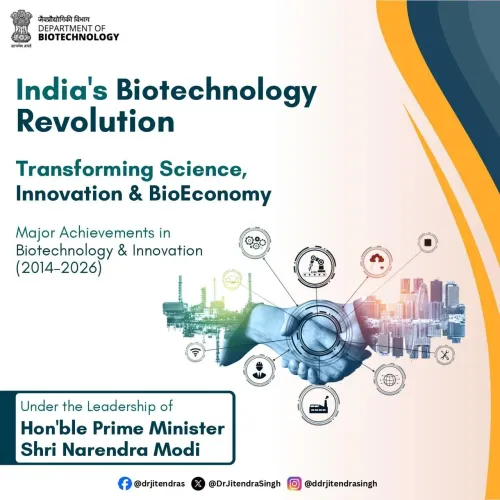
The bioeconomy expanded from $10 billion to $190 billion , with biotech startups scaling from around 500 to over 11,000 .
Weather radar coverage grew from 17 to 50 , with another 50 radars planned to further transform forecasting.
The nuclear sector has been opened to private participation; rules under the SHANTI Act are expected to be notified soon.
Chandrayaan-3 , indigenous Covid vaccines , and the Purple Revolution were cited as defining success stories of India's S&T ecosystem.
The press conference was held under the #12YearsOfSeva campaign marking over a decade of PM Narendra Modi's governance.
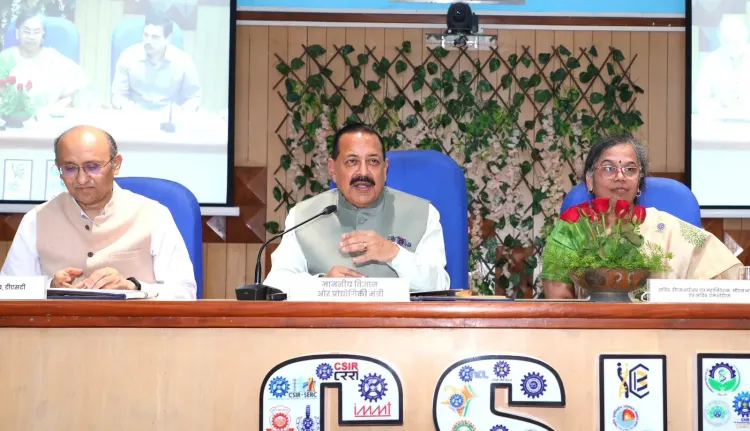
Union Science and Technology Minister Dr. Jitendra Singh addressed a press conference on Monday, June 15, 2026, outlining the milestones achieved across India's science and technology sectors over 12 years of Prime Minister Narendra Modi's leadership, citing sweeping growth in space, biotech, weather infrastructure, and nuclear policy.
Context
Speaking at the press conference, Dr. Singh framed the occasion around the hashtag #12YearsOfSeva, presenting a data-driven account of sectoral transformation since 2014. He described the period as one in which India's science and technology ecosystem had evolved into 'a global force.' The press conference comes as the ruling government marks over a decade in office, with ministries presenting sector-specific scorecards.
The minister's statement covered four major domains: space, biotechnology, meteorological infrastructure, and nuclear energy — each presented with comparative figures to illustrate scale of change.
Policy Backdrop
On the space front, Dr. Singh cited a rise from single-digit space startups to over 400, with the space economy projected to grow from $8 billion to $45 billion. This growth is anchored in the establishment of IN-SPACe (Indian National Space Promotion and Authorisation Centre) in 2020, which opened the sector to private players, and in landmark missions such as Chandrayaan-3, which achieved a successful lunar south-pole landing in August 2023.
In biotechnology, he pointed to the bioeconomy expanding from $10 billion to $190 billion, with biotech startups scaling from around 500 to over 11,000. The National Biopharma Mission, announced in 2017, and the Startup India initiative launched in 2016 provided the policy scaffolding for this expansion. Covid vaccine development and the Purple Revolution — an aroma mission promoting lavender cultivation in Jammu and Kashmir — were cited as emblematic success stories.
On meteorological infrastructure, the minister noted that the number of weather radars had grown from 17 to 50, with another 50 planned, describing the expansion as having 'transformed forecasting.' For the nuclear sector, he announced that it had been opened to private participation, with rules under the SHANTI Act expected to be notified soon.
Stakeholders and Impact
The beneficiaries of these policy shifts span a wide range of actors: space startups, biotech entrepreneurs, private nuclear energy firms, and the agricultural communities served by agri-biotech programmes like the Purple Revolution. Improved weather radar coverage directly affects the India Meteorological Department's forecasting capacity, with downstream benefits for disaster preparedness, agriculture, and aviation.
The scaling of biotech startups from 500 to over 11,000 represents a structural shift in India's innovation economy, reflecting both regulatory easing and increased public and private investment in life sciences. The space economy projections, if realised, would position India among the top global players in commercial space.
What's Next
The immediate policy milestone to watch is the final notification of SHANTI Act rules governing private nuclear participation — a move that would mark a significant liberalisation of one of India's most tightly regulated strategic sectors. The phased rollout of the additional 50 weather radars is also expected to unfold over the coming years, further strengthening the country's early-warning and climate monitoring capabilities.
As India's science and technology policy enters its next phase, the government's stated ambition is to consolidate these gains into durable global competitiveness — in space commerce, biotech exports, and clean energy — building on the regulatory and institutional reforms of the past decade.
Point of View
Using quantified sectoral metrics to build a narrative of governance competence as the Modi government marks 12 years in office. The choice of domains — space, biotech, weather, and nuclear — reflects an effort to signal both economic ambition and strategic self-reliance, core pillars of the Atmanirbhar Bharat framework. The imminent SHANTI Act rules, if notified, would represent the most consequential regulatory move in India's nuclear sector in decades, and its mention here suggests the government is preparing public ground for that announcement. Taken together, the data points position science and technology as a legacy argument for the ruling dispensation ahead of future electoral cycles.
NationPress
14 Sept 2026
Frequently Asked Questions
How many space startups does India have now?
According to Union Minister Dr. Jitendra Singh's June 2026 press conference, India now has over 400 space startups, up from single digits when the Modi government took office in 2014.
What is India's bioeconomy size in 2026?
Dr. Jitendra Singh stated that India's bioeconomy has grown from $10 billion to $190 billion over the past 12 years, accompanied by a rise in biotech startups from around 500 to over 11,000.
What is the SHANTI Act and how does it affect nuclear energy?
The SHANTI Act is legislation aimed at opening India's nuclear sector to private participation. Dr. Singh announced at the June 2026 press conference that the rules under the Act are expected to be notified soon, which would mark a significant liberalisation of the sector.
How many weather radars does India have?
India has expanded its weather radar network from 17 to 50 radars, with another 50 planned, according to Dr. Jitendra Singh's statement at the 12-years-of-S&T press conference in June 2026.
What is the Purple Revolution in India?
The Purple Revolution is an aroma mission that promotes lavender cultivation in Jammu and Kashmir as an example of agri-biotech application. It was cited by Dr. Singh as one of the flagship success stories of India's science and technology ecosystem.