Dr. Jitendra Singh at CSIR's 85th Foundation Day
Synopsis
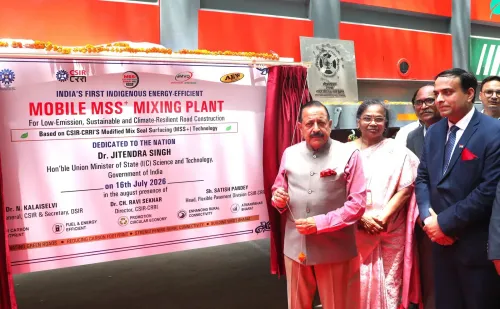
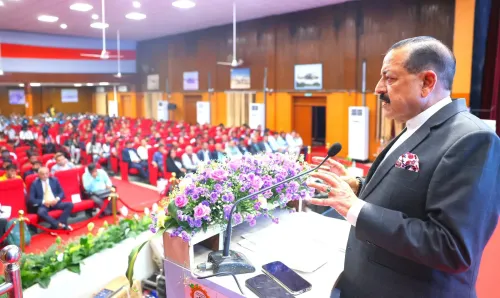
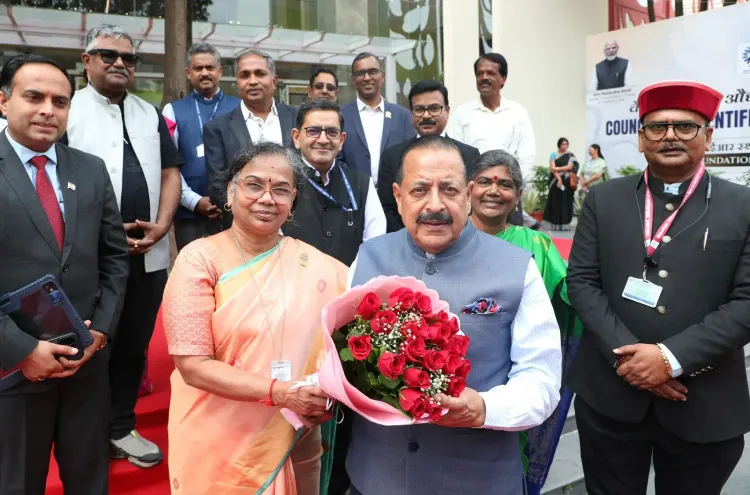
Union Minister Dr. Jitendra Singh attended the 85th Foundation Day of CSIR on 25 September 2026, joining DG Dr. N. Kalaiselvi and senior scientists from across the organisation's national laboratory network for a milestone gathering of India's applied research leadership.
Key Takeaways
Jitendra Singh attended the 85th CSIR Foundation Day on 25 September 2026 .
CSIR Director General Dr.
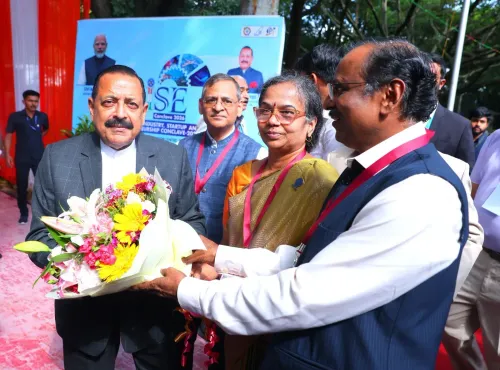
Kalaiselvi — the first woman to hold the post — received the minister at the event.
Secretaries of the science ministries and directors from multiple CSIR laboratories were present.
CSIR was established on 26 September 1942 , making it India's oldest and largest autonomous public R&D organisation.
Foundation Day gatherings traditionally serve as a working review of ongoing programmes aligned with national technology priorities.
Eighty-four years after India's most ambitious public science institution was born in the crucible of the independence movement, its founders' bet on homegrown industrial research got a fresh moment of reckoning. Union Science and Technology Minister Dr. Jitendra Singh arrived at the 85th Foundation Day Celebrations of the Council of Scientific and Industrial Research (CSIR) on Friday, 25 September 2026, joining a gathering of laboratory directors, senior scientists and ministry secretaries to mark the milestone.
A room full of India's scientific brass
The minister was received by CSIR Director General Dr. N. Kalaiselvi — the first woman ever to hold that office — alongside secretaries from across the science ministries and directors drawn from CSIR's sprawling network of laboratories. The assembly underscored just how seriously the government treats the anniversary: this is not a ceremonial cake-cutting but a working convocation of the people who run Indian applied science.
What CSIR's 84-year arc means for 'Make in India' science
CSIR was established on 26 September 1942 — still under British administration — with an explicit mandate to build the industrial and scientific backbone a future independent nation would need. Today it is India's largest autonomous public R&D organisation, with laboratories spanning chemicals, pharmaceuticals, materials science and biotechnology. Successive governments have treated it as a primary instrument of technological self-reliance, and foundation-day gatherings have historically doubled as internal stocktaking sessions: where are the programmes, what is working, what needs a push.
Dr. Kalaiselvi's presence as DG carries its own symbolic weight at an event like this — her appointment broke an 80-year glass ceiling at the organisation and signalled an intention to open its highest ranks to talent regardless of gender.
Why the 85th edition lands with extra resonance
The ministry's current policy thrust — domestic innovation, reduced import dependence in critical materials, and deeper industry-lab linkages — maps almost perfectly onto the original charter CSIR was handed in 1942. Foundation Day is the one occasion in the calendar when that continuity is made visible: the minister, the DG, the lab directors and the scientists all in the same room, measuring the distance between the founding ambition and where the organisation stands today. What comes out of those conversations — new programme announcements, budget signals, fresh lab mandates — will be worth watching in the days ahead.
Point of View
Not merely a ceremonial one. Dr. Kalaiselvi's visible co-hosting role reinforces the current leadership's emphasis on representation within India's scientific institutions. With the government's self-reliance agenda demanding faster lab-to-industry translation, CSIR's foundation-day deliberations feed directly into budget and programme decisions. The broader arc is one of an 84-year-old institution being asked to move faster than at any point in its history.
NationPress
25 Sept 2026
Frequently Asked Questions
What is CSIR and when was it founded?
The Council of Scientific and Industrial Research (CSIR) is India's largest autonomous public R&D organisation, established on 26 September 1942 under the Ministry of Science and Technology to advance applied research and industrial development.
Who is Dr. N. Kalaiselvi and why is her role significant?
Dr. N. Kalaiselvi is the Director General of CSIR and Secretary of the Department of Scientific and Industrial Research. She is the first woman ever appointed to lead the organisation in its more than eight-decade history.
What was the occasion of Dr. Jitendra Singh's visit to CSIR?
Dr. Jitendra Singh attended the 85th Foundation Day Celebrations of CSIR on 25 September 2026 , joining the DG, ministry secretaries and laboratory directors from across the CSIR network.
What is Dr. Jitendra Singh's role in the government?
Dr. Jitendra Singh is the Union Minister of State (Independent Charge) for Science and Technology and Earth Sciences, and also serves as Minister of State in the Prime Minister's Office and for Personnel.
Why are CSIR Foundation Day events significant?
Foundation Day gatherings bring together top ministry leadership and laboratory directors to review ongoing research programmes and align CSIR's work with national priorities such as technological self-reliance and domestic innovation.