Dr. Jitendra Singh Rallies Nation Behind #IndiaWithVikram1
Synopsis
Science Minister Dr. Jitendra Singh posted #IndiaWithVikram1 on 18 July 2026, publicly backing India's Vikram lunar lander legacy. The move signals sustained political support for ISRO's Moon programme following the landmark Chandrayaan-3 south-pole landing in August 2023.
Key Takeaways
Union Science Minister Dr.
Jitendra Singh posted #IndiaWithVikram1 on 18 July 2026 , rallying public support for India's lunar lander programme.
The hashtag references Vikram , the lander module that achieved India's historic soft landing near the lunar south pole during Chandrayaan-3 in August 2023 .
India became the fourth country to achieve a controlled lunar landing and the first to land at the Moon's south pole with Chandrayaan-3.
ISRO 's Chandrayaan programme is part of a wider national strategy to build self-reliance in space systems and expand international scientific partnerships.
Ministerial social media engagement around space milestones is a consistent government tool for building public ownership of ISRO 's achievements.
Attention is expected to focus on the timeline for follow-on lunar missions and their integration with the Gaganyaan human spaceflight programme.
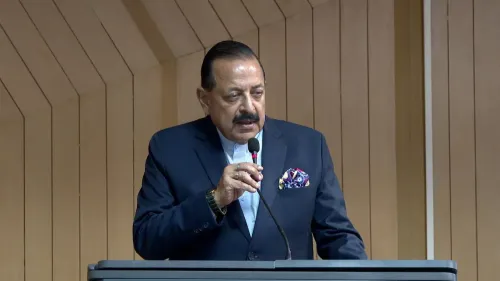
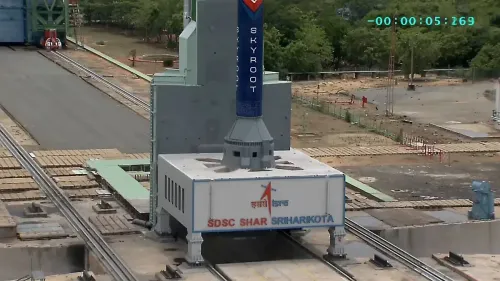
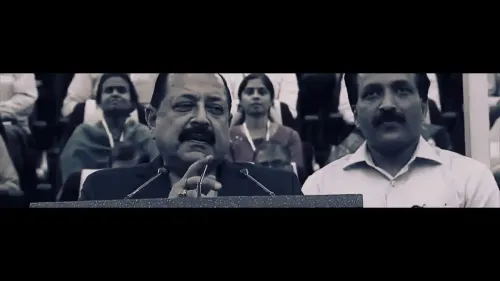
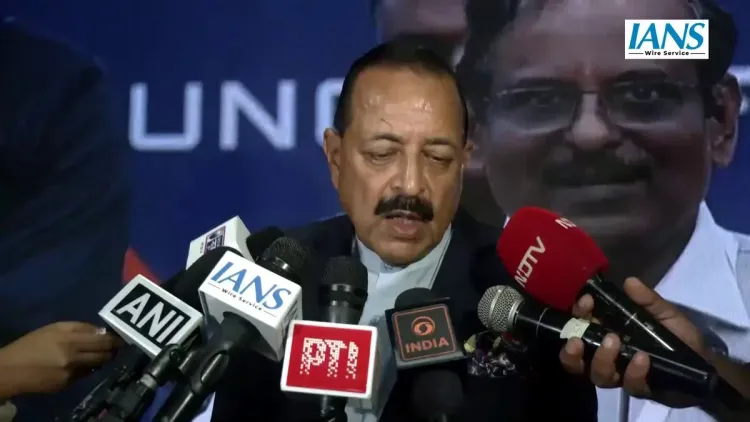
Union Science and Technology Minister Dr. Jitendra Singh took to X on Saturday, 18 July 2026, to publicly express solidarity with India's lunar programme, posting the hashtag #IndiaWithVikram1 alongside a video, signalling national backing for the next chapter of India's Moon mission ambitions.
Context
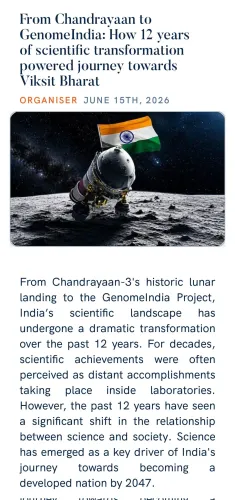
The hashtag #IndiaWithVikram1 carries unmistakable resonance for the Indian space community. Vikram is the name of the lander module central to ISRO's Chandrayaan series — most memorably the lander that achieved a historic soft landing near the lunar south pole during Chandrayaan-3 in August 2023, making India only the fourth country in the world to achieve a controlled lunar landing and the first to do so at the south pole.
A Union minister's public rallying call under such a hashtag is a deliberate act of institutional endorsement, channelling public sentiment toward the country's ongoing space endeavours and the scientists who drive them.
Policy Backdrop
India's lunar exploration programme has been built across successive Chandrayaan missions, each designed to demonstrate and expand indigenous landing, rover, and payload technologies. The Chandrayaan-3 success in 2023 was a watershed moment, validating ISRO's propulsion, guidance, and soft-landing systems after the partial setback of Chandrayaan-2's lander in 2019.
The broader strategic framework positions space self-reliance as a pillar of national capability, with ISRO simultaneously advancing the Gaganyaan human spaceflight programme and exploring international data-sharing partnerships. Successive governments have maintained continuity in institutional funding and political support for these missions, and ministerial visibility on social media has become a consistent tool for building public engagement around space milestones.
Stakeholders and Impact
ISRO's scientists and engineers are the primary stakeholders in any Vikram-related development, having invested years in perfecting the lander's autonomous descent algorithms and structural design. Public expressions of support from senior ministers like Dr. Jitendra Singh serve a dual purpose: they reinforce institutional morale within the space agency and signal to the broader scientific community that political backing for ambitious missions remains firm.
For the wider space research community and India's growing private space sector, such signals matter. Startups and research institutions calibrating their roadmaps around national space policy take cues from ministerial posture, particularly when it aligns with a flagship programme like the Chandrayaan-Vikram lineage.
What's Next
The hashtag and accompanying video are likely to prompt parliamentary and public attention on the timeline and status of follow-on lunar missions, as well as their integration with the Gaganyaan human spaceflight schedule. Any formal announcement on a next-generation Vikram lander or a successor lunar mission would represent a significant policy moment for India's space programme.
As India deepens its planetary science ambitions, ministerial communication of this kind sets the tone for how the government intends to frame space achievements as a matter of collective national pride — keeping public enthusiasm primed ahead of what could be another landmark mission.
Point of View
Whether a mission update, anniversary, or policy announcement. Dr. Jitendra Singh's post fits a well-established pattern of using ministerial platforms to build public ownership of ISRO's achievements, blurring the line between science communication and political branding. The choice of 'Vikram1' in the hashtag is notable: it implies a numbered lineage, potentially telegraphing a follow-on mission framing. Watched alongside the Gaganyaan timeline, this signals that India's space narrative is being actively managed at the highest political levels ahead of what could be another high-visibility lunar milestone.
NationPress
18 Jul 2026
Frequently Asked Questions
What is #IndiaWithVikram1 about?
#IndiaWithVikram1 is a hashtag used by Science Minister Dr. Jitendra Singh on 18 July 2026 to express national solidarity with India's Vikram lunar lander programme, which is central to ISRO's Chandrayaan missions.
Who is Vikram in the context of ISRO?
Vikram is the name of the lander module used in ISRO's Chandrayaan missions. It achieved a historic soft landing near the lunar south pole during Chandrayaan-3 in August 2023, making India the first country to land there.
What did Chandrayaan-3 achieve?
Chandrayaan-3's Vikram lander successfully soft-landed near the Moon's south pole in August 2023, making India only the fourth nation to achieve a controlled lunar landing and the first to do so at the south pole.
What is Dr. Jitendra Singh's role in India's space programme?
Dr. Jitendra Singh is the Union Minister of State (Independent Charge) for Science and Technology and Earth Sciences, making him the senior political overseer of ISRO and India's broader scientific research institutions.
Is there a new Vikram lander mission planned after Chandrayaan-3?
As of the available information, no specific new Vikram lander mission has been officially confirmed, though India's space policy roadmap includes follow-on lunar missions and the Gaganyaan human spaceflight programme.