Eastern Railway targets 99 non-interlocked LC gates after Berhampore crash kills 5
Synopsis
Five deaths — three of them schoolchildren — at a Berhampore level crossing have forced Eastern Railway into emergency mode. With 99 non-interlocked gates still on its network and a general manager now personally driving the overhaul, the zone is racing to make human error at LC gates structurally impossible.
Key Takeaways
A fatal LC gate accident in Berhampore, West Bengal killed five people , including three schoolchildren , triggering an Eastern Railway safety drive.
Eastern Railway has 906 manned LC gates ; 807 are interlocked , leaving 99 non-interlocked to be converted.
Sealdah Division leads with 368 of 379 gates interlocked; Howrah and Asansol each have 34 non-interlocked gates remaining.
Interlocked gates electronically prevent a signal from turning green unless the barrier is fully closed and locked, eliminating human error.
579 subways and underpasses already exist across the zone; more Road Under Bridges (RUBs) and Limited Height Subways (LHS) are under construction.
ER General Manager Milind Deouskar is personally leading the modernisation push across all four divisions.
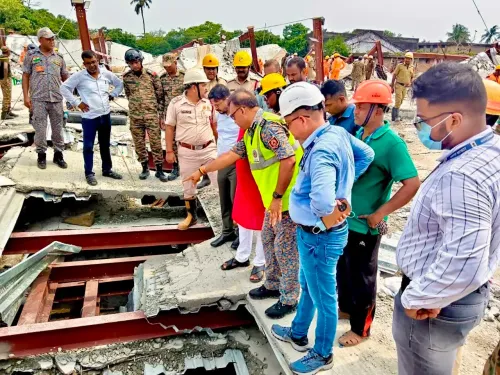
Eastern Railway (ER) has launched a mission to convert all 99 remaining non-interlocked Level Crossing (LC) gates across its four divisions to interlocked ones, following a fatal accident at an LC gate in Berhampore, West Bengal, that claimed five lives — including three schoolchildren. The tragedy has prompted the railway zone to treat the safety overhaul as a top operational priority.
What Triggered the Drive
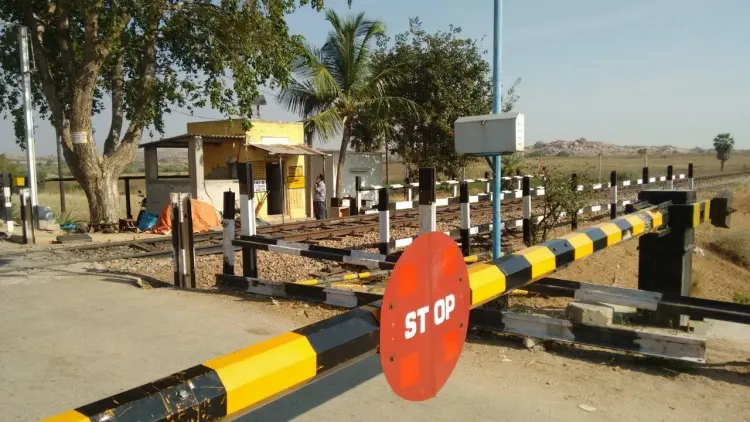
The Berhampore accident exposed the inherent vulnerability of non-interlocked LC gates, where safety depends entirely on telephonic communication between station staff and gatekeepers before a train passes. While gatekeepers routinely perform their duties, the manual nature of the system leaves a window for human error or communication delay — a gap that, in this case, proved fatal.
This is not the first time non-interlocked gates have come under scrutiny. Railway safety audits have repeatedly flagged manual LC gates as among the highest-risk points on the Indian rail network, and the Berhampore crash has now given the issue fresh urgency.
How Interlocked Gates Work
In an interlocked LC gate system, the physical barrier is electronically synchronised with the signalling network. According to a senior ER official, 'the signal cannot turn green unless the LC gate is completely closed, locked, and secured tightly. If a gate remains open even by an inch, the signal stays red, stopping the train safely and removing all chances of human error.' The technology effectively removes the human link in the safety chain at these crossings.
Division-Wise Progress
Of the 906 manned LC gates across Eastern Railway's four divisions, 807 are already interlocked, leaving 99 non-interlocked. The division-wise breakdown is as follows:
In the Sealdah Division, 368 of 379 manned LC gates are interlocked, with only 11 remaining non-interlocked. The Howrah Division has 267 interlocked out of 301, with 34 still to be converted. The Asansol Division has 93 interlocked out of 127, leaving 34 non-interlocked. The Malda Division has 79 interlocked out of 99, with 20 pending conversion.
Subways and Underpasses as Long-Term Solution
Where conversion to interlocked gates is not feasible, Eastern Railway is constructing Road Under Bridges (RUBs) and Limited Height Subways (LHS) to allow road vehicles, ambulances, and pedestrians to cross beneath railway tracks without ever interacting with a live line. The zone already operates 579 subways and underpasses, and more are planned. According to officials, work has begun 'on a war footing.'
ER General Manager Milind Deouskar is reportedly spearheading the modernisation drive across all four divisions — Sealdah, Howrah, Asansol, and Malda — with meticulous planning and execution timelines. Eastern Railway CPRO Shibram Majhi said there would be 'a constant endeavour to save lives in the railway network.'
What Comes Next
The remaining 99 non-interlocked gates are to be either upgraded or replaced by subways. Given that Sealdah Division has already converted over 97% of its gates, the focus now falls on Howrah, Asansol, and Malda, where conversion rates lag behind. If the current pace holds, Eastern Railway could achieve near-complete interlocking across its network within the coming months — a milestone that would significantly reduce the risk of LC gate-related fatalities.
Point of View
And the question is why it took five deaths, three of them children, to convert urgency into action. The interlocking technology itself is not new or expensive; the bottleneck has always been execution priority. If this drive holds, it will matter. If it follows the pattern of post-accident sprints that fade once media attention moves on, the next LC gate fatality is only a matter of time.
NationPress
21 Oct 2026
Frequently Asked Questions
What happened at the Berhampore level crossing that triggered this drive?
A train accident at a Level Crossing gate in Berhampore, West Bengal, killed five people, including three schoolchildren. The incident exposed the risks of non-interlocked LC gates that rely on manual telephonic communication between station staff and gatekeepers.
What is the difference between an interlocked and a non-interlocked LC gate?
A non-interlocked gate depends on manual communication to coordinate gate closure with train movement, leaving room for human error. An interlocked gate is electronically linked to the signalling system — the signal cannot turn green unless the barrier is fully closed and locked, making human error structurally impossible.
How many non-interlocked LC gates does Eastern Railway still have?
Eastern Railway has 99 non-interlocked LC gates remaining out of 906 total manned gates across its four divisions — Sealdah (11), Howrah (34), Asansol (34), and Malda (20). The remaining 807 are already interlocked.
What alternatives to LC gates is Eastern Railway building?
Eastern Railway is constructing Road Under Bridges (RUBs) and Limited Height Subways (LHS) at select locations, allowing vehicles, ambulances, and pedestrians to cross beneath railway tracks without interacting with a live line. The zone already has 579 such subways and underpasses.
Who is leading Eastern Railway's LC gate modernisation drive?
Eastern Railway General Manager Milind Deouskar is personally spearheading the modernisation drive across all four divisions. CPRO Shibram Majhi has stated that saving lives in the railway network will remain a constant priority.