Eastern Railway Saves Rs 63 Crore in 2025-26 via Solar & Green Energy Push
Synopsis
Eastern Railway saved over Rs 63 crore in 2025-26 by generating 22.15 MU of solar energy, deploying 508 three-phase regenerative locomotives, improving power factor, and shutting down all diesel locomotives — saving 3,277 KL of High Speed Diesel and significantly cutting its carbon footprint across West Bengal, Jharkhand, and Bihar.
Key Takeaways
Eastern Railway reported total green energy savings of over Rs 63 crore in 2025-26 across multiple initiatives.
22.15 Million Units (MU) of solar energy were generated, saving Rs 12.13 crore — a 6.50 per cent rise over the previous year.
508 three-phase locomotives using regenerative braking saved Rs 16.86 crore in March 2026 alone, with an average monthly saving of Rs 14.43 crore .
Improved power factor utilisation saved Rs 4.40 crore cumulatively up to February 2026 and Rs 1.36 crore in March 2026 .
A forced shutdown of all diesel locomotives on the fully electrified network saved 3,277.26 kilo litres of High Speed Diesel (HSD) , worth Rs 30.56 crore .
Eastern Railway serves West Bengal, Jharkhand, and parts of Bihar across a 2,848-km electrified network , established on April 14, 1952 .
Eastern Railway (ER) has reported combined savings of over Rs 63 crore in the financial year 2025-26 by aggressively adopting green energy measures, including expanded solar generation, improved power factor utilisation, regenerative braking technology, and a full forced shutdown of diesel locomotives across its 2,848-km electrified network in eastern India. The zone, headquartered at Fairlie Place, Kolkata, says these steps have simultaneously slashed its carbon footprint — a significant milestone for one of India's busiest rail corridors.
Solar Energy Generation Crosses 22 MU Mark
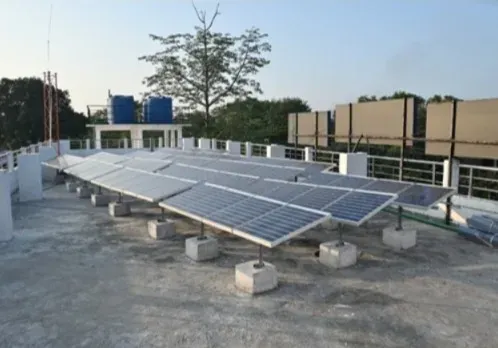
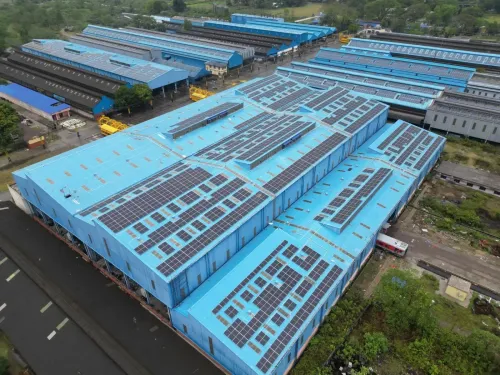
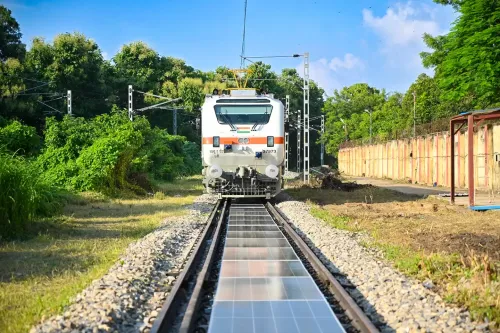
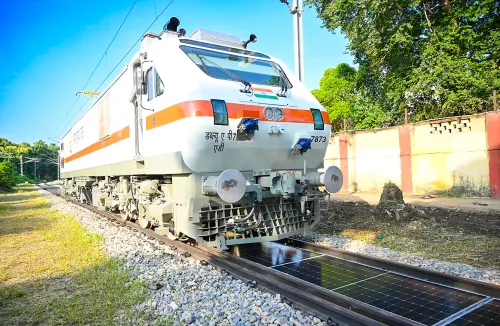
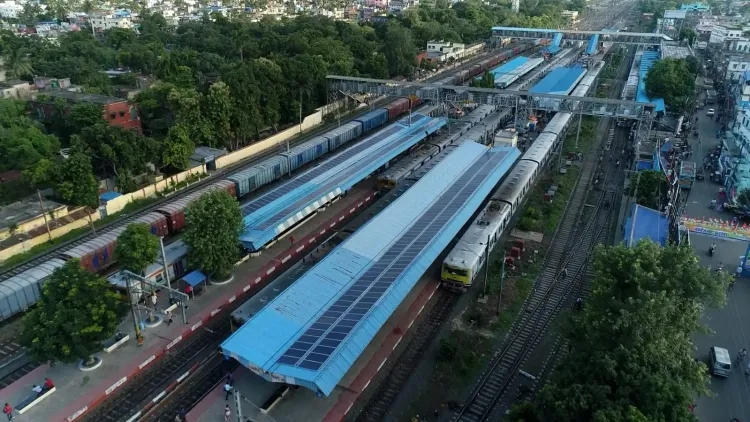
Eastern Railway generated 22.15 Million Units (MU) of solar energy in 2025-26, marking a 3.40 per cent increase compared to the previous financial year. This solar push alone translated into a cost saving of Rs 12.13 crore, which was 6.50 per cent higher than the savings recorded in the year prior.
Shibram Majhi, Chief Public Relations Officer (CPRO), Eastern Railway, confirmed these figures, underlining that the zone's sustained investment in rooftop and ground-mounted solar infrastructure is now yielding measurable financial returns. The growth in solar output also reduces dependence on grid electricity, which is still partially coal-powered, thereby lowering the zone's indirect carbon emissions.
Power Factor Improvement Adds Rs 4.40 Crore in Savings
Beyond solar, Eastern Railway focused on improving its power factor — a critical electrical engineering metric that measures how efficiently electrical power is consumed. A poor power factor leads to energy wastage and higher utility bills; improving it directly reduces costs without requiring additional infrastructure investment.
The zone recorded a cumulative saving of Rs 4.40 crore through better power factor utilisation up to February 2026. In March 2026 alone, the traction energy bill saving attributable to improved power factor stood at Rs 1.36 crore, according to CPRO Majhi.
Three-Phase Locomotives Drive Regenerative Energy Savings
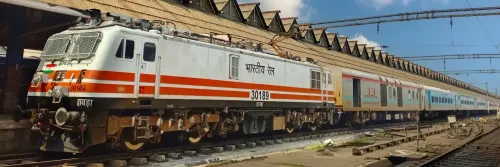
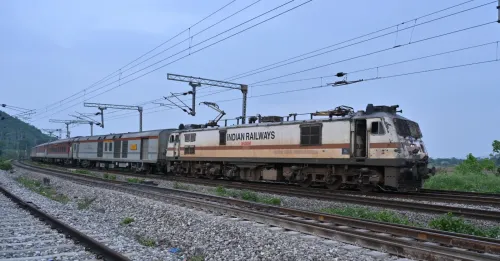
One of the largest contributors to the zone's energy savings is the widespread deployment of 3-phase electric locomotives, which have the capability to regenerate electricity during braking and feed it back into the traction grid — a process known as regenerative braking. This recovered energy can then power other trains on the same network, dramatically improving overall energy efficiency.
Eastern Railway deployed 508 three-phase locomotives in March 2026, resulting in a saving of Rs 16.86 crore in that single month. The average monthly saving through regenerative energy across the financial year has been Rs 14.43 crore, making it the single biggest energy-saving lever for the zone.
This is particularly significant given that Indian Railways as a whole has set an ambitious target of achieving net-zero carbon emissions by 2030, and regenerative braking is one of the key technologies enabling that transition nationally.
Diesel Locomotive Shutdown Saves 3,277 KL of Fuel
Since Eastern Railway operates a fully electrified network, it undertook a forced shutdown of all diesel locomotives during 2025-26 — eliminating fossil fuel consumption from its traction operations entirely. The total quantity of High Speed Diesel (HSD) saved as a result was approximately 3,277.26 kilo litres.
This fuel saving generated a financial benefit of Rs 30.56 crore, making it the highest single-category saving among all the green initiatives reported for the year. Beyond the monetary value, eliminating diesel traction directly reduces particulate matter (PM2.5) and NOx emissions in densely populated urban corridors across West Bengal, Jharkhand, and Bihar — regions where air quality is a persistent public health concern.
Broader Significance and What Comes Next
The combined savings of over Rs 63 crore across all green energy initiatives represent not just a financial win but a template that other railway zones may replicate. Eastern Railway, established on April 14, 1952, is one of 19 zonal railways under Indian Railways and serves one of the most densely populated stretches of the country.
Notably, Indian Railways has been on an aggressive electrification drive over the past decade, with overall network electrification crossing 95 per cent by early 2025 — up from just 45 per cent in 2014. Eastern Railway's results validate the financial logic of full electrification, as the diesel savings alone justify the capital expenditure on overhead electrification infrastructure.
Critics and independent analysts have, however, pointed out that while operational savings are commendable, the grid electricity consumed by electric locomotives is still significantly sourced from thermal power plants, meaning the full decarbonisation story depends on how fast India transitions its overall energy mix to renewables. The zone's growing solar generation is a step in the right direction, but scaling rooftop solar across all railway stations and yards remains a work in progress.
As Indian Railways moves toward its 2030 net-zero target, Eastern Railway's 2025-26 performance will likely serve as a benchmark. Stakeholders should watch for the zone's solar capacity expansion plans and whether the forced diesel shutdown will be formally codified as a permanent operational policy in the upcoming annual report.
Point of View
But the deeper story is about systemic efficiency — India's railways are proving that full electrification pays for itself, and fast. What mainstream coverage misses is the air quality dividend: shutting down diesel locomotives in densely populated eastern India corridors is a public health intervention as much as a financial one. However, the inconvenient truth remains — until the grid powering those electric locomotives runs on renewables, 'zero diesel' does not mean 'zero carbon.' The 2030 net-zero pledge will be won or lost not in railway yards, but in India's power generation mix.
NationPress
24 Sept 2026
Frequently Asked Questions
How much did Eastern Railway save in 2025-26 through green energy initiatives?
Eastern Railway saved over Rs 63 crore in 2025-26 through a combination of solar energy generation, improved power factor utilisation, regenerative braking by three-phase locomotives, and a forced shutdown of diesel locomotives. The diesel shutdown alone accounted for Rs 30.56 crore in savings.
How much solar energy did Eastern Railway generate in 2025-26?
Eastern Railway generated 22.15 Million Units (MU) of solar energy in 2025-26, a 3.40 per cent increase over the previous year. This resulted in a saving of Rs 12.13 crore, which was 6.50 per cent higher than the prior year's solar savings.
What is regenerative braking and how does it help Indian Railways save energy?
Regenerative braking is a technology used in three-phase electric locomotives that recovers kinetic energy during braking and feeds it back into the traction power grid. Eastern Railway saved Rs 16.86 crore in March 2026 alone using 508 such locomotives, with an average monthly saving of Rs 14.43 crore across the year.
Why did Eastern Railway shut down its diesel locomotives in 2025-26?
Eastern Railway shut down diesel locomotives because its entire network of approximately 2,848 km is fully electrified, making diesel traction redundant. The shutdown saved 3,277.26 kilo litres of High Speed Diesel and resulted in a cost saving of Rs 30.56 crore while also reducing fossil fuel emissions.
What is Indian Railways' target for net-zero carbon emissions?
Indian Railways has set a target to achieve net-zero carbon emissions by 2030. Eastern Railway's green energy initiatives in 2025-26, including solar expansion and diesel elimination, are aligned with this national decarbonisation goal.