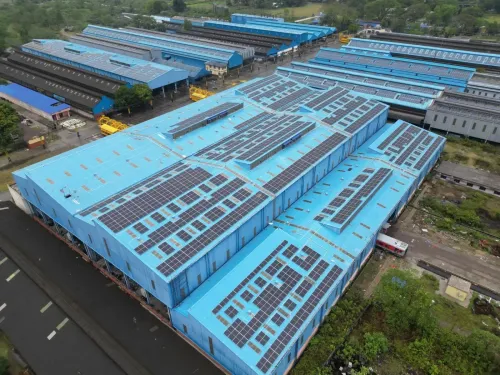
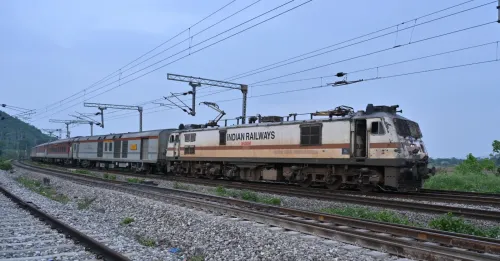
NFR hits 42.1 MWp solar capacity, leads all Zonal Railways in 2026
Synopsis
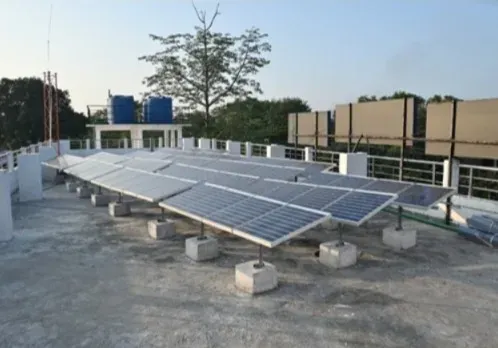
Northeast Frontier Railway has quietly become the top solar performer among all of India's Zonal Railways, commissioning 23.7 MWp in just seven months of 2026 — more than any other zone. With savings jumping 95% year-on-year to ₹8.6 crore and another 9 MWp in the pipeline, NFR's green push is as much a financial story as an environmental one.
Key Takeaways
NFR reached a total installed solar capacity of 42.1 MWp as of July 2026 , since its solarisation initiative began in 2011 .
NFR commissioned 23.7 MWp between January and July 2026 — the highest addition among all Zonal Railways of Indian Railways in this period.
Lumding Division (including Guwahati) leads with 17.7 MWp ; Rangiya Division follows with 9.6 MWp .
Solar generation in FY 2025–26 reached approximately 114 lakh units , saving around ₹8.6 crore — up roughly 90% and 95.45% respectively over the previous year.
An additional 9 MWp is currently under implementation across Lumding, Rangiya, Katihar, and Alipurduar divisions.
Northeast Frontier Railway (NFR) has crossed a total installed solar capacity of 42.1 MWp across its zone as of July 2026, marking a significant milestone in the railway's green energy journey that began with its solarisation initiative back in 2011. The achievement positions NFR as the frontrunner among all Zonal Railways of Indian Railways in solar capacity addition during the current calendar year.
Record Capacity Addition in 2026
NFR's Chief Public Relations Officer (CPRO) Kapinjal Kishore Sharma confirmed that 23.7 MWp of solar power capacity was commissioned between January and July 2026 alone — the highest single-period addition recorded by any Zonal Railway in the country during this timeframe. This rapid scale-up reflects a deliberate acceleration in the railway's renewable energy deployment strategy.
The cumulative 42.1 MWp figure represents over 15 years of sustained investment in solar infrastructure, spanning multiple divisions and operational units across NFR's vast network in the Northeast.
Division-Wise Solar Breakdown
Among NFR's divisions, Lumding Division — which includes the Guwahati portion — leads with the highest cumulative installation of 17.7 MWp. Rangiya Division follows with 9.6 MWp. Divisions at Alipurduar (West Bengal), Katihar (Bihar), and Tinsukia (Assam) have also contributed meaningfully to the overall capacity, reinforcing clean energy adoption across geographically diverse terrains.
Financial and Operational Gains
The solar push has delivered measurable financial returns. During financial year 2025–26, NFR's solar installations generated approximately 114 lakh units of electricity, yielding savings of around ₹8.6 crore. This represents a near-doubling of output compared to 2024–25, when around 60 lakh units were generated and savings stood at approximately ₹4.4 crore.
The year-on-year increase amounts to roughly 90% in solar energy generation and approximately 95.45% in financial savings — a trajectory that underscores the compounding benefit of scaling renewable capacity.
Pipeline and Expansion Plans
NFR currently has an additional 9 MWp of solar capacity under various stages of implementation across its divisions. Major upcoming installations are planned in Lumding, Rangiya, Katihar, and Alipurduar divisions, according to Sharma. Once commissioned, these projects are expected to push NFR's renewable energy footprint significantly higher.
NFR, headquartered at Maligaon near Guwahati, operates across the Northeastern states as well as seven districts of West Bengal and five districts of Bihar. Its solar expansion aligns with Indian Railways' broader ambition of becoming a net-zero carbon emitter — a target that requires every zonal railway to meaningfully reduce dependence on grid power. With 9 MWp more in the pipeline, NFR's renewable capacity is set to grow further before the financial year closes.
Point of View
Where grid reliability is historically patchy and energy self-sufficiency has direct operational value. The 95% jump in cost savings also signals that solar is no longer just a compliance exercise for Indian Railways; it is becoming a genuine cost lever. The real question is whether the 9 MWp pipeline translates on schedule — past railway infrastructure timelines have often slipped. If NFR delivers, it sets a replicable template for other zones lagging on renewables.
NationPress
8 Oct 2026
Frequently Asked Questions
What is NFR's total solar capacity as of 2026?
Northeast Frontier Railway has achieved a total installed solar capacity of 42.1 MWp as of July 2026, since its solarisation initiative was launched in 2011. This includes 23.7 MWp commissioned between January and July 2026 alone.
How does NFR rank among Indian Railways zones in solar power?
NFR commissioned the highest solar capacity — 23.7 MWp — among all Zonal Railways of Indian Railways during January to July 2026, making it the top performer in the country for this period.
Which NFR division has the most solar capacity?
Lumding Division, including the Guwahati portion, leads with the highest cumulative solar installation of 17.7 MWp. Rangiya Division follows with 9.6 MWp, with Alipurduar, Katihar, and Tinsukia divisions also contributing.
How much money has NFR saved through solar power?
In financial year 2025–26, NFR's solar installations generated around 114 lakh units of electricity, resulting in savings of approximately ₹8.6 crore — a rise of about 95.45% over the ₹4.4 crore saved in 2024–25.
What are NFR's upcoming solar expansion plans?
NFR has 9 MWp of additional solar capacity under various stages of implementation, with major installations planned in Lumding, Rangiya, Katihar, and Alipurduar divisions. These are expected to further boost NFR's renewable energy capacity in the near future.