NFR achieves 100% railway electrification across Northeast in under 10 years
Synopsis
From zero electrification in 2014 to 100 per cent coverage by 2026-27 — NFR's transformation of railway infrastructure across the Northeast spans 4,311.96 route kilometres across nine states and sub-regions. With the last sections in Mizoram and Assam completed just weeks ago, it is a rare infrastructure story where the target was actually met.
Key Takeaways
Northeast Frontier Railway (NFR) achieved 100% electrification across its jurisdiction by 2026-27 , up from zero coverage before 2014 .
Total electrified network spans 4,311.96 Route Kilometres (RKM) across nine states and sub-regions.
Assam leads with 2,546.04 RKM , followed by West Bengal (987.51 RKM) and Bihar (427.49 RKM) .
The electrification drive formally began in 2017-18 , with the peak year being 2024-25 at 1,141.38 RKM .
The Lumding–Badarpur section was completed on 14 September 2026 and the Bairabi–Sairang section in Mizoram on 12 October 2026 .
NFR's completion supports Indian Railways' national goal of 100% broad-gauge electrification .
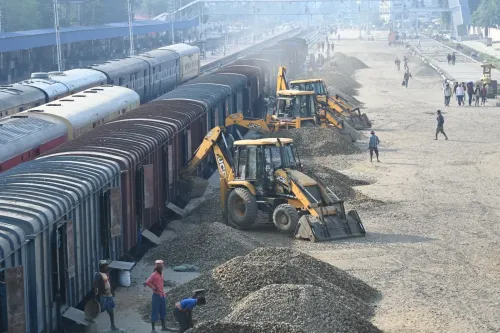
The Northeast Frontier Railway (NFR) has completed 100 per cent railway electrification across its entire jurisdiction in under a decade, officials announced on Tuesday, 17 November 2026 in Guwahati. The milestone is especially significant given that the Northeast had zero railway electrification before 2014, making the turnaround one of the most dramatic infrastructure transformations in the region's history.
Scale of the Achievement
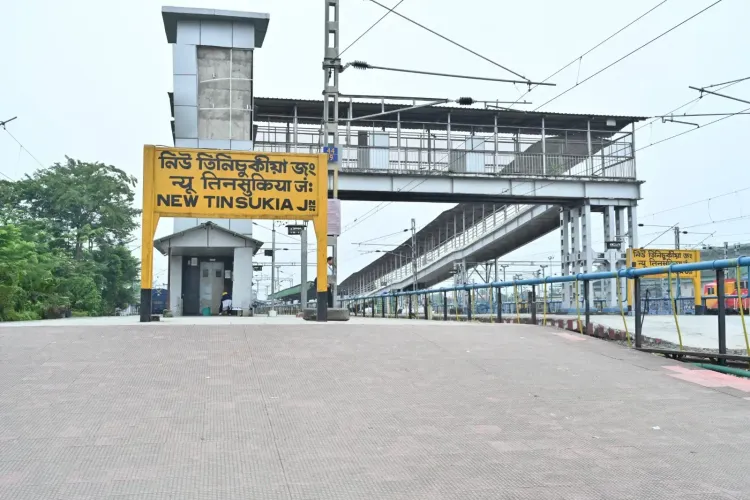
According to Kapinjal Kishore Sharma, Chief Public Relations Officer (CPRO) of NFR, cumulative electrification up to 2026-27 stands at 4,311.96 Route Kilometres (RKM) across the railway zone's jurisdiction. The NFR, headquartered at Maligaon near Guwahati, operates across the Northeastern states as well as seven districts of West Bengal and five districts of north Bihar.
State-wise, Assam accounts for the largest share at 2,546.04 RKM, followed by West Bengal at 987.51 RKM and Bihar at 427.49 RKM. Electrification has also been recorded in Tripura (269.45 RKM), Mizoram (52.88 RKM), Arunachal Pradesh (11.67 RKM), Meghalaya (9.58 RKM), Nagaland (6 RKM) and Manipur (1.35 RKM).
Year-wise Progress
The electrification drive gained momentum progressively. In 2023-24, NFR electrified 915.62 RKM, followed by its single-year peak of 1,141.38 RKM in 2024-25. A further 445.66 RKM was covered in 2025-26, with 141.77 RKM recorded so far in the current financial year 2026-27. The initiative formally commenced in 2017-18, roughly three years after the region registered its first electrification activity post-2014.
Recent Section Completions
Among the most recently completed segments, electrification of the Lumding–Badarpur section was finalised on 14 September 2026, and the Bairabi–Sairang section in Mizoram was completed on 12 October 2026. These two additions bridged the remaining gap in NFR's network coverage. Sharma noted that electrification work is also progressing simultaneously in ongoing new railway line projects, ensuring future infrastructure is equipped with energy-efficient traction systems from the outset.
Why This Matters for the Northeast
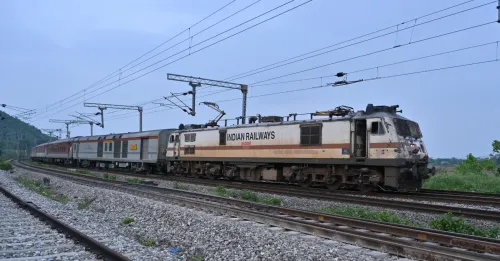
Railway electrification eliminates dependence on diesel traction, cutting operating costs, reducing carbon emissions and improving train frequency and speed. For a region long characterised by connectivity deficits, the shift has direct consequences for passenger reliability and freight movement. This comes amid Indian Railways' broader national target of achieving 100 per cent electrification of its broad-gauge network — a goal NFR has now fully realised within its zone. The NFR's completion positions it as a benchmark for other zones still working toward that target.
Point of View
However, is utilisation: electrification is only transformative if traction upgrades, locomotive deployment and power supply reliability keep pace. The Northeast's grid has historically been fragile, and electric traction is only as reliable as the overhead power feeding it. The more meaningful test will come in operational metrics — train punctuality, freight turnaround and frequency additions — over the next two to three years.
NationPress
17 Nov 2026
Frequently Asked Questions
What has NFR achieved in railway electrification?
The Northeast Frontier Railway has completed 100 per cent railway electrification across its entire jurisdiction by 2026-27, covering a total of 4,311.96 Route Kilometres. This is particularly notable as the Northeast had no railway electrification at all before 2014.
Which states are covered under NFR's electrified railway network?
NFR's electrified network covers Assam, West Bengal, Bihar, Tripura, Mizoram, Arunachal Pradesh, Meghalaya, Nagaland and Manipur. Assam has the largest share at 2,546.04 RKM, with West Bengal at 987.51 RKM and Bihar at 427.49 RKM.
When did NFR's railway electrification drive begin?
The electrification initiative formally commenced in 2017-18, though the broader push began after 2014 when the Northeast had zero electrified rail sections. The drive accelerated significantly in 2024-25, when 1,141.38 RKM were electrified in a single year.
Which were the last sections to be electrified under NFR?
The Lumding–Badarpur section in Assam was electrified on 14 September 2026, and the Bairabi–Sairang section in Mizoram was completed on 12 October 2026. These were among the final segments needed to achieve full coverage across the NFR network.
Why does railway electrification matter for the Northeast?
Electrification removes dependence on diesel traction, lowering operating costs, reducing carbon emissions and enabling more frequent, reliable train services. For a region historically underserved by connectivity infrastructure, full electrification is a foundational step toward faster passenger and freight movement.