Kaziranga ESZ: 10-km buffer stays till Assam notifies new zone, says Himanta Sarma
Synopsis
Assam CM Himanta Biswa Sarma has moved to pre-empt public confusion: the Supreme Court’s mention of a 1-km ESZ for Kaziranga does not dissolve the existing 10-km buffer. Until the state formally notifies a new zone — a multi-step process involving the Centre and the National Board for Wildlife — the stricter 10-km provision stands, keeping pressure on towns like Kaliabor and Bokakhat.
Key Takeaways
Assam CM Himanta Biswa Sarma clarified on 12 August that Kaziranga’s existing 10-km buffer remains in force.
The Supreme Court’s reference to a 1-km ESZ does not automatically replace the current provision.
A formal ESZ notification — requiring state Forest Department proposal, Centre approval, and National Board for Wildlife clearance — must precede any change.
Towns including Kaliabor , Dabhaka , Jakhalabandha , and Bokakhat are among the areas affected by the wider buffer.
Standard ESZ extent is 1 km , expandable to 3 km ; the recently notified ESZ around Deepor Beel was set at 1 km .
Assam Chief Minister Himanta Biswa Sarma on Wednesday, 12 August clarified that the existing 10-kilometre buffer around Kaziranga National Park will remain fully operative until the state government formally notifies a new Eco-Sensitive Zone (ESZ), warning that the Supreme Court's recent direction should not be read as an automatic rollback of the current provision.
What the Supreme Court Actually Said
Addressing a press conference in Guwahati, CM Sarma explained that the Supreme Court's reference to a one-kilometre ESZ does not mean the existing 10-km buffer has been scrapped. “The Supreme Court has said that the Eco-Sensitive Zone will be within one kilometre. This is not about reducing the existing zone. Until the state government notifies the Eco-Sensitive Zone, the 10-kilometre provision will continue to apply,” he said.
Sarma appealed to the public and stakeholders to read the court order carefully before drawing conclusions. “People are saying many things without properly understanding the issue. We need to carefully read and understand the Supreme Court’s order,” he added.
Why the 10-km Zone Is Contentious
The Chief Minister acknowledged that maintaining a 10-km zone carries significant consequences for densely populated areas surrounding Kaziranga, including Kaliabor, Dabhaka, Jakhalabandha, and Bokakhat. A wider ESZ, he noted, could restrict economic activities and create hardships for a large number of residents in these localities.
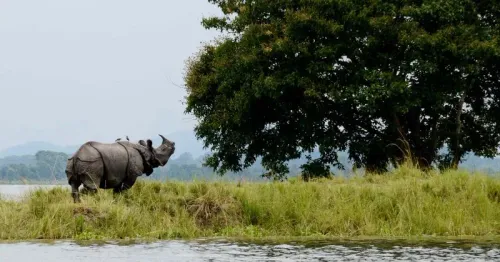
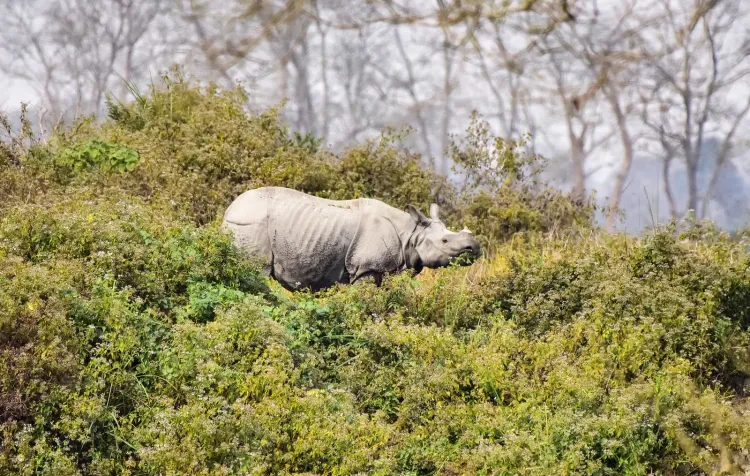
This tension between conservation imperatives and community livelihoods has been a recurring fault line in protected-area governance across India, and Kaziranga — home to the world’s largest population of one-horned rhinoceroses — is among the most politically sensitive cases.
How the ESZ Notification Process Works
Sarma outlined the formal process that must precede any change. The state Forest Department will first prepare a proposal, which the state government will then forward to the Centre. The proposal will subsequently be placed before the National Board for Wildlife before any notification is issued.
He noted that one kilometre is generally considered the standard ESZ extent, though it can be expanded up to three kilometres depending on site-specific conditions. Pointing to a recent precedent, Sarma cited the newly notified ESZ around Deepor Beel in Assam, where the zone has been fixed at one kilometre, underscoring that a 10-km buffer is not a universal requirement for every protected area.
What Happens Next
The 10-km provision will remain in force until the state issues its formal ESZ notification, at which point the notified distance will supersede the current arrangement. The timeline for completing the multi-step notification process — involving the state Forest Department, the Centre, and the National Board for Wildlife — has not yet been specified. Residents and businesses in the affected areas around Kaziranga will need to continue operating under existing restrictions in the interim.
Point of View
While residents and business owners in Kaliabor and Bokakhat see it as an economic stranglehold. By stressing that the Supreme Court order changes nothing immediately, the CM buys time for a negotiated notification that may land closer to 1 km than 10. The precedent of Deepor Beel at 1 km signals the likely direction. What remains unaddressed is a credible timeline: without one, communities in the buffer zone face prolonged uncertainty, and the state risks being seen as using procedural delay to defer a politically uncomfortable decision.
NationPress
12 Aug 2026
Frequently Asked Questions
What did the Supreme Court say about Kaziranga’s Eco-Sensitive Zone?
The Supreme Court indicated that the Eco-Sensitive Zone around Kaziranga National Park should be within one kilometre. However, Assam CM Himanta Biswa Sarma has clarified this does not automatically replace the existing 10-km buffer, which stays in force until the state issues a formal ESZ notification.
Why does the 10-km buffer around Kaziranga remain in effect?
Under the current legal framework, the existing 10-km provision continues to apply until the state government formally notifies a new ESZ. The notification process involves the state Forest Department, the Centre, and the National Board for Wildlife — none of which has been completed yet.
Which areas are affected by Kaziranga’s 10-km eco-sensitive buffer?
Several populated areas fall within the 10-km zone, including Kaliabor, Dabhaka, Jakhalabandha, and Bokakhat. Residents and businesses in these localities face restrictions on economic activities under the current provision.
How is an Eco-Sensitive Zone officially notified in India?
The state Forest Department first prepares a proposal, which the state government forwards to the Centre. It is then placed before the National Board for Wildlife before a formal notification is issued. Only after this process does the notified distance become legally applicable.
What is the standard size of an Eco-Sensitive Zone in India?
One kilometre is generally considered the standard ESZ extent, though it can be expanded up to three kilometres depending on site-specific conditions. Assam’s recently notified ESZ around Deepor Beel, for instance, was fixed at one kilometre.