CM Fadnavis Chairs Meet on Explosives Rules Amendment
Synopsis
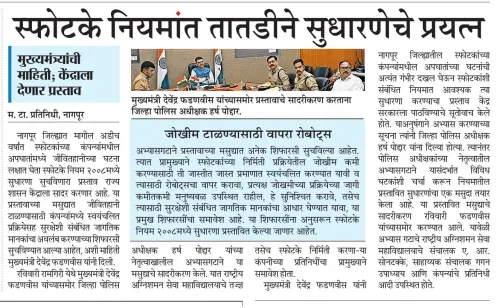
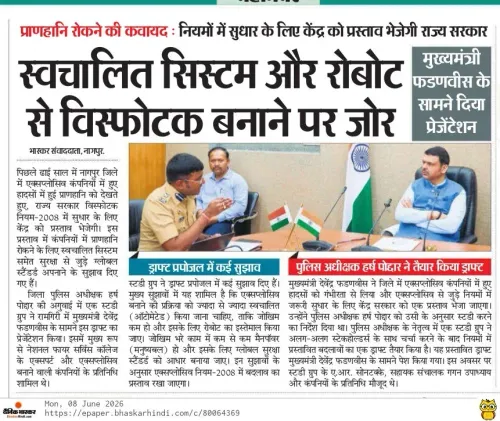
Chief Minister Devendra Fadnavis chaired a meeting at Ramgiri Bungalow, Nagpur, on 7 June 2026 to discuss proposed amendments to the Explosives Rules, 2008. Maharashtra will submit the proposal to the central government aimed at preventing accidents at explosives manufacturing companies.
Key Takeaways
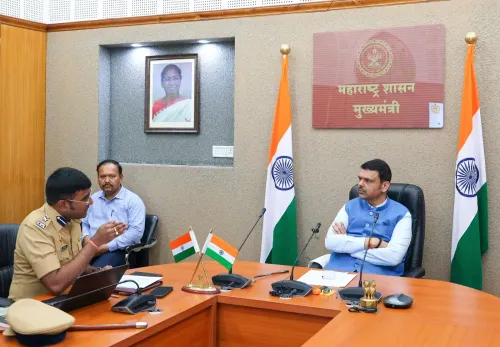
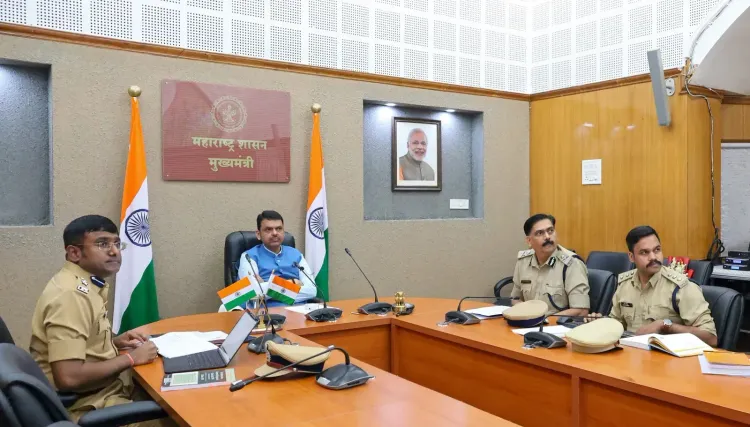
CM Devendra Fadnavis chaired the meeting at Ramgiri Bungalow, Nagpur on 7 June 2026 .
The meeting focused on proposed amendments to the Explosives Rules, 2008 , notified under the Explosives Act, 1908 .
Maharashtra will formally submit its amendment proposals to the central government for consideration.
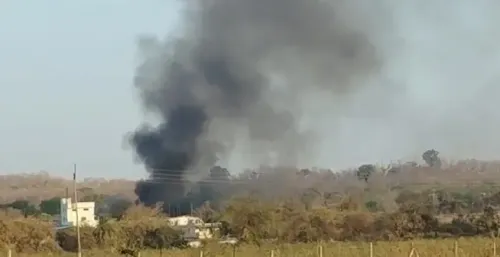
The stated goal of the amendments is to prevent accidents at explosives manufacturing companies .
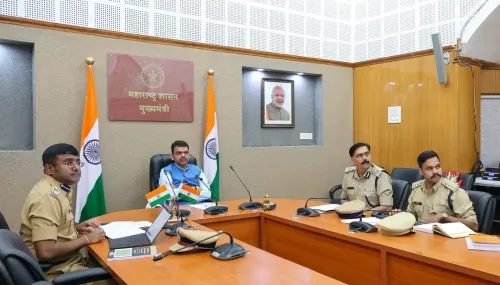
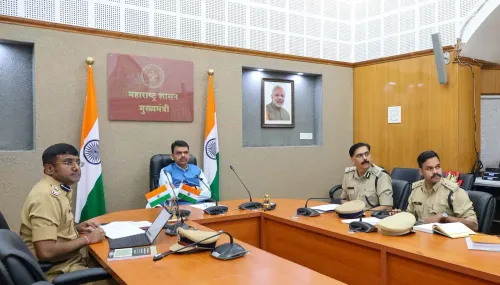
Senior police officials and other dignitaries were present at the meeting.
Since explosives regulation is a central subject, Maharashtra cannot amend the rules unilaterally and must seek New Delhi's approval.
The Chief Minister's Office of Maharashtra announced on Sunday, 7 June 2026 that Chief Minister Devendra Fadnavis chaired a high-level meeting at Ramgiri Bungalow, Nagpur, to deliberate on proposed amendments to the Explosives Rules, 2008, with the state government set to forward its recommendations to the central government to prevent accidents at explosives manufacturing companies.
Context
The meeting, held at 4 pm on 7 June 2026, brought together senior police officials and other dignitaries under the chairmanship of CM Fadnavis. The official post stated: 'The State Government will submit this proposal to the Central Government to prevent accidents at explosives manufacturing companies.' Senior police officials were present alongside other dignitaries, signalling a coordinated law-enforcement and administrative approach to the issue.
The venue, Ramgiri Bungalow in Nagpur, is the official residence of the Chief Minister during sessions and official visits to the city, which serves as the winter capital of Maharashtra.
Policy Backdrop
The Explosives Rules, 2008, were notified under the Explosives Act, 1908 — a century-old central legislation that provides the nationwide framework for regulating the manufacture, storage, transport, and use of explosives across India. The 2008 revision was itself a comprehensive update to bring safety standards in line with modern industrial practices.
Under India's constitutional division of powers, the central government holds legislative authority over explosives, while states are responsible for local enforcement and policing. This federal arrangement means Maharashtra must formally submit its amendment proposals to New Delhi for consideration, rather than amending the rules unilaterally.
State governments across India have periodically approached the centre with safety-related suggestions following industrial accidents at hazardous facilities, making Maharashtra's initiative consistent with established federal practice.
Stakeholders and Impact
The proposed amendments, if accepted by the central government, would directly affect explosives manufacturers, industrial workers employed at such facilities, and state police units tasked with oversight and enforcement. Maharashtra hosts a number of licensed explosives manufacturing units, and any tightening of safety norms could reshape operational requirements for these companies.
Industrial workers stand to benefit most directly from stronger accident-prevention measures, while manufacturers may face revised compliance obligations. State police officials present at the meeting are likely to play a role in drafting and implementing any enhanced enforcement protocols that accompany the proposed rule changes.
What's Next
The immediate next step is the formal submission of Maharashtra's amendment proposals to the Government of India. Once received, the central government would typically initiate a consultative process — potentially involving the Petroleum and Explosives Safety Organisation (PESO) and other technical bodies — before issuing any gazette notifications amending the Explosives Rules, 2008.
The outcome of this inter-governmental process will determine whether Maharashtra's safety concerns translate into binding national regulations, with implications for explosives industry oversight across all states.
Point of View
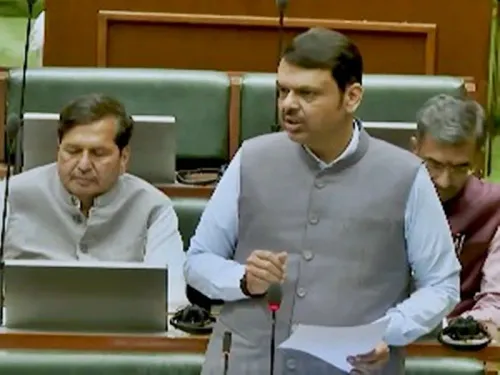
2008, reflects a broader pattern of state governments using inter-governmental channels to address industrial safety gaps after accidents expose regulatory shortcomings. By convening senior police officials alongside administrative figures, CM Fadnavis signals that enforcement and legislative reform are being pursued in tandem rather than in isolation. The move also underscores the structural constraints of India's federal framework, where states must lobby the centre even on locally pressing safety concerns. How swiftly the central government responds will be a test of the cooperative federalism that the current national dispensation has championed.
NationPress
22 Oct 2026
Frequently Asked Questions
What are the Explosives Rules, 2008?
The Explosives Rules, 2008, are central government regulations notified under the Explosives Act, 1908, that govern the manufacture, storage, transport, and use of explosives across India.
Why is Maharashtra proposing changes to the Explosives Rules?
Maharashtra is proposing amendments to prevent accidents at explosives manufacturing companies in the state, and will submit these proposals to the central government for formal consideration.
Who chaired the meeting on Explosives Rules amendments in Nagpur?
Chief Minister Devendra Fadnavis chaired the meeting at Ramgiri Bungalow, Nagpur, on 7 June 2026, attended by senior police officials and other dignitaries.
Can Maharashtra amend the Explosives Rules on its own?
No. Explosives regulation falls under central government authority, so Maharashtra must submit its proposals to New Delhi, which holds the power to amend the Explosives Rules, 2008.
What happens after Maharashtra submits the proposal to the central government?
The central government would typically review the proposals through technical bodies and, if accepted, issue gazette notifications formally amending the Explosives Rules, 2008.