Maharashtra CM Fadnavis launches 1,000-Day Early Childhood Development Mission
Synopsis
Maharashtra is moving beyond piecemeal department-by-department efforts on child health. CM Fadnavis has ordered a unified '1,000 Days' mission — backed by a dedicated Mission Secretariat and third-party monitoring — that treats maternal and child wellbeing as a shared state responsibility, not a turf battle between departments.
Key Takeaways
Maharashtra CM Devendra Fadnavis on 1 October 2026 directed the launch of the 1,000 Days Early Childhood Development Mission .
The Public Health and WCD departments must jointly draft the mission framework and submit it to the State Cabinet .
A dedicated Mission Secretariat with third-party, data-driven monitoring will be established.
Urban Maharashtra now has more than 50% urban residents, far exceeding the 30% for which existing systems were designed.
Key indicators to be tracked include maternal anaemia , births to malnourished mothers, breastfeeding, and immunisation rates.
Successful district models from Nashik , Jalna , Pune , and Nandurbar will inform the mission's state-wide rollout.
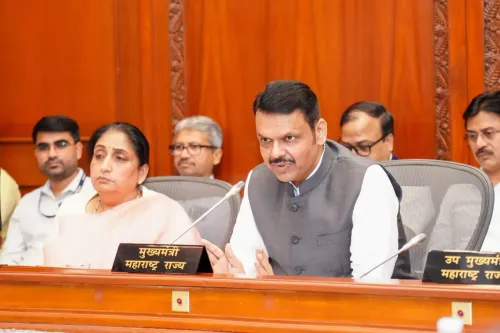
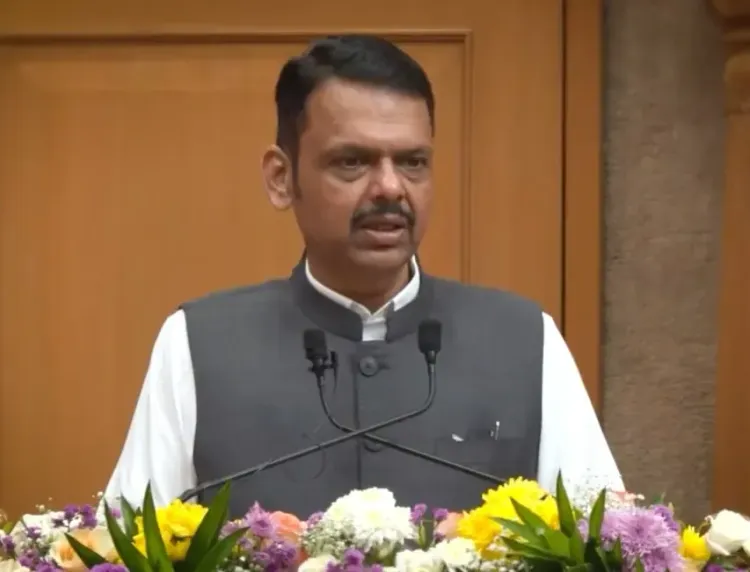
Maharashtra Chief Minister Devendra Fadnavis on Thursday, 1 October 2026, directed the state's Public Health Department and Women and Child Development (WCD) Department to jointly draft the '1,000 Days Early Childhood Development Mission' and submit its framework to the State Cabinet. The directive, issued at a Social Sector War Room meeting chaired by Fadnavis, marks Maharashtra's most structured push yet to address child malnutrition, maternal anaemia, and stunted development outcomes through an integrated, cross-departmental approach.
What the Mission Entails
At the heart of the initiative is a shift away from siloed departmental functioning. Chief Minister Fadnavis stressed that early childhood development challenges are inherently multi-departmental and cannot be resolved by setting isolated, department-specific targets. The mission will place the mother and child at the centre of all interventions, bringing together the Tribal Development, Rural Development, and School Education departments alongside Health and WCD as key stakeholders.
A dedicated Mission Secretariat is to be established to conduct regular, data-driven monitoring. Fadnavis emphasised that third-party monitoring will be introduced to make inter-departmental coordination more effective, with progress measured against the mission's collective goals rather than individual departmental metrics.
Key Issues Identified
The Social Sector War Room meeting reviewed presentations from domain experts and departmental officials, drawing on experiences from Meghalaya and successful models implemented across Maharashtra, including in Nashik, Jalna, Pune, and Nandurbar. Specific challenges flagged include the nutritional status of children in tribal regions and rising malnutrition in urban slums and densely populated neighbourhoods.
Fadnavis noted that urbanisation in Maharashtra has risen sharply, with urban residents now accounting for more than 50 per cent of the population — far exceeding the roughly 30 per cent for which existing systems were originally designed. He called for a dedicated, structured urban framework using the Health Department's new 'Urban Vertical' to address this gap.
The Outcome-Based Approach
The Chief Minister underscored the need for an outcome-based, evidence-based approach, stressing continuous tracking of key indicators including maternal anaemia, births to malnourished mothers, breastfeeding rates, immunisation coverage, and broader nutritional data. He cautioned that suppressing or altering data would not resolve problems — only accurate, real-time data would allow issues to be addressed swiftly.
Fadnavis also clarified that while certain core interventions will remain standardised across the state, the mission must retain flexibility to account for local conditions, community lifestyles, dietary habits, and customs. He said a single uniform solution cannot address every early childhood challenge, particularly malnutrition.
Resolving Jurisdictional Bottlenecks
A recurring theme of the meeting was the need to cut through bureaucratic friction. Fadnavis directed that work must not be stalled due to minor departmental jurisdiction disputes or expenditure disagreements over Anganwadis, nutrition programmes, and essential services. He argued that government investment benefits society as a whole and should not be treated as a single department's exclusive domain, calling for issues to be resolved through mutual coordination.
What Happens Next
The Public Health and WCD departments are now tasked with preparing the mission's detailed framework for Cabinet submission. Once approved, the Mission Secretariat will begin structured monitoring, with roles defined for all concerned departments. The initiative draws on lessons from states such as Meghalaya and from district-level innovations within Maharashtra, signalling that implementation will blend proven models with locally adapted solutions. All eyes will now be on the Cabinet's timeline for formal clearance and the speed at which the Secretariat becomes operational.
Point of View
Maharashtra could build a replicable model. If it cannot, the '1,000 Days' label risks becoming another headline number in a policy landscape already crowded with them.
NationPress
2 Oct 2026
Frequently Asked Questions
What is Maharashtra's 1,000 Days Early Childhood Development Mission?
It is a state initiative directed by Chief Minister Devendra Fadnavis on 1 October 2026, under which the Public Health and WCD departments will jointly draft a mission framework placing the mother and child at the centre of integrated, cross-departmental early childhood development. The framework is to be submitted to the State Cabinet before implementation begins.
Why is the mission focused on the first 1,000 days?
The first 1,000 days — from conception to a child's second birthday — are globally recognised as the most critical window for physical and cognitive development. Interventions during this period, including addressing maternal anaemia, breastfeeding, immunisation, and nutrition, have the highest long-term impact on health and education outcomes.
Which departments will be involved in the mission?
The Public Health and Women and Child Development departments are the primary stakeholders. The Tribal Development, Rural Development, and School Education departments will also have defined roles, with a dedicated Mission Secretariat coordinating across all of them.
Why is urban malnutrition a concern in Maharashtra?
Urban residents now account for more than 50 per cent of Maharashtra's population, but the systems in place were originally designed for a roughly 30 per cent urban share. Slum areas and densely populated urban neighbourhoods face significant malnutrition issues that existing infrastructure is not adequately equipped to handle.
What monitoring mechanisms will the mission use?
A dedicated Mission Secretariat will conduct regular, data-driven monitoring. Chief Minister Fadnavis has also called for third-party monitoring to ensure inter-departmental accountability, with progress measured against collective mission goals rather than individual departmental targets.