CM Fadnavis Pays Tribute on Mahakavi Kalidas Din 2026
Synopsis
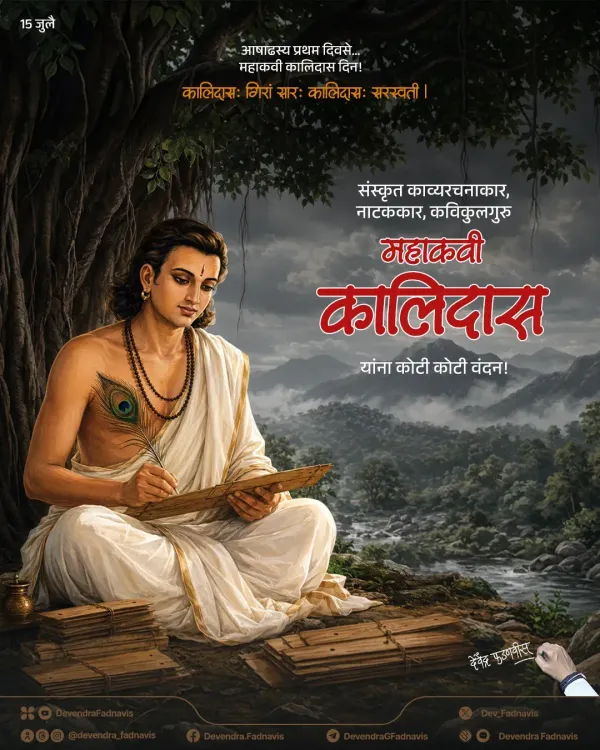
Maharashtra Chief Minister Devendra Fadnavis marked Mahakavi Kalidas Din on 15 July 2026, the first day of Ashadha, honouring the ancient Sanskrit poet Kalidasa and his epics Kumarasambhavam, Meghadutam, and Raghuvamsham in a bilingual English-Marathi tribute on X.
Key Takeaways
Mahakavi Kalidas Din is observed on the first day of the Hindu lunar month Ashadha each year to honour classical Sanskrit poet Kalidasa.
Maharashtra CM Devendra Fadnavis posted the tribute on 15 July 2026 in both English and Marathi.
Fadnavis cited three major works: the epics Kumarasambhavam , Raghuvamsham , and the lyric poem Meghadutam .
He addressed Kalidasa by the traditional honorific kavikulaguru , meaning 'teacher of the community of poets'.
The observance connects to Kalidasa's own verse, as Meghadutam famously opens with a reference to the first day of Ashadha.
No new state scheme or budget allocation was announced alongside the tribute.
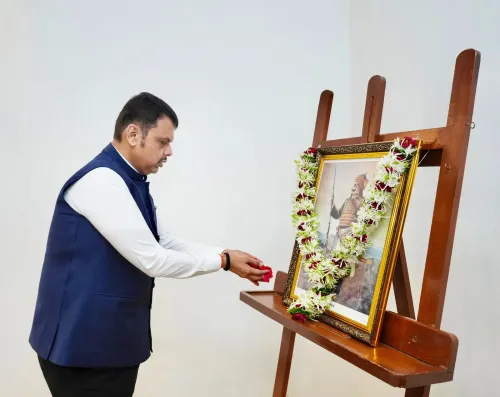
Maharashtra Chief Minister Devendra Fadnavis on Wednesday, 15 July 2026 paid tribute to ancient Sanskrit poet and playwright Mahakavi Kalidasa on the occasion of Mahakavi Kalidas Din, observed on the first day of the Hindu lunar month of Ashadha.
Context
Mahakavi Kalidas Din is observed on the first day of Ashadha each year to honour Kalidasa, widely regarded as the greatest poet and dramatist in the Sanskrit literary tradition. The day holds particular resonance because Kalidasa's celebrated poem Meghadutam (Cloud Messenger) opens with the iconic line 'Ashadhasya prathama divase' — 'on the first day of Ashadha' — linking the observance directly to the monsoon season and the poet's own verse.
Fadnavis posted in both English and Marathi, offering 'koti koti vandan' (crores of salutations) to Kalidasa, whom he addressed as 'kavikulaguru' — teacher of the community of poets — a title long associated with the classical master.
Policy Backdrop
Indian political leaders, particularly those from the BJP, have increasingly used traditional calendar observances to publicly honour classical Sanskrit figures, framing such tributes as part of a broader cultural emphasis on India's pre-modern literary heritage. Maharashtra, with its long history of both Sanskrit and Marathi literary patronage, has periodically hosted district-level Kalidasa festivals and incorporated classical texts into state education programmes.
Fadnavis cited three of Kalidasa's most celebrated works: the epics Kumarasambhavam, Raghuvamsham, and the lyric poem Meghadutam. These texts are studied across Indian universities and form a core part of Sanskrit curriculum at multiple levels of formal education.
Stakeholders and Impact
The tribute resonates primarily with Sanskrit scholars, the wider literary community, and cultural organisations that advocate for classical language promotion. For Maharashtra's educational institutions, such public acknowledgements by the Chief Minister can reinforce the visibility of Sanskrit studies and classical literature in state-level academic discourse.
Observances like Mahakavi Kalidas Din also draw participation from cultural bodies, universities, and Sahitya Sabhas across the state, which typically organise readings, seminars, and recitations of Kalidasa's works to mark the occasion.
What's Next
Attention will now turn to whether the Maharashtra state education department issues any circulars on the inclusion of Kalidasa texts in revised curricula, or whether the government announces support for district-level Kalidasa festivals during the monsoon season. Such announcements, if made, would give the tribute a concrete policy dimension beyond the ceremonial. For now, the Chief Minister's post signals continued state-level cultural engagement with India's classical literary tradition.
Point of View
Such observances serve a dual purpose: reinforcing the party's cultural-nationalist credentials while keeping the Chief Minister visible on non-political occasions. The choice to name all three major Kalidasa works signals an effort to go beyond a perfunctory tribute and project genuine literary engagement. Whether this translates into concrete state policy — such as curriculum reform or festival funding — will determine whether the gesture carries lasting institutional weight.
NationPress
13 Oct 2026
Frequently Asked Questions
What is Mahakavi Kalidas Din and why is it celebrated?
Mahakavi Kalidas Din is observed on the first day of the Hindu lunar month Ashadha to honour Kalidasa, the ancient Sanskrit poet and playwright. The date is chosen because Kalidasa's poem Meghadutam opens with the line 'on the first day of Ashadha,' directly linking the observance to his own work.
Who was Mahakavi Kalidasa?
Kalidasa was an ancient Indian poet and dramatist widely regarded as the greatest figure in classical Sanskrit literature. His major works include the epics Kumarasambhavam and Raghuvamsham and the lyric poem Meghadutam.
What did CM Devendra Fadnavis say on Mahakavi Kalidas Din 2026?
On 15 July 2026, Fadnavis posted a bilingual tribute in English and Marathi on X, offering 'koti koti vandan' (crores of salutations) to Kalidasa and naming his works Kumarasambhavam, Meghadutam, and Raghuvamsham.
What does 'kavikulaguru' mean?
'Kavikulaguru' is a Sanskrit honorific meaning 'teacher of the community of poets.' It is a title traditionally associated with Kalidasa and was used by CM Fadnavis in his tribute.
Is Mahakavi Kalidas Din a public holiday in Maharashtra?
Mahakavi Kalidas Din is a cultural observance, not a gazetted public holiday. It is marked by literary events, university seminars, and tributes from public figures, particularly in Maharashtra and other states with strong Sanskrit literary traditions.