Exam paper leak protests: Jantar Mantar agitators reject fast-track courts, demand Pradhan's exit
Synopsis
Students at Jantar Mantar have now been protesting for nearly a month — and PM Modi's fast-track court announcement has done nothing to cool the agitation. Their demand is singular and non-negotiable: Education Minister Dharmendra Pradhan must go. With allegations of police action on 20 July and a government that has yet to address them, the protest shows no sign of winding down.
Key Takeaways
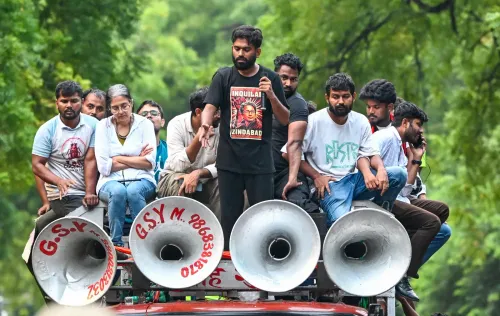
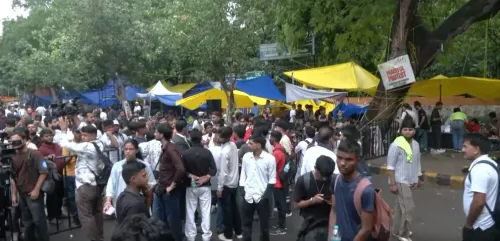
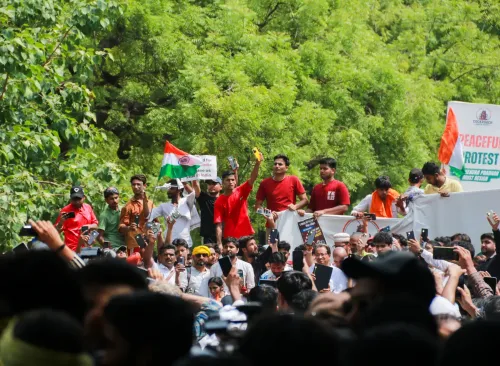
Students at Jantar Mantar , New Delhi have been protesting exam paper leaks for nearly four weeks as of 23 July .
Protesters rejected PM Modi's fast-track court directive, calling it insufficient and a 'formality.' The Cockroach Janta Party (CJP) -led agitation is demanding the resignation of Union Education Minister Dharmendra Pradhan .
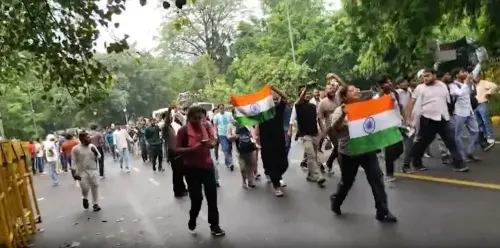
Demonstrators alleged police used cane charges during the 20 July 'Sansad Chalo' march and that Sonam Wangchuk was forcefully detained.
The Centre has not publicly addressed the alleged police conduct or the ministerial resignation demand.
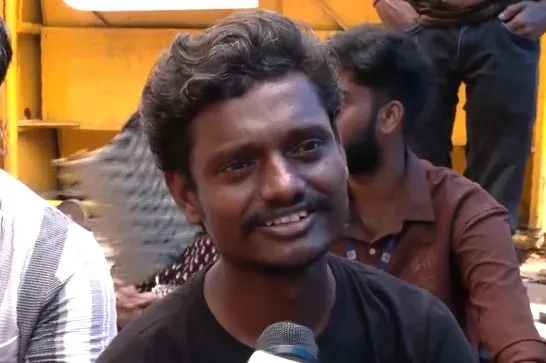
Students and youth protesters who have been demonstrating at Jantar Mantar in New Delhi for nearly a month told reporters on Thursday, 23 July that Prime Minister Narendra Modi's directive to establish fast-track courts for exam paper leak cases falls far short of their demands. The protesters, led by the Cockroach Janta Party (CJP), have consistently called for the resignation of Union Education Minister Dharmendra Pradhan — a demand they say the Centre has so far refused to acknowledge.
What the Protesters Said
'Fast track courts are not enough at all. The Prime Minister is turning a deaf ear to our demands of Dharmendra Pradhan's resignation,' one protester said. Another agitator added: 'The Prime Minister is not doing what is actually required; he should simply take the resignation of Dharmendra Pradhan and accept the government's accountability.'
A young woman at the site struck a conditional note: 'The Union government has made enough promises...we are sitting here for action, not for words. Until and unless there is action on the ground, we can't say if we will be satisfied or not.'
Anger Over Alleged Police Action on 20 July
Several protesters directed sharp criticism at the Centre over the handling of the 20 July 'Sansad Chalo' march. One youth alleged: 'The Centre unleashed cane charge on the protesters, women were harassed and Sonam Wangchuk ji was forcefully taken away.' Another protester questioned why PM Modi had not addressed the reported incidents of police action, calling the fast-track court directive 'just a formality' and adding, 'Nothing will happen with a social media post.'
The Centre has not publicly responded to the specific allegations of police conduct during the march. This comes amid a broader national debate over exam integrity following multiple paper leak incidents that have disrupted competitive examinations across India.
The Government's Position
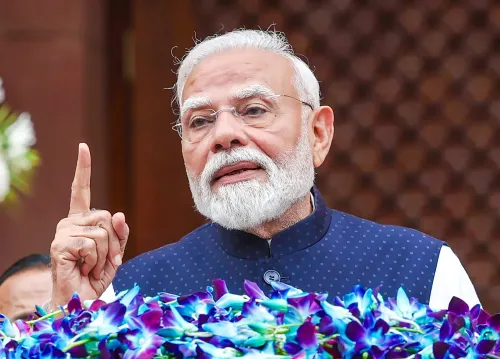
PM Modi had stated that the government has decided to establish fast-track courts to ensure swift and stringent punishment for those found guilty of paper leaks, and issued a warning to those 'trying to harm the future of youth.' The directive was widely seen as a response to mounting public pressure, but protesters at Jantar Mantar described it as insufficient and cosmetic.
Background and What's at Stake
The agitation, now in its fourth week, reflects deep frustration among India's student community over recurring examination irregularities. The CJP-led movement has drawn participants from across the country, many of whom say their career prospects have been derailed by compromised competitive exams. Notably, this protest has maintained a largely peaceful character — a point the demonstrators themselves emphasised, with one saying, 'We are educated and are therefore protesting peacefully with the hope that the Union government will listen to our demands.'
A former Modi supporter at the site said, 'I have been a big supporter of PM Modi but now I think the power is being misused by the ruling coalition. This directive is not enough.' Whether the government moves beyond the fast-track court announcement toward structural accountability measures — including any ministerial action — will determine the protest's next phase.
Point of View
They shift the story from exam integrity to civil liberties, a much harder frame for the Centre to manage. Four weeks of sustained, peaceful protest in the capital without a substantive government dialogue is itself a signal worth reading.
NationPress
23 Jul 2026
Frequently Asked Questions
Why are students protesting at Jantar Mantar?
Students and youth have been protesting at Jantar Mantar in New Delhi for nearly four weeks over exam paper leaks and irregularities in competitive examinations. They are holding the NDA government accountable and demanding the resignation of Union Education Minister Dharmendra Pradhan.
What did PM Modi announce regarding exam paper leaks?
PM Modi announced that the government would establish fast-track courts to ensure swift and stringent punishment for those found guilty of exam paper leaks. He also issued a warning to those attempting to harm the future of youth.
Why are protesters not satisfied with the fast-track court directive?
Protesters say the directive does not address their core demand — the resignation of Education Minister Dharmendra Pradhan — and does not hold the government itself accountable. They have described it as a formality and said action on the ground, not announcements, is what they are waiting for.
What happened during the 20 July 'Sansad Chalo' march?
Protesters allege that police used cane charges against demonstrators during the 20 July march, that women were harassed, and that Sonam Wangchuk was forcefully taken away. The Centre has not publicly responded to these specific allegations.
Who is leading the Jantar Mantar protest?
The agitation is being led by the Cockroach Janta Party (CJP), which has consistently demanded the resignation of Union Education Minister Dharmendra Pradhan as a condition for ending the protest.