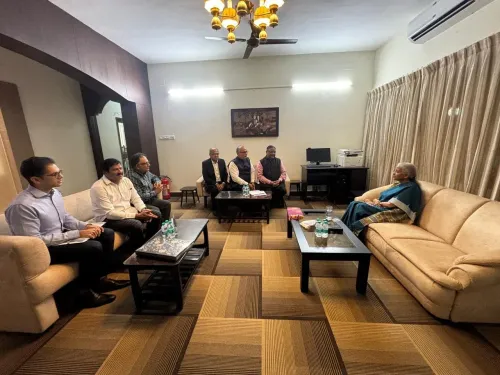
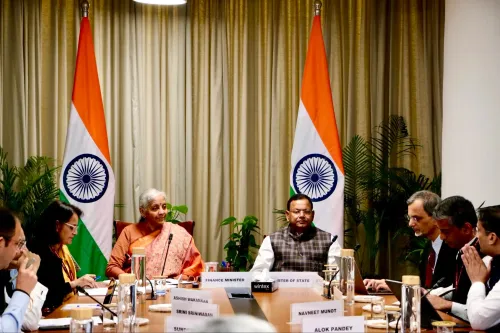
FM Sitharaman meets CPAI delegation on capital markets

Synopsis
Union Finance Minister Nirmala Sitharaman received a delegation from the Commodity & Capital Market Participants Association of India (CPAI) on 22 June 2026, continuing the Finance Ministry's established practice of consultative engagement with capital and commodity market stakeholders ahead of budget and policy cycles.
Key Takeaways
Union Finance Minister Nirmala Sitharaman met a delegation from the Commodity & Capital Market Participants Association of India (CPAI) on 22 June 2026 .
CPAI represents participants in India's commodity derivatives and capital markets, including traders, brokers, and intermediaries.
The meeting is part of the Finance Ministry's established consultative framework with financial-sector associations.
The specific agenda and outcomes of the meeting have not been officially disclosed.
Such interactions typically inform pre-budget policy positions on issues like transaction taxes, margin norms, and market infrastructure.
Follow-up regulatory steps by SEBI or references in the next Union Budget documents are possible outcomes to watch.
Union Finance Minister Nirmala Sitharaman received a delegation from the Commodity & Capital Market Participants Association of India (CPAI) on Monday, 22 June 2026, in a meeting that underscores the government's continued consultative engagement with financial-sector stakeholders ahead of the next budget cycle.
Context
The CPAI is an industry body that represents participants across India's commodity derivatives and capital markets. Its members include traders, brokers, and market intermediaries who engage with the government on regulatory, taxation, and operational issues that affect market functioning. The delegation's call on the Finance Minister signals active industry outreach at a time when commodity and capital market regulation remains a closely watched policy area.
The Finance Ministry's official account posted on X that the 'Delegation from the Commodity & Capital Market Participants Association of India (CPAI) calls on Smt @nsitharaman,' accompanied by two images from the meeting.
Policy Backdrop
Pre-budget and inter-budget consultations between the Finance Ministry and sectoral associations are a well-established feature of India's fiscal policymaking process. Successive Finance Ministers have used such structured interactions to gather industry feedback on taxation, market infrastructure, and regulatory frameworks before finalising budget proposals or policy positions.
Commodity and capital markets have seen significant regulatory evolution in recent years, with SEBI periodically revising norms around derivatives participation, margin requirements, and investor protection. Industry bodies such as CPAI serve as a formal channel through which market participants can present their concerns and recommendations directly to the ministry that oversees the broader financial architecture.
Stakeholders and Impact
The meeting is of direct relevance to commodity traders, brokers, and capital market intermediaries across India, who look to such interactions to flag operational bottlenecks and seek policy clarity. Issues that industry associations in this space typically raise include transaction taxes, margin norms, algorithmic trading rules, and the ease of participation for institutional and retail investors alike.
For the broader market ecosystem, high-level access to the Finance Minister provides an opportunity to shape the contours of upcoming regulatory or budgetary decisions. The specific agenda and outcomes of this particular meeting have not been officially disclosed.
What's Next
Observers will watch for any follow-up action by SEBI on market participation norms or references to commodity and capital market priorities in the next Economic Survey or Union Budget documents. Such stakeholder consultations often inform the fine-print of budget announcements related to securities transaction tax, commodity transaction tax, or market infrastructure investment. The government's willingness to engage with CPAI at the ministerial level suggests that the concerns of commodity and capital market participants remain on the policy radar in New Delhi.
Point of View
Where sectoral associations are given ministerial access to present their regulatory and taxation concerns. At a time when commodity derivatives markets are under active regulatory scrutiny by SEBI, such direct engagement signals that the ministry is keeping its ear to the ground. The interaction could foreshadow adjustments to commodity transaction tax or derivatives participation norms in the next budget. More broadly, it reinforces the pattern of the current Finance Ministry using structured stakeholder dialogue as a tool of financial-sector governance.
NationPress
21 Sept 2026
Frequently Asked Questions
What is CPAI and why did it meet the Finance Minister?
The Commodity & Capital Market Participants Association of India (CPAI) is an industry body representing traders, brokers, and intermediaries in India's commodity derivatives and capital markets. It met Finance Minister Nirmala Sitharaman on 22 June 2026 to engage on regulatory, taxation, and operational issues affecting market participants.
What issues does CPAI typically raise with the Finance Ministry?
Industry bodies like CPAI typically raise concerns around commodity transaction tax, securities transaction tax, margin requirements, algorithmic trading norms, and ease of participation for institutional and retail investors in derivatives markets.
Is this meeting related to the Union Budget?
While no official agenda was disclosed, Finance Ministry consultations with market associations are a standard part of the pre-budget and inter-budget policy process, and such interactions often inform budgetary decisions on capital and commodity markets.
What follow-up action can be expected after this meeting?
Observers will watch for references to commodity and capital market priorities in the next Economic Survey or Union Budget, and for any follow-up regulatory steps by SEBI on market participation norms.
Who oversees commodity and capital markets regulation in India?
SEBI (Securities and Exchange Board of India) is the primary regulator for both capital markets and commodity derivatives in India, while the Finance Ministry sets the broader policy and taxation framework within which SEBI operates.