Gadkari Clears ₹359.63 Cr to Upgrade NH-9 in Delhi NCT
Synopsis
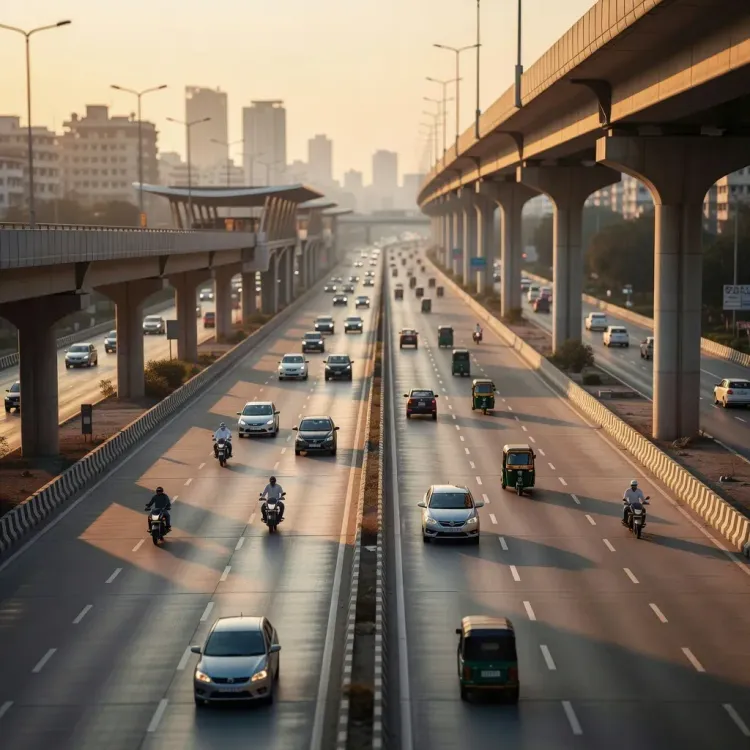
Union Minister Nitin Gadkari has approved ₹359.63 crore to upgrade the 12.4-km, six-lane NH-9 (Rohtak Road) in Delhi NCT from Udyog Nagar Metro Station to Tikri Border, with rigid pavement, improved junctions and seamless service roads under the Gati Shakti framework.
Key Takeaways
₹359.63 crore approved for NH-9 upgradation in Delhi NCT, announced on 17 November 2026 .
The project covers a 12.4-km, six-lane main carriageway and service roads from Udyog Nagar Metro Station to Tikri Border .
Upgrade will use rigid (cement-concrete) pavement , significantly lowering long-term maintenance costs.
Key localities served include Punjabi Bagh, Peeragarhi, Nangloi, Mundka and Tikri Border , with onward connectivity to Bahadurgarh and Rohtak in Haryana.
Project is tagged under the Gati Shakti National Master Plan and aligns with the broader Bharatmala Pariyojana urban-corridor upgrade programme.
Tendering timelines, construction start date and junction-level metro integration details are yet to be announced.
A ₹359.63 crore approval is about to reshape one of western Delhi's most congested arterial roads. Union Road Transport and Highways Minister Nitin Gadkari announced on Tuesday, 17 November 2026, that the Centre has cleared funds to upgrade a 12.4-km, six-lane stretch of NH-9 (Rohtak Road) — from Udyog Nagar Metro Station to Tikri Border — covering both the main carriageway and its flanking service roads.
What the ₹359.63 crore will actually build
The project is not a cosmetic resurfacing job. The upgrade centres on rigid pavement — the cement-concrete standard that lasts far longer than conventional bituminous surfaces and demands significantly less maintenance expenditure over its lifecycle. Alongside that, the scheme promises seamless service road connectivity and improved junctions at key intersections along the corridor. The combined effect: smoother freight flow, safer crossings for local commuters, and a measurable cut in the stop-start congestion that currently plagues the stretch.
Why NH-9's western corridor matters to Delhi's economy
NH-9 threads through some of Delhi's densest and most economically active western localities — Punjabi Bagh, Peeragarhi, Nangloi, Mundka and Tikri Border — before pushing out toward Bahadurgarh and Rohtak in Haryana. The road carries a layered mix of regional passenger traffic, suburban commuters and heavy industrial freight serving the manufacturing clusters along Delhi's western periphery. Choking that artery means choking supply chains, not just school-run timings.
Gadkari tagged PMO India and a string of BJP MPs and Delhi leaders in his post — a signal that the project carries political as well as administrative weight ahead of Delhi's perpetual infrastructure scrutiny cycle. The hashtags #PragatiKaHighway (Highway of Progress) and #GatiShakti explicitly tie the work to the National Master Plan for multimodal infrastructure launched in 2021, which mandates that road projects be planned in coordination with metro, rail and logistics nodes.
Bharatmala lineage and the rigid-pavement push
The approval fits squarely into a decade-long policy trajectory. Bharatmala Pariyojana, launched in 2015, set out to modernise India's national highway network with a focus on economic corridors and urban fringe connectivity. Through the late 2010s and into the 2020s, the National Highways Authority of India (NHAI) progressively shifted urban NH stretches to rigid-pavement standards — precisely the technology now earmarked for this Delhi NCT section. The Udyog Nagar-to-Tikri Border segment represents the logical next link in that chain, connecting a metro interchange directly to a state border crossing.
The immediate watch-items are tendering timelines, a confirmed construction start date, and whether any of the junction improvements will incorporate integration with the adjacent Delhi Metro interchange at Udyog Nagar — a detail the minister's post signals but does not specify.
Point of View
The government signals an intent to integrate road and rail rather than treat them as competing investments. The extensive tagging of BJP Delhi leaders in the announcement also reflects how infrastructure approvals increasingly serve a dual purpose: delivering genuine public goods while staking political ownership in a city where the Centre and state governments have long competed for development credit. The real test will come at tendering and construction — where urban NH projects have historically faced delays from utility shifting and right-of-way conflicts.
NationPress
17 Nov 2026
Frequently Asked Questions
What is the NH-9 Rohtak Road upgrade project in Delhi?
The project involves upgrading a 12.4-km, six-lane stretch of NH-9 (Rohtak Road) in Delhi NCT from Udyog Nagar Metro Station to Tikri Border , including the main carriageway and service roads, at a cost of ₹359.63 crore .
How much money has been approved for the NH-9 Delhi upgrade?
₹359.63 crore has been approved by the Union Ministry of Road Transport and Highways for the NH-9 corridor upgrade in Delhi NCT, as announced by Minister Nitin Gadkari on 17 November 2026 .
Which areas of Delhi will benefit from the NH-9 upgrade?
The upgrade will directly benefit commuters and businesses in Punjabi Bagh, Peeragarhi, Nangloi, Mundka and Tikri Border , and will improve connectivity between Delhi and Bahadurgarh and Rohtak in Haryana.
What is rigid pavement and why is it used for NH-9?
Rigid pavement uses cement-concrete instead of bitumen, offering a much longer service life and significantly lower maintenance costs — the key reason it is specified for the high-traffic NH-9 urban corridor upgrade.
Is the NH-9 Delhi project part of Gati Shakti or Bharatmala?
Yes. The project falls under both the Gati Shakti National Master Plan (launched 2021) for integrated infrastructure planning and the broader Bharatmala Pariyojana (launched 2015) national highway modernisation programme.