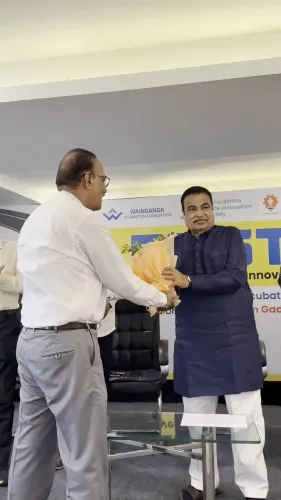
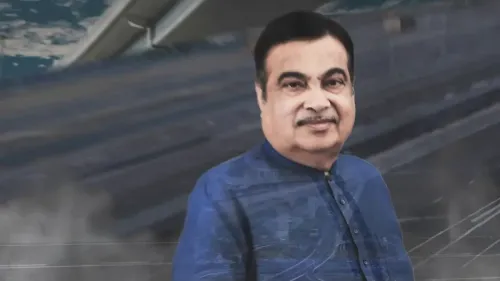
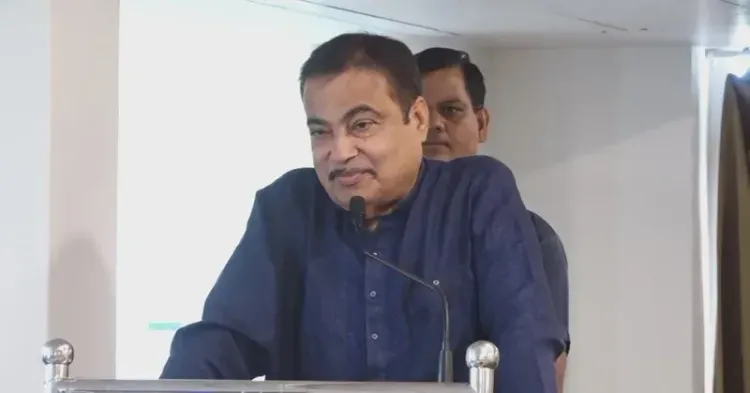
Gadkari addresses RASTA Startup Challenge prize distribution in Nagpur
Synopsis
Union Minister Nitin Gadkari addressed the prize distribution of the RASTA National Level Startup and Innovation Challenge in Nagpur on 28 May 2026, reinforcing the government's push to integrate startup-driven technology into India's national highway infrastructure under the Startup India and Bharatmala policy frameworks.
Key Takeaways
Nitin Gadkari addressed the RASTA National Level Startup and Innovation Challenge prize distribution in Nagpur on 28 May 2026 .
RASTA is a ministry-backed competition inviting startups to develop technology solutions for road construction, maintenance, and transport safety.
The challenge is anchored in the Startup India initiative (2016) and the Bharatmala Pariyojana (2017) , which together created policy demand for infrastructure-focused innovation.
Ministerial endorsement signals the Ministry of Road Transport and Highways as an institutional buyer for startup solutions, potentially attracting private capital to the sector.
Implementation of winning innovations into live national highway projects remains the key measure of the competition's real-world impact.
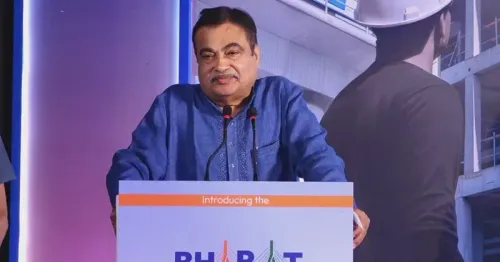
Union Road Transport and Highways Minister Nitin Gadkari addressed the prize distribution programme of the RASTA National Level Startup and Innovation Challenge in Nagpur on Thursday, 28 May 2026, lending the ministry's top-level endorsement to a competition designed to channel startup energy into the roads and highways sector.
Context
The RASTA National Level Startup and Innovation Challenge is a ministry-backed competition that invites entrepreneurs and technology firms to develop solutions for persistent challenges in road construction, maintenance, and transport safety. Nagpur, Gadkari's political home base in Maharashtra, regularly hosts flagship events tied to the Ministry of Road Transport and Highways. The minister's presence at the prize distribution underscores the government's intent to treat startup-driven innovation as a mainstream input into infrastructure planning rather than a peripheral exercise.
Policy Backdrop
The RASTA challenge draws on a layered policy foundation. The Startup India initiative, launched in 2016, created the broad framework for encouraging entrepreneurship across sectors, including infrastructure. The Bharatmala Pariyojana, approved in 2017, added a highways-specific imperative by demanding faster, more technology-efficient construction of national corridors. Together, these programmes created institutional demand for sector-specific innovation competitions of the kind RASTA represents. Successive Union Budgets have reinforced this direction by allocating resources for technology adoption in public works.
The ministry under Gadkari has since 2014 consistently pushed for embedding new-age solutions — from GPS-based project monitoring to alternative construction materials — into the national highway network. RASTA functions as a structured pipeline to identify such solutions at the startup stage before scaling them through larger procurement and pilot programmes.
Stakeholders and Impact
The primary beneficiaries of a competition like RASTA are early-stage transport-technology startups that gain both visibility and validation when a Union Minister personally presides over their recognition. Highway developers and engineering procurement construction firms stand to benefit downstream if winning innovations are piloted on live national highway projects. Road users ultimately stand to gain through improvements in construction quality, faster project delivery, and lower maintenance costs over time.
For the broader startup ecosystem, ministerial participation signals that the Ministry of Road Transport and Highways is a willing institutional buyer — a signal that can attract venture capital into what has traditionally been a capital-intensive, government-dominated sector. The Atmanirbhar Bharat framework gives this dynamic additional policy legitimacy by encouraging domestic solutions over imported technology.
What's Next
The critical question following any prize distribution event is whether winning innovations move from recognition to real-world implementation on national highway projects. Observers will watch for ministry announcements on pilot deployments, procurement tie-ups, or the scaling of the RASTA competition to include more categories or a larger prize pool in subsequent editions. Any such follow-through would mark a meaningful step beyond ceremonial encouragement toward structural integration of startup innovation in India's road infrastructure build-out.
Point of View
Not a public-relations exercise. It fits a consistent pattern since 2014 of using high-profile ministerial endorsement to legitimise non-traditional vendors in a sector long dominated by large EPC contractors. The real test, however, lies in whether RASTA winners secure actual pilot contracts on Bharatmala corridors, which would distinguish this from the many government-backed competitions that stop at recognition. If that pipeline materialises, RASTA could become a replicable model for other infrastructure ministries seeking to de-risk early-stage technology adoption.
NationPress
11 Oct 2026
Frequently Asked Questions
What is the RASTA National Level Startup and Innovation Challenge?
RASTA is a competition organised under the Ministry of Road Transport and Highways that invites startups and innovators to propose technology-driven solutions for challenges in road construction, maintenance, and transport safety in India.
Why did Nitin Gadkari attend the RASTA prize distribution in Nagpur?
As Union Minister of Road Transport and Highways, Gadkari personally presided over the prize distribution to signal high-level government commitment to integrating startup innovation into national highway projects.
How does RASTA relate to Startup India and Bharatmala?
RASTA builds on the Startup India framework launched in 2016 and the Bharatmala Pariyojana approved in 2017, both of which created policy demand for technology-efficient and startup-supported infrastructure development.
What happens to the winning innovations from RASTA?
The key expectation is that winning solutions will be piloted or procured for use on national highway projects, though specific implementation decisions are announced by the ministry after the competition.
Why is Nagpur significant for Nitin Gadkari's events?
Nagpur is Gadkari's political home base in Maharashtra and regularly hosts ministry-linked events, making it a natural venue for flagship programmes tied to his portfolio.