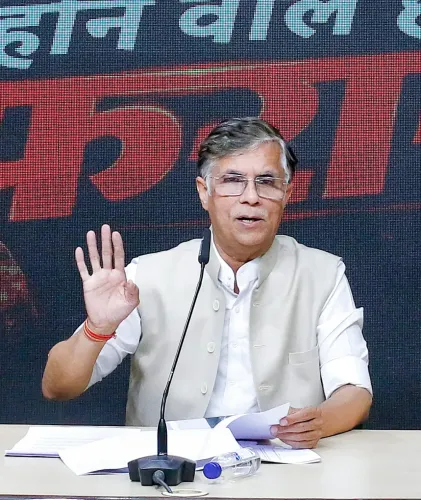
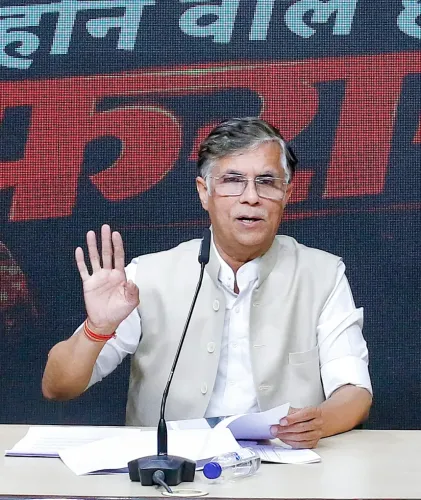
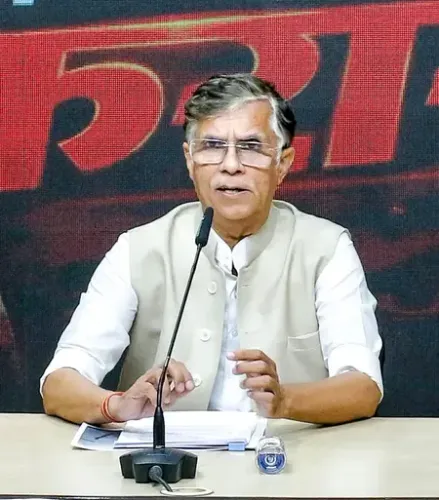
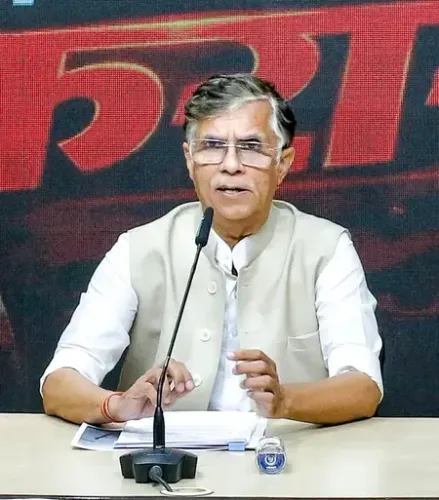
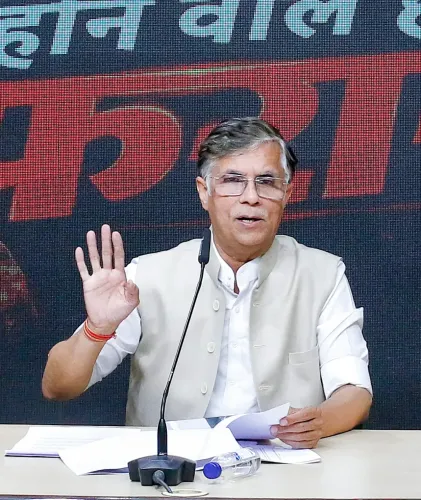
Gauhati HC Rejects Pawan Khera's Anticipatory Bail in Passport Case
Synopsis
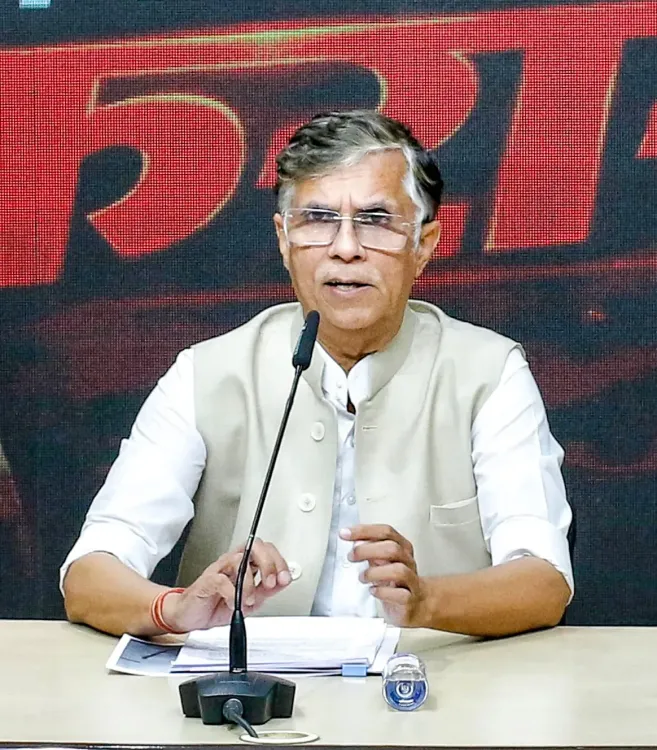
The Gauhati High Court has rejected Congress leader Pawan Khera's anticipatory bail in an FIR filed by Assam CM Himanta Biswa Sarma's wife over multiple passport allegations. With the Supreme Court having already stayed earlier relief, Khera now faces the real possibility of arrest by Assam Police.
Key Takeaways
Gauhati High Court on April 24 rejected the anticipatory bail plea of Congress leader Pawan Khera in a case registered at Guwahati Crime Branch Police Station .
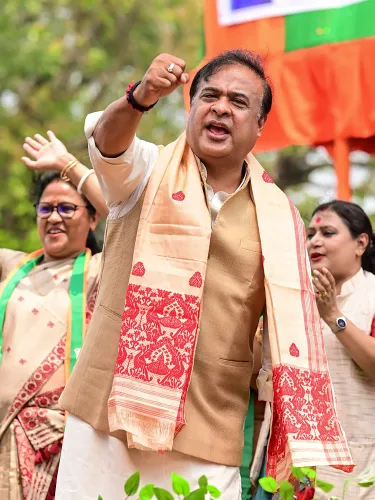
The FIR was filed by Riniki Bhuyan Sharma , wife of Assam CM Himanta Biswa Sarma , over Khera's allegations about her holding multiple passports.
The case invokes multiple provisions of the Bharatiya Nyaya Sanhita (BNS) , including charges of cheating, forgery, false statements, and defamation .
The Supreme Court had on April 15 stayed transit anticipatory bail earlier granted by the Telangana High Court on April 10 .
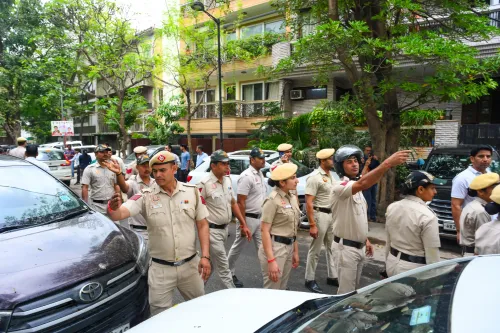
Assam Police has already conducted searches at Khera's Delhi residence and visited Hyderabad in connection with the case.
The detailed judgment by Justice Parthivjyoti Saikia is awaited; Khera may now approach the Supreme Court for emergency protection against arrest.
Guwahati, April 25: The Gauhati High Court on Friday, April 24, rejected the anticipatory bail application of senior Congress leader Pawan Khera, who is facing an FIR filed by Riniki Bhuyan Sharma — wife of Assam Chief Minister Himanta Biswa Sarma — over allegations that Khera publicly claimed she held multiple passports. The order was pronounced by a single-judge bench of Justice Parthivjyoti Saikia, who had reserved the verdict on April 21 after hearing extensive arguments from both sides. The detailed judgment is yet to be released.
What Arguments Were Made in Court
Senior advocate Abhishek Manu Singhvi, representing Khera, told the court that the case was politically motivated, arguing that the allegations stemmed from remarks attributed to the Chief Minister himself. He contended that the charged atmosphere ahead of upcoming elections raised serious concerns about fairness in the proceedings.
Singhvi further argued that Khera posed no flight risk and that custodial interrogation was entirely unwarranted. He maintained that the allegations, at best, could amount to criminal defamation — a matter that does not necessitate arrest.
Senior counsel Kamal Nayan Choudhury supported these arguments, calling the charges "scandalous" and asserting they were framed with "deliberate malice." He argued that the nature of the allegations did not justify invoking serious penal provisions and that the matter could be resolved through a private complaint.
Assam Government's Counterarguments
Assam Advocate General Devajit Lon Saikia strongly opposed the bail plea, arguing that the case went far beyond defamation. He submitted that the FIR involved grave offences including cheating, forgery, and alleged fabrication of documents and title deeds — charges that warranted custodial investigation to uncover the full scope of the alleged conspiracy.
The FIR, registered at the Guwahati Crime Branch Police Station, invokes multiple provisions of the Bharatiya Nyaya Sanhita (BNS), including sections related to false statements, cheating, forgery, and defamation — a combination that significantly elevated the legal stakes for Khera.
Complex Legal Journey Before Gauhati HC
The case has traversed multiple courts in a short span of time. The Telangana High Court had granted Khera a week's transit anticipatory bail on April 10, providing him a window to approach the competent court. However, the Supreme Court of India stayed this relief on April 15 after Assam Police challenged the order.
The apex court subsequently declined Khera's plea to vacate the stay and also refused to extend any interim protection to him. Crucially, the Supreme Court clarified that its earlier observations should not influence the competent court in Assam while deciding the bail application — paving the way for the Gauhati High Court hearing.
Earlier this month, Assam Police conducted searches at Khera's residence in Delhi and also visited Hyderabad in connection with the case, signaling an aggressive investigative approach by the state machinery.
Political and Legal Implications
The rejection of Khera's anticipatory bail puts the Congress leader in a precarious legal position. With no protective order in place, Assam Police now has a clear path to arrest him, which could escalate the political confrontation between the Congress party and the Assam government significantly.
This case is emblematic of a broader pattern of legal battles between opposition leaders and ruling state governments across India, where FIRs involving defamation and forgery have increasingly become instruments of political contestation. Critics of the ruling establishment argue that invoking serious penal provisions like forgery and cheating — alongside defamation — substantially raises the threshold for bail, effectively functioning as a tool of political pressure ahead of elections.
Notably, the Congress party has rallied behind Khera, framing the case as an attempt to silence political dissent. The party has pointed out that the allegations originated from Khera's public statements questioning whether the Chief Minister's wife held multiple passports — a political claim that the Sarma family has categorically denied and responded to through legal channels.
What Happens Next
With the Gauhati High Court having rejected anticipatory bail, Pawan Khera may approach the Supreme Court once again seeking emergency protection. Alternatively, Assam Police could move to arrest him in the near term, which would then trigger a fresh round of bail hearings in a lower court.
The detailed judgment from Justice Parthivjyoti Saikia is awaited and is expected to shed light on the legal reasoning behind the rejection — a document that will be critical for any further appeals. As elections loom and political temperatures rise, this case is likely to remain a flashpoint between the Congress and the BJP-led Assam government for weeks to come.
Point of View
Making bail harder to secure and arrest easier to execute. The fact that this case has already bounced between the Telangana High Court, the Supreme Court, and now the Gauhati High Court reveals how opposition politicians are being forced into exhausting legal marathons. Whether or not the underlying allegations have merit, the pattern of state police filing FIRs against vocal critics of ruling governments — and then aggressively pursuing custodial interrogation — raises uncomfortable questions about the health of political dissent in India's federal democracy.
NationPress
13 Oct 2026
Frequently Asked Questions
Why did the Gauhati High Court reject Pawan Khera's anticipatory bail?
The Gauhati High Court rejected Pawan Khera's anticipatory bail after the Assam government argued the case involved serious offences like cheating and forgery, not merely defamation. Justice Parthivjyoti Saikia pronounced the order on April 24, though the detailed judgment is still awaited.
What is the FIR against Pawan Khera about?
The FIR was filed by Riniki Bhuyan Sharma, wife of Assam Chief Minister Himanta Biswa Sarma, after Pawan Khera publicly alleged she held multiple passports. The case invokes provisions of the Bharatiya Nyaya Sanhita covering false statements, cheating, forgery, and defamation.
What happened in the Supreme Court regarding Pawan Khera's bail?
The Supreme Court stayed the transit anticipatory bail granted by the Telangana High Court on April 15, following a challenge by Assam Police. The apex court also declined to vacate the stay or extend any interim protection to Khera.
Can Pawan Khera be arrested now after the Gauhati HC order?
Yes, with no anticipatory bail in place, Assam Police now has the legal ground to arrest Pawan Khera. He may approach the Supreme Court again for emergency protection to prevent arrest.
Who represented Pawan Khera in the Gauhati High Court?
Senior advocate Abhishek Manu Singhvi and senior counsel Kamal Nayan Choudhury represented Pawan Khera. They argued the case was politically motivated and that the charges did not justify arrest or custodial interrogation.