GCNS 2026: 40+ analysts examine China's self-reliance strategy and military rise
Synopsis
More than 40 analysts gathered in New Delhi for GCNS 2026 to dissect China's 'Zili Gengsheng' doctrine — a self-reliance framework with roots in the Mao era now being repurposed for AI competition, military modernisation and geopolitical assertiveness. With the 2027 Party Congress approaching, the stakes for India's strategic calculus have rarely been higher.
Key Takeaways
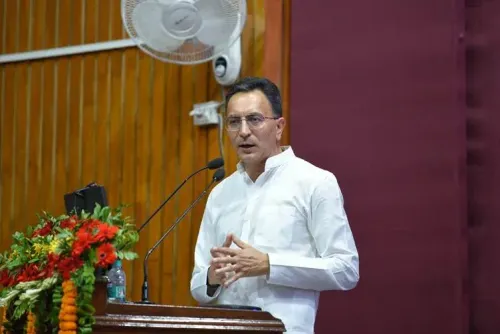
The fourth Global Conference on New Sinology (GCNS 2026) was held in New Delhi this week, organised by ORCA .
More than 40 speakers , including over 13 international experts , participated across three days of panels and closed-door roundtables.
The conference examined China's Zili Gengsheng (self-reliance) doctrine across science, military modernisation, governance and foreign policy.
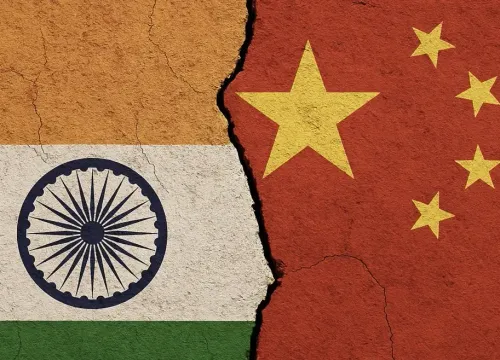
An Experts' Dialogue on India-China relations assessed strategic rivalry, border tensions and prospects for coexistence.
A dedicated roundtable on China's military modernisation towards 2027 highlighted growing capabilities as a key concern for regional security.
Proceedings were preceded by a Himalayan water security roundtable on 25 September and an MEA fireside chat on 27 September .
The fourth edition of the Global Conference on New Sinology (GCNS), organised by the Organisation for Research on China and Asia (ORCA), concluded this week in New Delhi, bringing together more than 40 speakers — including over 13 international experts — to assess China's evolving strategic posture and what it means for India and the broader international order.
Theme and Opening Remarks
Held under the theme 'Zili Gengsheng in an Era of Great Changes Unseen', the three-day conference examined how China's concept of self-reliance — interpreted as 'regeneration through one's own effort' — is being reframed amid deepening global uncertainty. ORCA Director Eerishika Pankaj opened proceedings by tracing the roots of Zili Gengsheng to the Mao era, arguing that the concept today extends well beyond conventional notions of economic independence. She posed a central question: what does self-reliance mean for Beijing as it attempts to navigate and shape an increasingly unpredictable domestic and international environment?
The opening keynote was delivered by Kerry Brown, who examined how historical narratives of national rejuvenation, growing technological capabilities and the self-reliance doctrine are collectively shaping China's response to what its leadership describes as unprecedented global change.
Key Sessions: Strategy, Governance and Foreign Policy
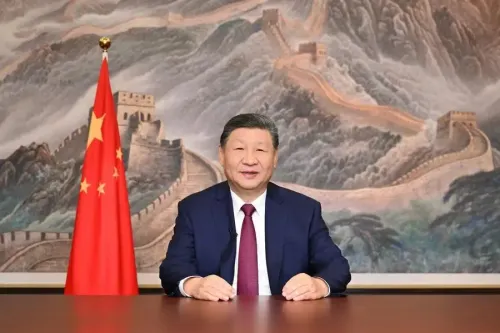
The first session, focused on how self-reliance is integrated into national strategy, featured experts Jonghyuk Lee and Yong Hong Han, who analysed political and policy signals ahead of the 21st Party Congress in 2027. Their discussion covered leadership continuity, elite politics and institutional adaptation under President Xi Jinping. Scholars Jiwei Qian and Shin Kawashima examined Communist Party of China (CPC) discourse on social stability and China's pursuit of artificial intelligence capabilities amid intensifying technological competition.
The second session explored how China's domestic priorities and foreign policy are reshaping the international order. An Experts' Dialogue on India-China relations featured Jagannath Panda and Srikanth Kondapalli, who analysed strategic rivalry, border tensions, economic competition and the prospects for coexistence between the two neighbours. Scholars Minghao Zhao and Jiangnan Zhu examined how China's Party-state apparatus drives its foreign-policy agenda, while Miwa Hirono's keynote address explored the tension between Beijing's strategic interests and its stated principle of non-interference in global crises.
China's Five-Year Plan and Civil-Military Fusion
A dedicated panel on China's 15th Five-Year Plan featured Lt. Gen. S L Narasimhan (Retd), who assessed the role of civil-military fusion in China's development model. Renowned Chinese economist Yang Yao explored the concept of 'new quality productive forces' and its centrality to China's high-quality development agenda and technological priorities.
Closed-Door Roundtables and Military Modernisation
GCNS also hosted a series of closed-door roundtable discussions held under the Chatham House Rule, addressing strategic blind spots in China analysis, emerging vectors of regional contestation in South Asia, and domestic challenges to Beijing's self-strengthening drive. The concluding roundtable, titled 'Towards 2027 and Beyond: Evaluating China's Next Phase of Military Modernisation', focused on the strategic priorities shaping China's future military capabilities — a subject of acute concern for India given the unresolved border situation.
The conference was preceded on 25 September by a closed-door roundtable on water risks and environmental security in the Himalayas, and a curtain-raiser event on 27 September that included a fireside chat with a senior official from India's Ministry of External Affairs (MEA).
As China moves closer to the politically significant 2027 Party Congress, the conversations at GCNS signal that India's strategic community is intensifying its effort to build a more rigorous, interdisciplinary understanding of a neighbour whose capabilities and ambitions are growing simultaneously.
Point of View
More capable and more assertive simultaneously. The focus on the 2027 Party Congress is telling — Indian strategists are reading Beijing's internal politics as a leading indicator of external behaviour, which is the right instinct. What is less clear is whether the conference's interdisciplinary ambitions translate into policy uptake; India has a long history of excellent China analysis that stops short of the decision-maker's desk. The inclusion of a senior MEA official in the curtain-raiser is a small but notable signal that the gap between scholarship and statecraft may be narrowing.
NationPress
1 Oct 2026
Frequently Asked Questions
What is the Global Conference on New Sinology (GCNS)?
The Global Conference on New Sinology is an annual multi-day forum organised by the Organisation for Research on China and Asia (ORCA) that brings together Indian and international experts to analyse China's strategic, political and economic trajectory. The 2026 edition was the fourth instalment, held in New Delhi.
What was the central theme of GCNS 2026?
The conference was held under the theme 'Zili Gengsheng in an Era of Great Changes Unseen', examining how China's concept of self-reliance — interpreted as regeneration through one's own effort — is being reinterpreted and applied across policy areas including AI, military modernisation and foreign policy.
How were India-China relations addressed at the conference?
An Experts' Dialogue on India-China relations in the 2020s featured scholars Jagannath Panda and Srikanth Kondapalli, who examined strategic rivalry, border tensions, economic competition and the prospects for coexistence between the two countries.
What did the military modernisation roundtable cover?
The concluding closed-door roundtable, titled 'Towards 2027 and Beyond: Evaluating China's Next Phase of Military Modernisation', assessed the strategic priorities shaping China's future military capabilities, a topic of direct relevance to India given ongoing border sensitivities.
Why is the 2027 Party Congress significant in this context?
The 21st Party Congress in 2027 is a key political milestone that will signal leadership continuity and long-term governance priorities under President Xi Jinping. Several GCNS sessions examined the political and policy signals emerging ahead of this event, as it is expected to shape China's strategic direction for years beyond.