Ashok Gehlot Challenges Central Government's Approach to Women's Reservation Bill
Synopsis
In a critical stance, Ashok Gehlot questions the timing and process of the Women's Reservation Bill, emphasizing the need for consensus and proper consultation. Is the NDA government rushing this crucial legislation during election season?
Key Takeaways
Ashok Gehlot questions the urgency of the Women’s Reservation Bill amidst elections.
The Congress party has a history of supporting women's reservation.
Concerns raised about the use of outdated Census data for delimitation.
Gehlot emphasizes the need for cooperative federalism and collective dialogue.
Democratic governance should be based on consensus, not unilateral decisions.
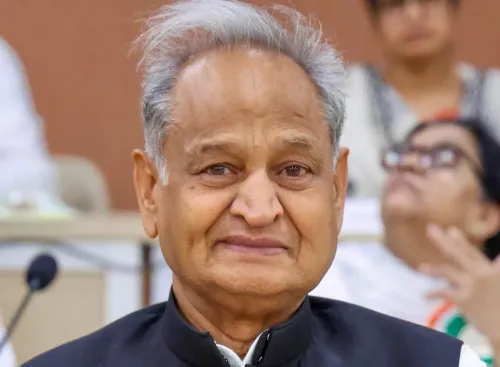
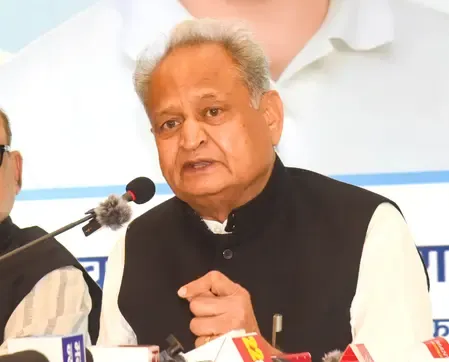
Jaipur, April 15 (NationPress) Senior Congress figure and former Chief Minister of Rajasthan, Ashok Gehlot, raised concerns on Wednesday regarding the Central Government's approach towards the proposed Women’s Reservation legislation. He questioned both the timing and the process involved in its introduction.
Gehlot emphasized that the Congress party has consistently been a proponent of women's reservation. He stated, “The Congress party has always championed women's rights. It was Sonia Gandhi who ensured the passage of the Women’s Reservation Bill in the Rajya Sabha during the UPA administration.”
Nonetheless, he expressed his worry about the “hasty manner” in which the NDA government is poised to present the 131st Constitutional Amendment Bill, purportedly aimed at women's reservation.
Gehlot questioned the necessity of such urgency, asking whether the introduction of a significant measure amidst elections constitutes a breach of the Model Code of Conduct. “What kind of emergency warrants such haste during election time? Does this not violate the Model Code of Conduct?” he queried.
Additionally, he pointed out that with a new Census underway, it would be unjust to conduct delimitation based on the outdated 2011 data, which could disenfranchise new voters and skew democratic processes.
He warned that such an action might create an unwarranted divide between northern and southern states. Furthermore, Gehlot criticized the government for not convening an all-party meeting to discuss this issue.
He remarked that engaging in separate consultations with opposition parties, rather than fostering collective dialogue, undermines the essence of cooperative federalism. He deemed it inappropriate to make such a pivotal decision without garnering consensus from all stakeholders, including various states.
Gehlot alleged that the current government's pattern of unilateral decision-making and disregard for opposition voices is concerning.
Reaffirming the importance of democratic values, he asserted that governance should be based on consensus rather than arbitrary decisions. He urged the Central Government to engage in thorough consultations with all political parties and stakeholders before moving forward with this matter.
Point of View
The article highlights Ashok Gehlot's concerns regarding the timing and process of the Women's Reservation Bill, emphasizing the importance of collective dialogue in governance and democratic processes. His observations reflect a broader discourse on the need for consensus in significant political decisions.
NationPress
21 Oct 2026
Frequently Asked Questions
What is the Women's Reservation Bill?
The Women's Reservation Bill aims to reserve a certain percentage of seats for women in the Lok Sabha and state legislative assemblies to promote gender equality in politics.
Why is Ashok Gehlot concerned about the bill's timing?
Gehlot is concerned that introducing the bill during election season may violate the Model Code of Conduct, raising questions about the urgency behind it.
What are the implications of using outdated Census data for delimitation?
Using outdated Census data can disenfranchise new voters and lead to unfair representation, potentially creating divisions between regions.
What does Gehlot suggest regarding consultations?
Gehlot suggests that the Central Government should engage in comprehensive consultations with all political parties and stakeholders before making decisions on significant legislation.
How has the Congress party historically approached women's reservation?
The Congress party has consistently supported women's reservation initiatives, notably passing the Women's Reservation Bill during Sonia Gandhi's leadership.