How Did Ashok Gehlot Honor Netaji on His Birth Anniversary?

Synopsis
On the birth anniversary of Netaji Subhas Chandra Bose, Ashok Gehlot pays heartfelt tribute to one of India's most revered freedom fighters. Discover how his legacy continues to inspire generations and the significance of this day in promoting courage and unity among citizens.
Key Takeaways
Ashok Gehlot commemorated Netaji Subhas Chandra Bose on his birth anniversary.
Bose was a pivotal leader in India's freedom struggle and a former president of the Indian National Congress .
His legacy inspires future generations, promoting values of courage , resilience , and unity .
The day is celebrated as Prakram Day across India.
Bose abandoned his civil service dreams for his passion for India's independence.
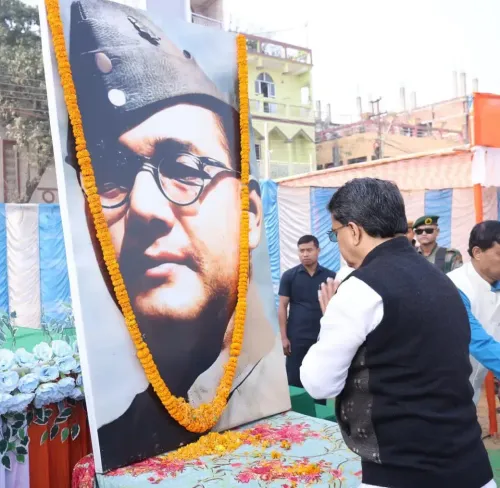
Jaipur, Jan 23 (NationPress) Former Chief Minister of Rajasthan, Ashok Gehlot, on Friday, commemorated Netaji Subhas Chandra Bose on his birth anniversary, reflecting on his legacy as a past president of the Indian National Congress and a pivotal leader in India's freedom movement.
“On this significant occasion, we express our sincere homage to Netaji Subhas Chandra Bose, a towering figure who led the freedom struggle,” Gehlot remarked.
In his statement, Gehlot noted that alongside Pandit Jawaharlal Nehru, Bose energized the youth of India and fervently advocated for full independence from British dominion.
“Netaji epitomized fearlessness, valor, and steadfast resolve, dedicating his life to the nation’s service,” said Gehlot.
He further emphasized that Bose's selfless dedication and patriotism would continue to motivate future generations and serve as a guiding light for the nation. “His sacrifices will always inspire us,” Gehlot added.
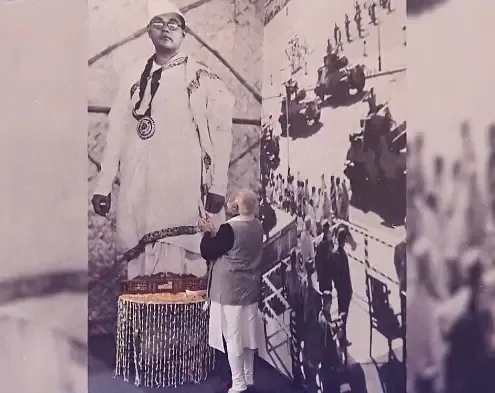
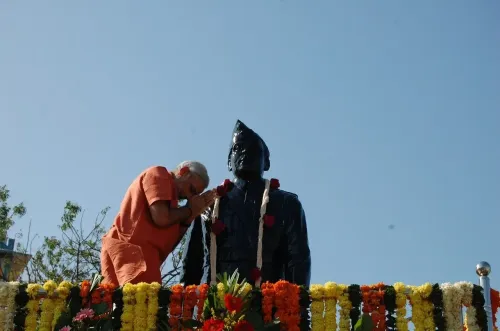
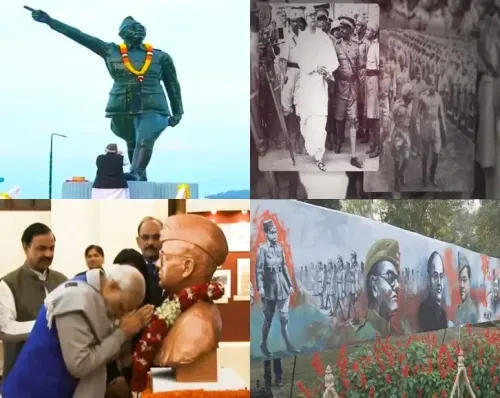
Netaji's birth anniversary is celebrated throughout India on this day, recognized as Prakram Day.
As a key freedom fighter, this day honors his “indomitable spirit” and selfless contributions, inspiring Indians, particularly the youth, with his courage, patriotism, and commitment to the nation’s liberation.
This day encourages values like courage, resilience, and unity, motivating citizens to engage in nation-building with the same tenacity that Netaji displayed in confronting challenges.
Born on January 23, 1897, in Cuttack, Odisha, Bose was an exceptional student who graduated from the University of Calcutta before heading to England to join the Indian Civil Services (ICS). However, his passion for freedom led him to forsake his ICS dreams and join the Indian National Congress.
Bose quickly ascended within the INC, gaining recognition for his radical stance and advocacy for total independence from British rule, contrasting the more moderate perspectives held by some leaders. He served as the INC President in 1938 and 1939 but resigned due to disagreements with Mahatma Gandhi and other leaders regarding their non-violent approach.
Point of View
It's essential to recognize the lasting impact of leaders like Netaji Subhas Chandra Bose on our national identity. His commitment to freedom and unity is a cornerstone of our democratic values. The celebration of his birth anniversary serves not only as a reminder of his sacrifices but also as a call to action for today's youth to embody his spirit of resilience and dedication to nation-building.
NationPress
20 Sept 2026
Frequently Asked Questions
Why is Netaji Subhas Chandra Bose significant?
Netaji Subhas Chandra Bose is a key figure in India's struggle for independence, known for his radical approach and leadership in advocating for complete freedom from British rule.
What is Prakram Day?
Prakram Day is celebrated on January 23 to honor the birth anniversary of Netaji Subhas Chandra Bose, recognizing his contributions to India's freedom.
What values does Netaji's legacy promote?
Netaji's legacy promotes values such as courage, resilience, and unity among citizens, encouraging them to participate in nation-building.