Why is there a renewed focus on Netaji Subhas Chandra Bose?
Synopsis
As India honors Parakram Diwas on January 23, we reflect on the deeper philosophical roots of the renewed focus on Netaji Subhas Chandra Bose. Discover how this movement emphasizes national memory and responsibility, urging citizens to commit to the nation as inspired by the words of Prime Minister Modi.
Key Takeaways
Parakram Diwas honors the legacy of Netaji Subhas Chandra Bose .
Renewed focus on Netaji is based on a deeper philosophical understanding.
National memory plays a crucial role in inspiring dedication to the nation.
Prime Minister Modi emphasizes the importance of recognizing national heroes.
Concrete actions have been taken to honor Netaji's contributions.
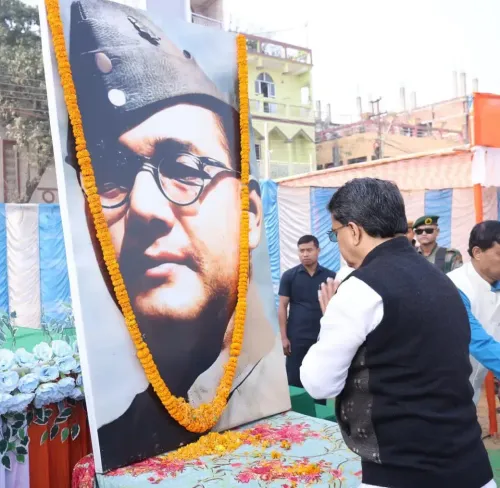
New Delhi, Jan 23 (NationPress) As the nation commemorates Parakram Diwas on the birth anniversary of Netaji Subhas Chandra Bose, it is important to recognize that the revitalized national emphasis on this celebrated freedom fighter stems from a profound philosophical foundation.
'Modi Archive', a widely-followed social media account on X, stated, “As we mark #ParakramDiwas today - the Jayanti of Netaji Subhas Chandra Bose - it's significant to observe that the renewed focus on Netaji is underpinned by deeper philosophical roots.”
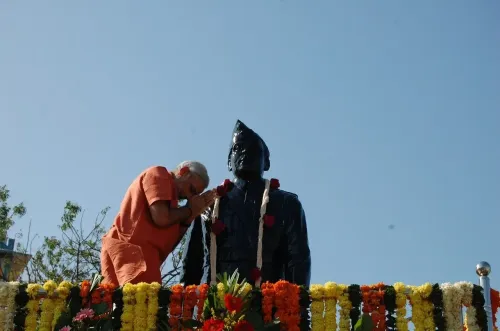
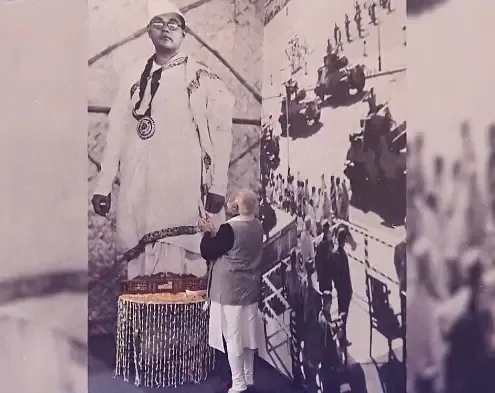
The post referenced a speech made by Prime Minister Narendra Modi in 1997 during an event honoring the installation of a statue of Netaji.
“In this 1997 address at an event celebrating a statue of Netaji, @narendramodi expressed a compelling notion - that initiatives aimed at honoring national heroes preserve our moral memory and influence our national awareness,” the post indicated.
Emphasizing the importance of national memory, the Modi Archive remarked, “Just as a temple ignites devotion in a community, the remembrance of national heroes fosters a lifelong dedication to the country.”
He further noted that when individuals engage with national memory in their daily lives, their inherent sense of duty toward the nation intensifies organically,” the post added.
This early commitment was eventually transformed into concrete actions.
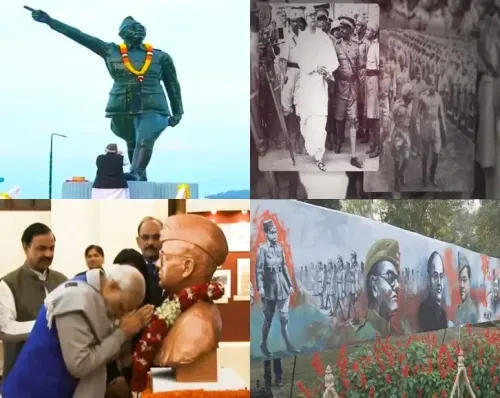
“Years later, these foundational beliefs materialized into significant initiatives - as Chief Minister, launching 'E-gram Vishwagram' in 2009 from Haripura, the exact location where Netaji ignited the flame for Swaraj, and subsequently as Prime Minister: the grand statue at India Gate, renaming Ross Island to Netaji Subhas Chandra Bose Dweep, declaring January 23rd as Parakram Diwas, declassifying secret Netaji files, establishing the Subhash Chandra Bose Museum & INA exhibit at the Red Fort, among numerous other initiatives,” it stated.
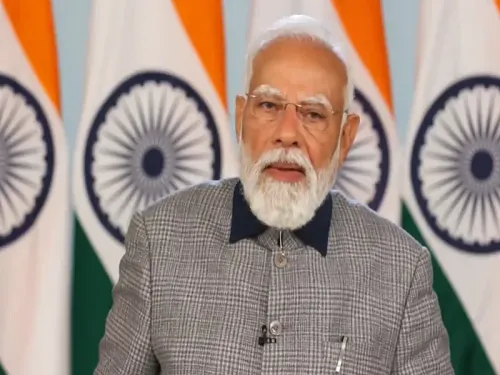
In a five-minute video released by the Modi Archive, Prime Minister Modi is heard stating, “Let us honor Netaji Subhas Chandra Bose. When one truly grasps the essence of nation-building, one recognizes the imperative to forge a new determination and a renewed awakening.”
He further asserted that statues of national icons are not merely for decoration.
“Some may construct a garden, position a fountain, plant trees, erect a tower, or place a statue. However, these acts go beyond mere beautification. The statues of national heroes are designed to influence the lives of future generations,” he remarked.
“The legacies of national icons motivate individuals to devote everything at the altar of the nation,” PM Modi concluded in the article, emphasizing that the enduring memory of Netaji’s life could serve as an everlasting source of inspiration for generations to come.
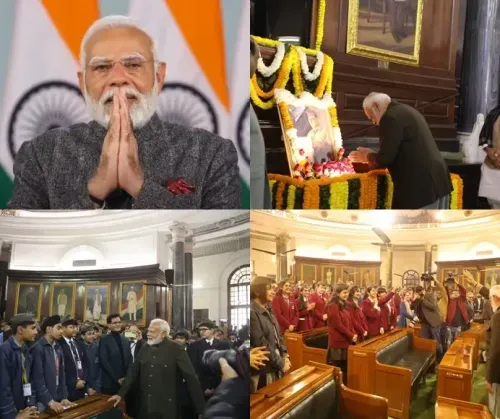
The video also features then Chief Minister Narendra Modi paying homage to Netaji at Haripura in Bardoli in 2009, the venue of the 1938 Congress session chaired by Bose. From there, PM Modi initiated the ‘E-gram Vishwagram’ project, which introduced broadband connectivity to 13,693 gram panchayats across Gujarat.
It further illustrates how, between 2015 and 2016, Prime Minister Modi declassified all documents related to Netaji Subhas Chandra Bose, concluding decades of secrecy. The announcement was made on October 14, 2015, following a meeting with Netaji’s family. The first 33 files were declassified on December 4, 2015, followed by the release of an additional 100 files on January 22, 2016, coinciding with Netaji’s 119th birth anniversary, revealing critical chapters of India’s freedom struggle to the public.
Point of View
It is vital to recognize how honoring Netaji Subhas Chandra Bose resonates with the spirit of national pride and responsibility. His legacy serves not only as a reminder of our past struggles but also as a guiding light for future generations, inspiring commitment to the nation's ideals and aspirations. The renewed focus on Netaji reflects our collective memory and dedication to fostering a sense of duty towards our country.
NationPress
5 Oct 2026
Frequently Asked Questions
What is Parakram Diwas?
Parakram Diwas is observed on January 23, marking the birth anniversary of Netaji Subhas Chandra Bose, honoring his contributions to India's independence.
Why is Netaji Subhas Chandra Bose significant?
Netaji Subhas Chandra Bose is a revered freedom fighter known for his leadership in the struggle for India's independence and his vision for a free India.
How has Prime Minister Modi recognized Netaji's contributions?
Prime Minister Modi has emphasized Netaji's legacy through various initiatives, including declassifying files, establishing museums, and commemorating important sites.
What initiatives have been launched in honor of Netaji?
Initiatives include the launching of 'E-gram Vishwagram', renaming Ross Island to Netaji Subhas Chandra Bose Dweep, and establishing Parakram Diwas.
What is the importance of national memory according to PM Modi?
PM Modi believes that national memory fosters a sense of responsibility and commitment among citizens towards their nation.