Giriraj Singh: Milkweed a new income source for Rajasthan farmers
Synopsis
Union Textiles Minister Giriraj Singh has highlighted milkweed (aak), a wild plant needing no irrigation, as a new supplementary income source for Rajasthan farmers through its growing use as a natural fibre in the textile sector.
Key Takeaways
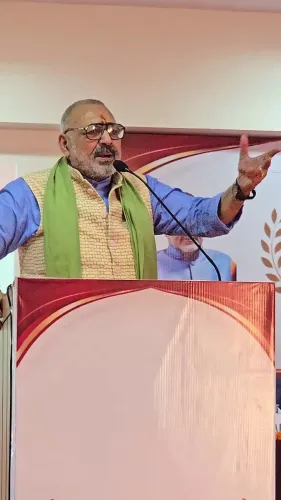
Union Textiles Minister Giriraj Singh flagged milkweed ( aak ) as an emerging income opportunity for Rajasthan farmers in a post on 14 August 2026 .
Aak grows wild on marginal, arid land with no additional cultivation, irrigation, or input cost required from farmers.
Farmers are collecting milkweed pods and linking them to markets, creating a value-addition stream from a plant previously treated as a weed.
Milkweed floss fibre is seeing rising demand in the textile sector for its lightweight and natural properties.
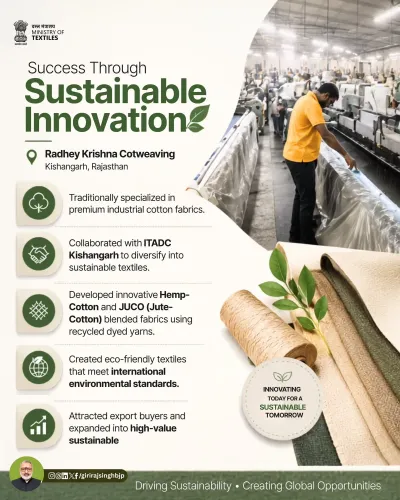
The Ministry of Textiles has been promoting alternative natural fibres to reduce dependence on water-intensive cotton and diversify rural incomes.
State-level collection pilots in Rajasthan and potential inclusion under central textile schemes are the key developments to watch.
A wild plant that needs no irrigation and no extra farmland is quietly becoming a cash crop for farmers in one of India's driest states — and Union Textiles Minister Giriraj Singh is putting the spotlight on it.
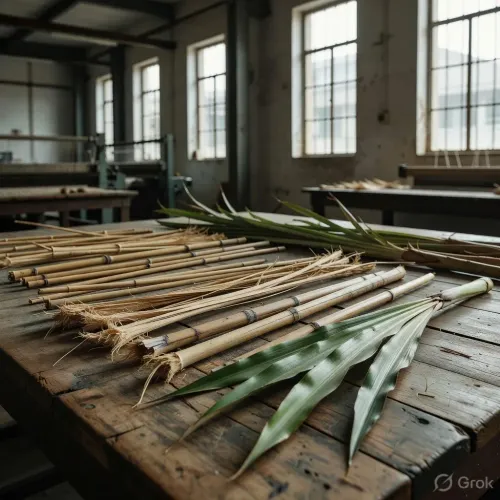
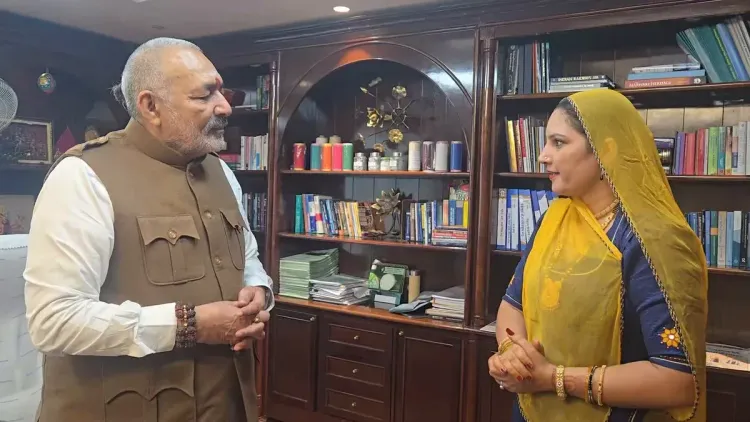
Posting on 14 August 2026, Singh highlighted how aak — commonly known as milkweed — is emerging as a supplementary income opportunity for Rajasthan's farmers. The plant grows wild on marginal land across the state's arid and semi-arid zones, and farmers are now collecting its pods and feeding them into market channels — without a single rupee of additional investment in cultivation or water.
Why aak, why now
Rajasthan is India's largest state by area, and a significant portion of it is rain-fed, drought-prone farmland where conventional cash crops struggle. The milkweed plant — aak in Hindi — has long been a fixture of this landscape, treated largely as a weed. What is changing is the textile sector's appetite for its fibre.
Milkweed floss is lightweight, hollow, and naturally hydrophobic, properties that make it attractive for blended textiles and insulation applications. As the broader push for natural, non-water-intensive fibres gathers pace globally, Indian textile manufacturers are beginning to look inward at what marginal Indian land already produces for free.
Singh framed it in terms of value addition — a farmer who once ignored aak pods now has a reason to collect, aggregate, and sell them. No new acreage, no new input cost, no new irrigation burden. The economics are unusually clean.
The government's natural-fibre push
The Ministry of Textiles has been working to diversify India's fibre basket beyond cotton and synthetic alternatives — partly to ease pressure on water resources in states like Maharashtra and Telangana, and partly to build new rural income streams in regions that conventional textile supply chains have bypassed. Milkweed fits that brief almost perfectly: it is already there, it is already growing, and the infrastructure question is really about aggregation and market linkage, not cultivation.
The minister's post signals that milkweed is now on the ministry's radar as a material worth formalising into the broader handloom and textile ecosystem. Whether that translates into inclusion under central fibre-promotion schemes or state-level collection pilots in Rajasthan is the next step to watch.
For a Rajasthan farmer staring at an arid plot, the message from the Union minister is pointed: the weed in your field may be the fibre in tomorrow's fabric.
Point of View
Which makes it a low-resistance entry point for diversification. The real test will be whether the ministry can build the aggregation and market-linkage infrastructure that converts a wild plant into a reliable income line, rather than leaving it as a ministerial tweet. If Rajasthan pilots scale, it could become a template for other arid states looking for textile-linked rural income without irrigation demands.
NationPress
28 Sept 2026
Frequently Asked Questions
What is aak or milkweed and why is it useful for farmers?
Aak (milkweed) is a wild plant that grows on arid and marginal land in Rajasthan without any irrigation or cultivation. Its pod fibre is lightweight and increasingly used in textiles, allowing farmers to collect and sell it as a supplementary income without extra investment.
What did Union Textiles Minister Giriraj Singh say about milkweed?
On 14 August 2026, Giriraj Singh posted that milkweed (aak) is becoming a new income opportunity for Rajasthan farmers by linking the plant's pods to textile markets, calling it a new medium of value addition for farmers.
How is milkweed fibre used in the textile sector?
Milkweed floss is a natural, lightweight, and hollow fibre used in blended textiles and insulation applications. Its demand is growing as the textile industry seeks alternatives to water-intensive fibres like cotton.
Which state is being highlighted for milkweed farming?
Rajasthan, India's largest state by area with large arid and semi-arid zones, is the focus. The plant grows wild there and farmers are beginning to aggregate and sell its pods to textile buyers.
Is milkweed covered under any central government textile scheme?
As of now, the inclusion of milkweed fibre under central textile or handloom promotion schemes has not been officially confirmed. The minister's post signals policy attention, and state-level collection pilots are being watched as a possible next step.