Giriraj Singh Blames Nehru for 1947 Partition on Eve of Independence Day
Synopsis
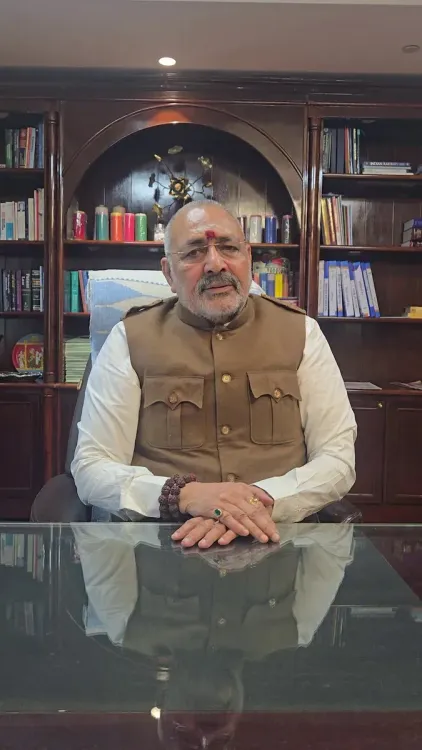
Union Textiles Minister Giriraj Singh, on 14 August 2026, blamed Jawaharlal Nehru's 'blind lust for power' for the 1947 Partition's mass displacement and bloodshed — the latest BJP salvo in a long-running contest over India's founding historical narrative.
Key Takeaways
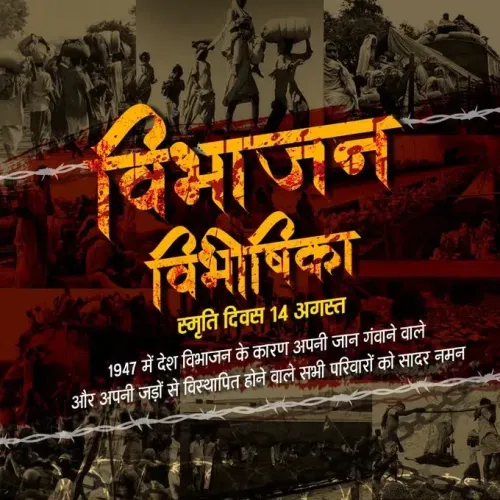
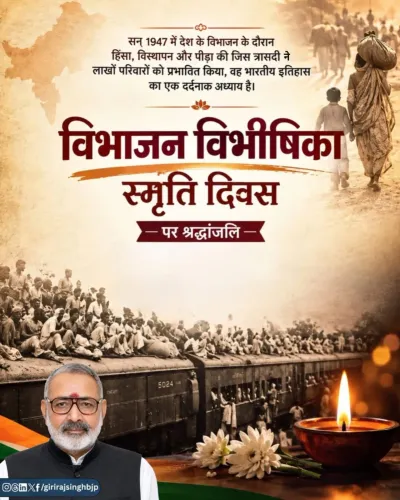
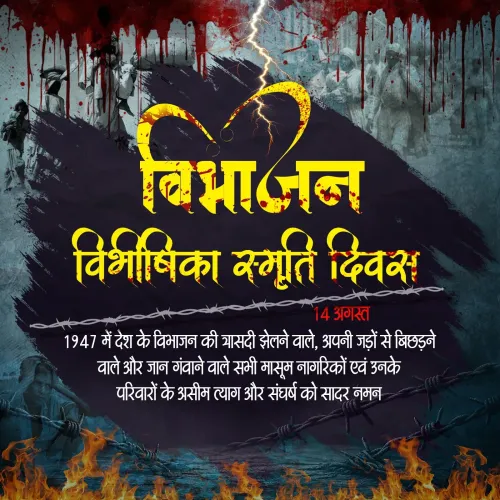
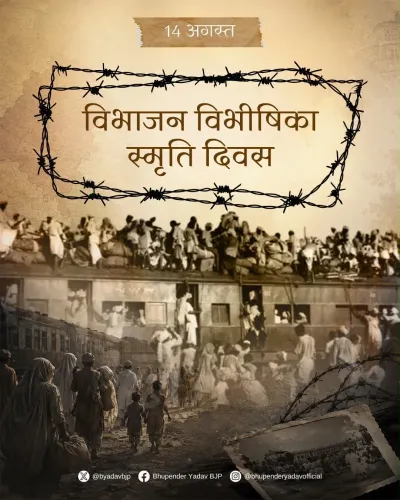
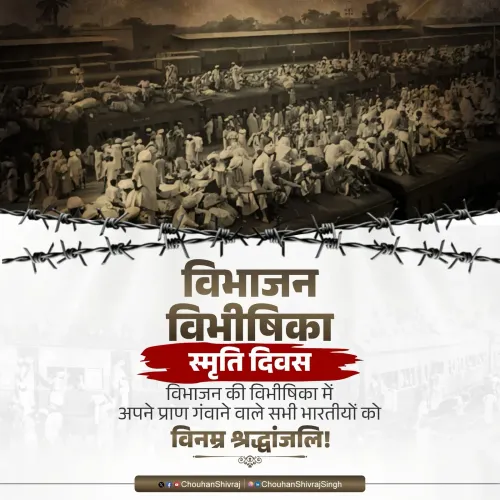
Giriraj Singh posted on 14 August 2026 , the eve of Independence Day and India's Partition Horrors Remembrance Day.
He called the 1947 Partition not an accident but the result of Nehru's 'blind lust for power,' alleging India's integrity was sacrificed for political office.
The post highlighted mass displacement of millions and loss of 'countless' Hindu lives during Partition violence.
BJP figures have repeatedly used 14 August — Partition Horrors Remembrance Day, established in 2021 — to advance this historical argument against Congress.
Historians regard the causes of Partition as multi-causal and contested; Singh's framing reflects a political, not scholarly, consensus.
Opposition Congress reactions to the post are anticipated around Independence Day events.
On the eve of India's Independence Day, Union Textiles Minister Giriraj Singh reignited one of the country's most contested historical debates — pinning the catastrophic violence and displacement of the 1947 Partition squarely on the ambition of Jawaharlal Nehru.
Posting in Hindi on 14 August 2026, Singh wrote: 'विभाजन में लाखों बेघर हुए, अनगिनत हिंदुओं ने जानें गंवाईं और पूरा देश लहूलुहान हो गया।' ('Millions were rendered homeless in the Partition, countless Hindus lost their lives, and the entire nation was drenched in blood.') He went further, calling the catastrophe not an accident but 'the result of Nehru's blind lust for power,' alleging that India's first Prime Minister 'sacrificed the nation's integrity for his chair.'
The charge BJP has returned to, year after year
Singh's post is not an isolated outburst — it is the latest iteration of a sustained BJP political argument. In the years since the Partition Horrors Remembrance Day was established on 14 August, senior party figures have used the anniversary to spotlight Congress-era decisions they hold responsible for the subcontinent's bloodiest rupture. The framing consistently targets Nehru's reported eagerness to assume power over a united India versus the urgency of any settlement, contrasting him with Sardar Vallabhbhai Patel — a figure the BJP has long sought to reclaim as its own ideological ancestor. Historians remain sharply divided on the causal chain behind Partition. The roles of the British colonial administration, the Muslim League under Muhammad Ali Jinnah, the Congress leadership, and the accelerating communal violence of 1946-47 are all part of a dense, contested record. Attributing primary agency to any single individual's ambition is a political reading, not a settled scholarly verdict.Why 14 August amplifies every word
The timing is deliberate. 14 August is simultaneously Pakistan's Independence Day and India's Partition Horrors Remembrance Day — a designation introduced by the Modi government in 2021 to memorialise the estimated 10 to 20 million people displaced and the hundreds of thousands killed in the violence that accompanied the division of British India. On a day when the national conversation turns to 1947, a post like Singh's lands with maximum resonance — and maximum political charge. For the Congress party, which has consistently defended Nehru's legacy and the complexity of the choices made under colonial transition, the attack is a familiar one that demands a familiar rebuttal. Reactions from opposition leaders in the hours around Independence Day celebrations are worth watching closely. Seventy-nine years on, the wound of Partition still shapes how India's two dominant political traditions see themselves — and each other.Point of View
The BJP sharpens a contrast with its own icon Sardar Patel and keeps the Congress permanently on the defensive about its legacy. The move also serves a present-day function: with Independence Day commanding maximum national attention, the post ensures the BJP's historical narrative dominates the morning news cycle before the tricolour is even hoisted. Whether it shifts any political ground depends entirely on how vigorously Congress chooses to respond.
NationPress
14 Aug 2026
Frequently Asked Questions
What did Giriraj Singh say about Nehru and Partition?
Singh said the 1947 Partition — which displaced millions and caused mass deaths — was not an accident but the result of Nehru's 'blind lust for power,' claiming Nehru sacrificed India's territorial integrity to become Prime Minister.
Why did Giriraj Singh post this on 14 August?
14 August is both Pakistan's Independence Day and India's Partition Horrors Remembrance Day , a date designated by the Modi government in 2021 to memorialise Partition victims, making it the most prominent occasion for such commentary.
What is Partition Horrors Remembrance Day?
It is an annual observance on 14 August , established by the Indian government in 2021 , to remember the suffering of those displaced and killed during the 1947 division of British India into India and Pakistan.
Is Nehru's role in Partition historically proven?
The causes of Partition are widely regarded by historians as multi-causal, involving British colonial policy, the Muslim League, Congress leadership decisions, and escalating communal violence. Attributing primary blame to Nehru's personal ambition is a contested political argument, not a settled historical conclusion.
How has BJP used the Partition narrative in politics?
BJP leaders have periodically attributed Partition to Congress-era decisions, particularly around Independence Day and Partition Remembrance Day, as part of a broader effort to challenge Congress's claim as the party of India's freedom movement and to elevate Sardar Patel over Nehru in the national memory.