Giriraj Singh calls for green innovation to power India's growth
Synopsis
Union Textiles Minister Giriraj Singh called on October 29, 2026, for innovations that place environmental protection at the centre of India's growing energy needs, stressing responsible resource use and carbon emission reduction as the path to sustainable development.
Key Takeaways
Giriraj Singh posted on October 29, 2026 , calling for innovation anchored in environmental protection to meet India's rising energy demands.
He stressed that responsible use of natural resources and reduction of carbon emissions must accompany technological progress.
India committed to a net-zero emissions target by 2070 at COP26 in Glasgow (2021) , setting the policy context for such statements.
Indian industries across sectors face pressure to decouple output growth from environmental degradation.
The framing positions green innovation as an enabler of development, not a constraint on it.
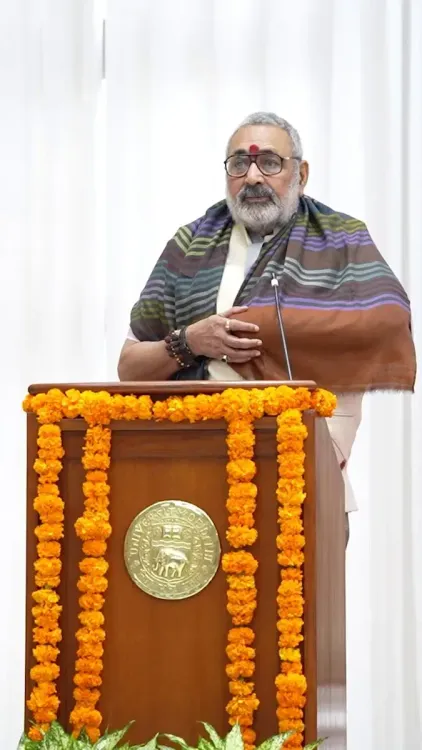
India's energy future cannot be separated from its environmental commitments — and Union Textiles Minister Giriraj Singh said exactly that on Thursday, October 29, 2026, in a pointed post on X that linked technological progress directly to responsible resource use and carbon reduction.
Posting in Hindi, Singh wrote: 'विकास की बढ़ती ऊर्जा जरूरतों को पूरा करने के लिए ऐसे नवाचार आवश्यक हैं, जो पर्यावरण संरक्षण को केंद्र में रखकर किए जाएं।' — translated: 'To meet the growing energy needs of development, innovations that place environmental protection at the centre are essential.' He added that responsible use of natural resources and ensuring a reduction in carbon emissions alongside technological advancement 'should be our effort in the direction of sustainable development.'
Where the statement lands in India's climate story
India committed to a net-zero emissions target by 2070 at the COP26 summit in Glasgow in 2021 — a pledge that requires the country to fundamentally rewire how it generates and consumes energy across every sector. The tension at the heart of that commitment is real: India remains one of the world's fastest-growing large economies, and its appetite for energy grows with every percentage point of GDP. Singh's framing — innovation anchored in environmental protection, not opposed to it — speaks directly to that tension. Indian ministers have consistently positioned technological progress and sustainability as compatible rather than competing forces, a narrative that runs through the country's Nationally Determined Contributions under the Paris Agreement. The argument is straightforward: cleaner technology is not a brake on growth, it is the engine of the next phase of it.Responsible resource use as the operative phrase
The specific language Singh chose — 'प्राकृतिक संसाधनों का जिम्मेदार उपयोग' ('responsible use of natural resources') — signals a concern that runs well beyond energy generation. Indian industries across manufacturing, agriculture, and infrastructure face mounting pressure to demonstrate that output gains are not being purchased at the cost of water, land, and air quality. Carbon emission reduction targets make that pressure measurable and global. The call for green innovation centred on environmental protection is a reminder that India's climate ambitions require not just policy frameworks but the kind of ground-level technological shifts — in materials, processes, and energy sources — that can actually bend the emissions curve down as the economy scales up. The road India walks is narrow: deliver development for a billion-plus people, honour climate pledges made on the world stage, and do it fast enough to matter. Singh's message is that the only credible path runs straight through innovation — built green from the start.Point of View
Provided innovation is designed with environmental goals built in from the start. That framing matters politically because it allows the government to defend industrial expansion while staying rhetorically aligned with its COP26 pledges. For a senior BJP minister to invoke carbon emission reduction and responsible resource use in the same breath as 'development energy needs' reflects how deeply the sustainability vocabulary has entered mainstream party communication. The real test, as always, will be whether such signals are followed by sector-specific green mandates — particularly in energy-intensive industries.
NationPress
29 Oct 2026
Frequently Asked Questions
What did Giriraj Singh say about environment and development?
On October 29, 2026 , Singh stated that innovations centred on environmental protection are essential to meet India's growing energy needs, and that responsible use of natural resources alongside carbon emission reduction should guide the country's sustainable development efforts.
What is India's net-zero emissions target?
India announced a net-zero carbon emissions target by 2070 at the COP26 summit in Glasgow in 2021 , as part of its updated climate commitments under the Paris Agreement.
Why is Giriraj Singh talking about the environment?
As a senior BJP leader and Union Minister , Singh regularly comments on national policy themes; his October 2026 post reflects the government's broader narrative of linking technological progress with India's international climate pledges.
What does sustainable development mean in the Indian policy context?
In Indian policy terms, sustainable development means delivering economic growth and meeting rising energy demands while reducing carbon emissions and ensuring responsible use of natural resources — goals embedded in India's Nationally Determined Contributions under the Paris Agreement.
What are India's Nationally Determined Contributions?
India's Nationally Determined Contributions are its formal climate commitments under the Paris Agreement, which include targets for renewable energy capacity, emission intensity reduction, and the long-term goal of reaching net-zero by 2070 .