Giriraj Singh credits Modi govt for lifting 50 crore out of poverty
Synopsis
Union Textiles Minister Giriraj Singh on November 4, 2026 credited PM Modi's decade of governance for lifting approximately 50 crore Indians out of extreme poverty, expanding modern infrastructure and positioning cities as new development hubs under the Viksit Bharat vision.
Key Takeaways
Giriraj Singh posted on X on November 4, 2026 crediting PM Modi 's governance for transformative national progress.
He cited approximately 50 crore people exiting extreme poverty over the past 10 to 12 years as a headline achievement.
NITI Aayog 's Multidimensional Poverty Index reports since 2021 have documented significant poverty headcount reductions from a 2013-14 baseline.
The National Infrastructure Pipeline , launched in 2019 , underpins the government's claim of expanded modern infrastructure and urban growth centres.
The post is framed around the Viksit Bharat vision of making India a developed nation by 2047 .
The next NITI Aayog MPI update and forthcoming Union Budget targets will be key milestones to watch.
Fifty crore people pulled out of extreme poverty, cities remade as growth engines, and a country racing toward its 2047 vision — Union Textiles Minister Giriraj Singh laid out that sweeping arc of national transformation in a post on X on Wednesday, November 4, 2026, citing the last decade of governance under Prime Minister Narendra Modi as the driving force.
Writing in Hindi, the senior BJP leader from Begusarai, Bihar said: 'Bharat vikas, samridhi aur jankalyan ke naye pratiman sthapit kar raha hai' — 'India is setting new benchmarks in development, prosperity and public welfare.' He pointed to three specific pillars: the exit of approximately 50 crore people from extreme poverty over the past 10 to 12 years, the expansion of modern infrastructure, and the reshaping of cities into new development hubs — all framed as evidence of the country's forward march toward a 'Viksit Bharat,' or developed India.
The poverty-reduction claim and what backs it
NITI Aayog has published a series of Multidimensional Poverty Index (MPI) reports since 2021, documenting sharp falls in multidimensional poverty headcount ratios going back to the 2013-14 baseline. Those reports measure deprivation across health, education and living standards — not income alone — and have shown hundreds of millions exiting poverty conditions across successive survey rounds. Singh's figure of 50 crore aligns with the direction of that data, though the precise number represents the government's most recent aggregate claim.
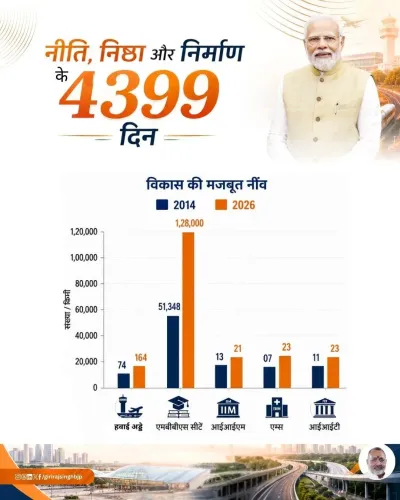
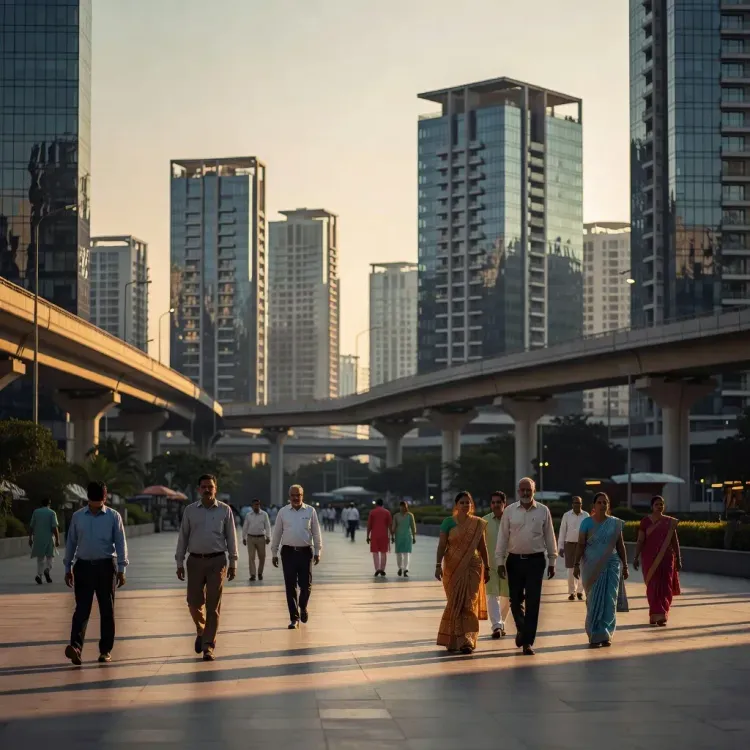
The National Infrastructure Pipeline, announced in 2019, provided the structural scaffolding for the minister's second point: a multi-trillion-rupee commitment to roads, airports, urban amenities and digital connectivity. That programme has visibly accelerated both physical and digital infrastructure across Indian cities, lending concrete ground to the 'cities as development centres' framing Singh invoked.
Viksit Bharat — the political and policy north star
The Viksit Bharat vision — India as a fully developed nation by 2047, the centenary of independence — has become the organising idea around which the Modi government consolidates its economic messaging. Senior ministers across portfolios have periodically issued progress summaries that map welfare and infrastructure milestones onto that long-horizon goal. Singh's post follows that established pattern, arriving at a moment when the government is likely preparing the economic narrative ahead of the next Union Budget and Economic Survey cycle.
What makes the message notable is its scale: a claim of 50 crore beneficiaries — roughly the combined population of several large European nations — is not routine political shorthand. If the NITI Aayog's next MPI update validates that figure, it would rank among the most significant poverty-reduction achievements recorded for any country in a comparable time window.
The next hard test for the narrative will come when fresh multidimensional poverty data lands — and when urban infrastructure targets get stress-tested against budgetary commitments in the months ahead.
Point of View
Sustaining this narrative through independently verified data updates is both a political necessity and a reputational risk — the bigger the claim, the sharper the accountability lens. How the next official poverty report frames the numbers will determine whether this messaging holds or becomes a liability.
NationPress
4 Nov 2026
Frequently Asked Questions
How many people has India lifted out of poverty under PM Modi according to Giriraj Singh?
Union Textiles Minister Giriraj Singh claimed that approximately 50 crore people have exited extreme poverty in India over the past 10 to 12 years under PM Narendra Modi 's leadership.
What is Viksit Bharat and why does Giriraj Singh mention it?
Viksit Bharat is the government's vision to make India a fully developed nation by 2047 , the centenary of independence. Singh invoked it as the broader goal that recent poverty reduction and infrastructure expansion are driving India toward.
What data supports India's poverty reduction claims?
NITI Aayog 's Multidimensional Poverty Index reports, published since 2021 , have documented significant reductions in poverty headcount ratios across health, education and living standards dimensions, using 2013-14 as the baseline.
What is India's National Infrastructure Pipeline?
The National Infrastructure Pipeline is a government programme announced in 2019 to accelerate large-scale investment in roads, airports, urban amenities and digital infrastructure across India.
Why is Giriraj Singh making development claims now in November 2026?
Senior BJP ministers periodically release national progress summaries aligned with policy anniversaries, economic surveys or pre-budget periods. Singh's post follows this established pattern and is likely timed to build the government's economic narrative ahead of the forthcoming budget cycle.